A chance for the descendants of Holocaust victims to reclaim a piece of the past
The Center for Jewish History’s ‘Histories and Mysteries’ project seeks to solve Nazi-era cold cases
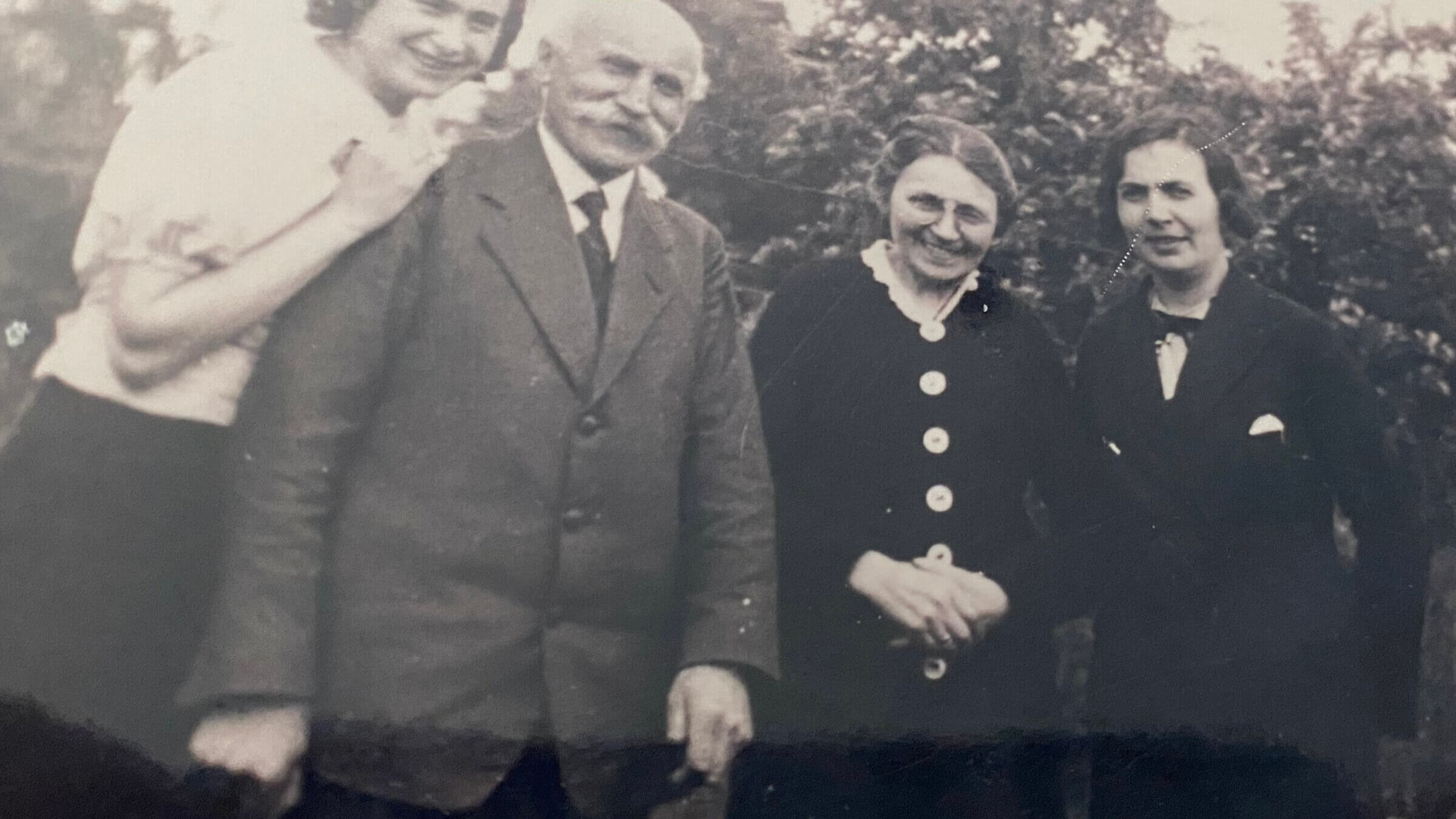
The Buxbaum family in 1934, in Alsfeld, Germany. Courtesy of Marlene Verber
Levi Buxbaum boarded the S.S. St. Louis on May 13, 1939, both relieved and hopeful. Relieved to be leaving Nazi Germany behind, hopeful that he would soon reunite with his daughters. But 14 days later, when the ship arrived in Havana, most of its passengers were denied entry.
Refused safe harbor in Cuba, the United States and Canada, the refugees were forced to return to Europe. That June, Buxbaum and 222 other passengers disembarked in France. Discouraged but undeterred, he clung to the hope that he would eventually secure a visa to America.
It was not to be. Sometime between Nov. 6 and Nov. 8, 1942, Buxbaum died aboard a transport bound for Auschwitz-Birkenau. Until recently, that was all Bonnie Elkaim knew about her great-grandfather.
Now, thanks to the Center for Jewish History’s newly launched initiative, “Histories and Mysteries,” Elkaim knows what happened between Buxbaum’s arrival in France in 1939 and his death three years later. The project helps families investigate Holocaust-era cold cases through crowdsourced genealogy, expert archival research and community collaboration.
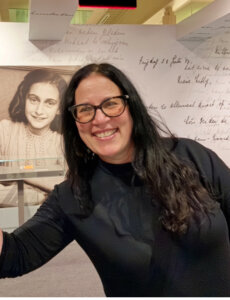
“I’m extremely grateful that I filled in some of the pieces. I didn’t want my great-grandfather to just be a statistic,” Elkaim, 58, told me in a Zoom interview.
The initiative was made possible by a nearly $300,000 grant from the Conference on Jewish Material Claims Against Germany, or the Claims Conference. Since the project was launched in January, genealogists at CJH have received nearly 50 inquiries from the United States, Germany, Austria, the United Kingdom, and Canada, and have begun work on 11 cases.
“This project brings together passed-down family stories and the irreplaceable truth found in the archive. By taking part in this work, each person helps restore histories stolen in the Holocaust and gives families a chance to reclaim pieces of their past,” said Jenny Rappaport, head genealogist at the Ackman & Ziff Family Genealogy Institute.
Elkaim’s story will be the first shared publicly, released in weekly social media posts through July 31.
Miriam Frankel, CJH’s social media coordinator, said she hopes the project’s collaborative nature will resonate with audiences.
“What I love about the project is the communal aspect and being able to steward these stories into the digital world and affirm that they matter,” Frankel said.
The idea for the project grew out of the family history of Ilana Rosenbluth, CJH’s communications director.
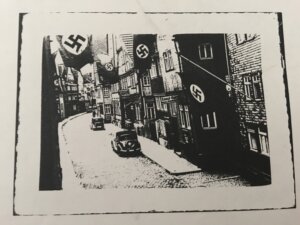
When Nazi Germany invaded Poland on Sept. 1, 1939, Rosenbluth’s father, then four years old, was living with his parents in eastern Poland. By month’s end, the country had been divided between Germany and the Soviet Union.
Rosenbluth’s family fled eastward, moving from Lvov to Siberia and eventually Uzbekistan, where food was scarce and disease rampant. During that time, her grandmother gave birth to a daughter, Lucia, known as Lucy, who later died of starvation.
In 1943, desperate to support his family, Rosenbluth’s grandfather boarded a train carrying bolts of fabric and disappeared.
“There are varying accounts of what happened to him, but the truth is my family has never had closure,” Rosenbluth said, adding that this initiative may be the last chance for us, and people like us to find answers.
As the number of living witnesses declines, preserving Holocaust history has taken on new urgency, said Gideon Taylor, president of the Claims Conference.
“We’re at a unique moment in time in terms of Holocaust memory and education. Fewer and fewer people have direct knowledge of it,” Taylor said.
A 2020 Claims Conference survey found that 63% of Americans do not know that six million Jews were murdered in the Holocaust, and nearly half cannot name a single one of the more than 400,000 camps and ghettos that existed across Europe.
Elkaim, a retired New York City teacher, says she first learned about the Holocaust when she was nine years old.
“I only knew a few limited facts. I knew my grandparents had survived and my great-grandfather hadn’t. My grandmother felt a lot of survivor guilt and didn’t talk about it, and people didn’t ask questions then,” she said.
Now an educator and guide at CJH’s Anne Frank exhibition, Elkaim spent years searching for fragments of information that might transform her great-grandfather from an abstraction into a living, breathing person.
“I wanted to feel a connection with him,” she said.
When Rappaport received Elkaim’s inquiry, she immediately began contacting archivists in Germany and France. She also worked with CJH partner organizations, including the Leo Baeck Institute and YIVO, which held a census record from the General Union of French Israelites. The document placed Buxbaum in Vienne, France, between 1941 and 1942 and showed that he was unemployed. Rappaport also combed databases such as Ancestry.com, which contains extensive German vital records.
“Sometimes a single clue can rewrite an entire family story,” Rappaport said.
In Elkaim’s case, it was three clues.
The first breakthrough was the death record of Elkaim’s great-grandmother, Pauline Rothschild Buxbaum, which confirmed that he was in Kassel, Germany, on March 24, 1939.
Next came his 1876 German birth record, which verified his identity across multiple French documents.
Finally, a typed marriage record for Levi Buxbaum and Pauline Rothschild further confirmed the timeline, placing him definitively in Germany shortly before his flight from Nazi persecution.
Piece by piece, Rappaport reconstructed what followed.
In September 1939, Buxbaum was interned as an “enemy alien” at Camp du Ruchard, a former convalescence hospital for Belgian soldiers after World War I. He was released in June 1940, and lived as a refugee in France for two years before being arrested and transferred to the Drancy internment camp. All the while he never stopped trying to get to America.
The last document bearing his name appears on Transport 42 from Drancy to Auschwitz-Birkenau.
“He either died on the transport or immediately after arriving. There’s no way to know exactly. But I admire him so much and how hard he fought to survive,” Elkaim said.

Hello, fellow Forward reader! I’m Joel Brown, a Forward reader and supporter for more than 15 years, and currently the chair of the board of directors.
I’m an avid Forward reader because it ticks so many of my essential boxes: excellent journalism, Jewish focus and diverse viewpoints. In today’s political climate, what I most appreciate is the Forward’s independence — made possible by the generosity of its membership.
The Forward is committed to bringing you unbiased, nuanced Jewish news. From my position as board chair, I see an exciting future as we expand our position as the definitive independent voice of contemporary American Judaism.
That’s why I’m paying it Forward, by matching $36,000 of reader gifts. It’s an investment in the Forward’s newsroom, to continue telling the American Jewish story with truth and independence.
— Joel Brown, Forward board chair
Support our mission to tell the Jewish story fully and fairly.