Cole Allen’s manifesto cites the Bible — so why did Trump say he ‘hates Christians?’
The suspect in the White House Correspondents’ dinner attack thanked his church
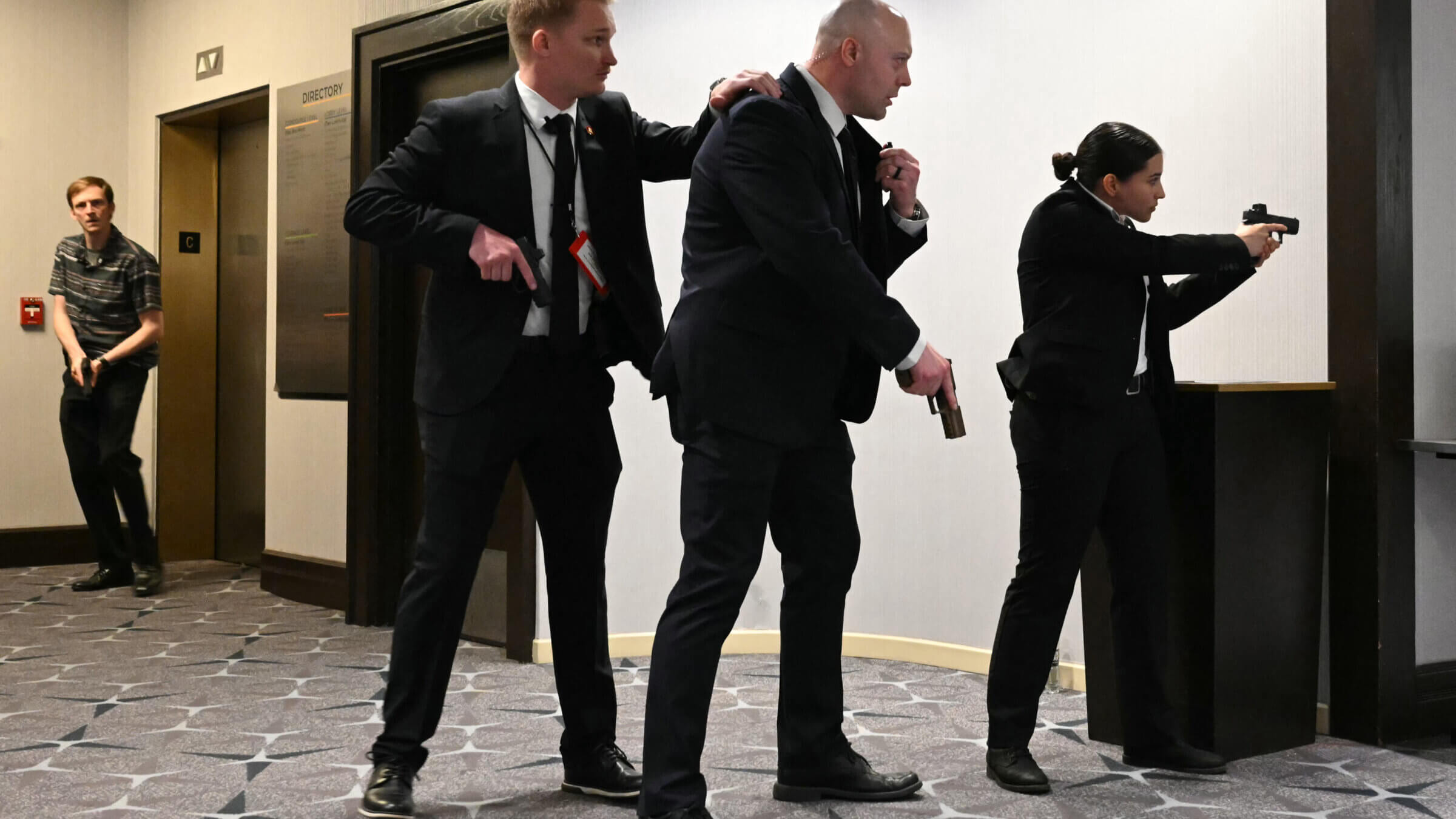
Agents draw their guns after loud bangs were heard during the White House Correspondents’ dinner Photo by Mandel NGAN / AFP via Getty Images

By Mira Fox April 27, 2026
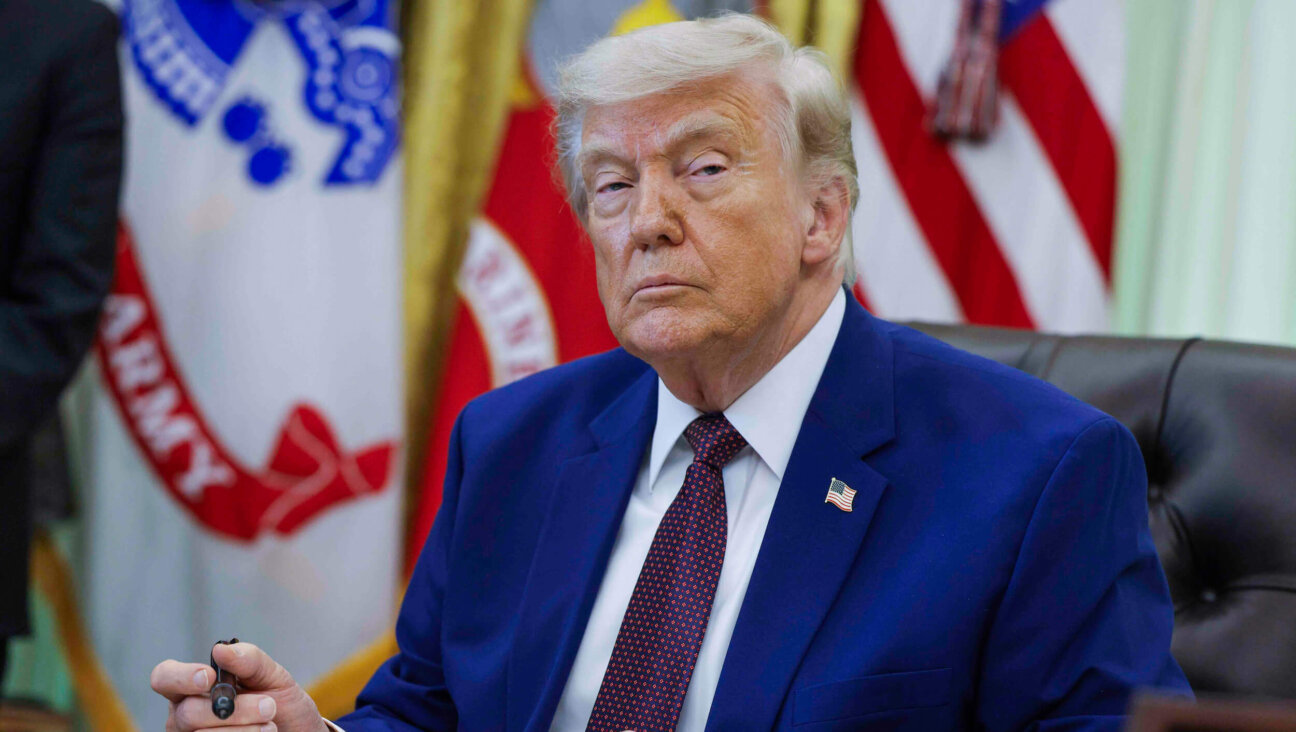
“When you read his manifesto, he hates Christians,” President Trump said on Fox News, speaking about the alleged culprit behind an attack at the White House Correspondents Dinner.
But Cole Allen, the 31-year-old man tackled to the ground of the Capitol Hilton, where the dinner was held, is, according to reporting from independent journalist Ken Klippenstein, a devout Christian, active in the Christian fellowship at CalTech, his alma mater. And his manifesto, which started with an apology to “everyone whose trust I abused,” in fact thanked his church and cited the Bible, giving a theological justification for his efforts.
“Rebuttals to objections,” he wrote in his neatly laid out manifesto, starting off with the idea that “as a Christian, you should turn the other cheek.” This, he argued, doesn’t apply when someone else is oppressed and, in fact, “turning the other cheek when *someone else* is oppressed is not Christian behavior.”
Later, he turned to the quote “yield unto Caesar what is Caesar’s” that comes from the gospels. (The line appears in Matthew, Mark and Luke.) This quote is usually interpreted to mean that Christians should obey the government of their time, or that earthly matters — like, in the biblical context, taxation — do not concern God. Trump, Allen wrote, is not a supreme emperor like Caesar but instead subject to the rule of law. “In so far as representatives and judges do not follow the law, no one is required to yield them anything,” he wrote.
While people might have theological quibbles with these arguments, they clearly come from a place of engagement with Christianity. So why did Trump frame Allen’s attack as specifically one against Christians?
Trump signed a national security directive in September last year, stating that “anti-Christianity” as well as “hostility towards those who hold traditional American views on family, religion, and morality” are common threads driving domestic terrorism. The directive outlined a new strategy including investigating any person or organization who might fall under this new, sweeping set of domestic terrorism priorities in order to “intervene in criminal conspiracies before they result in violent political acts.” Much of the directive is focused on monitoring speech.
Directing attention toward a sense of persecution functions to unite an increasingly splintered MAGA base, some of whom are feuding over how their Christianity dictates their response to Israel and the war in Iran.
Some Christian politicians on the right, such as Ted Cruz and Mike Huckabee, claim their Christianity demands that they support Israel. Secretary of War Pete Hegseth regularly cites his religion in justifying U.S. wars, including the one in Iran.
But an increasing number of others, including talking heads like Candace Owens and Nick Fuentes, and former congresswoman Marjorie Taylor Greene — once an outspoken Trump supporter — have said that their faith demands that they oppose the government’s wars and its support for Israel.
This is an issue for Trump, who was elected with the support of a strong network of conservative Christian leaders, think tanks and PACs. Many of Trump’s supporters were initially drawn to him for religious reasons and have long spoken of him in terms of God’s favor, comparing him to biblical figures including King Cyrus and King David or citing Trump’s survival of the assassination attempt during his campaign as a sign of God’s personal protection.
By invoking another attack against him as an attack against all Christians, Trump may be hoping to redirect his base from their squabbles over Israel, and Jews, and reunite them against a common enemy — namely, a conveniently nebulous association of figures who supposedly hate Christianity, or want to violently police their beliefs. Perhaps he’s hoping none of them will read Allen’s manifesto and come to the conclusion that he is, in fact, one of them.
I’m personally matching all gifts to the Forward, up to $36,000. Can I match your gift now?

Hello, fellow Forward reader! I’m Joel Brown, a Forward reader and supporter for more than 15 years, and currently the chair of the board of directors.
I’m an avid Forward reader because it ticks so many of my essential boxes: excellent journalism, Jewish focus and diverse viewpoints. In today’s political climate, what I most appreciate is the Forward’s independence — made possible by the generosity of its membership.
The Forward is committed to bringing you unbiased, nuanced Jewish news. From my position as board chair, I see an exciting future as we expand our position as the definitive independent voice of contemporary American Judaism.
— Joel Brown, Forward board chair
Support our mission to tell the Jewish story fully and fairly.