Trump Peace Plan Could Recognize Palestinian State

Donald Trump and Mahmoud Abbas at the White House, May 3, 2017 Image by Getty Images

By Aiden Pink February 28, 2018
The Trump administration’s proposal for an Israeli-Palestinian peace deal could include recognizing a Palestinian state with East Jerusalem as its capital, the Saudi newspaper Asharq al-Awsat reported Wednesday.
The report, citing “knowledgeable Arab diplomatic sources,” claimed that the United States was also proposing that the Old City of Jerusalem would be placed under “international protection.”
In return for recognition of its statehood, large Israeli settlements inside the West Bank would remain in place, and the Palestinian Authority would have to give up on its “right of return” demand that Palestinian refugees and their ancestors would be allowed to return to their former homes inside Israel.
Arab media have reported over the past few months on versions of this plan, which some Palestinian officials have referred to as the “slap of the century.” Palestinian Authority President Mahmoud Abbas has refused to meet with American envoys, and said after President Trump recognized Jerusalem as Israel’s capital that the United States could no longer be a fair broker in negotiations.
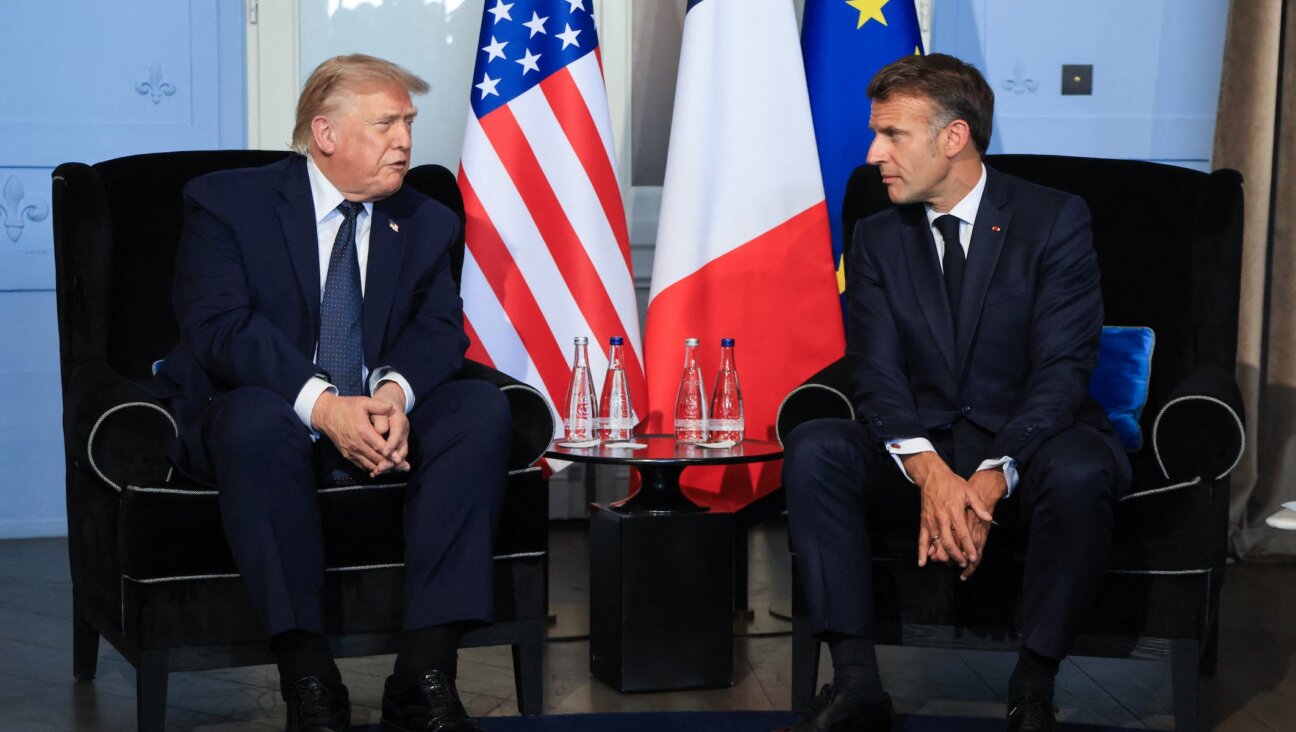
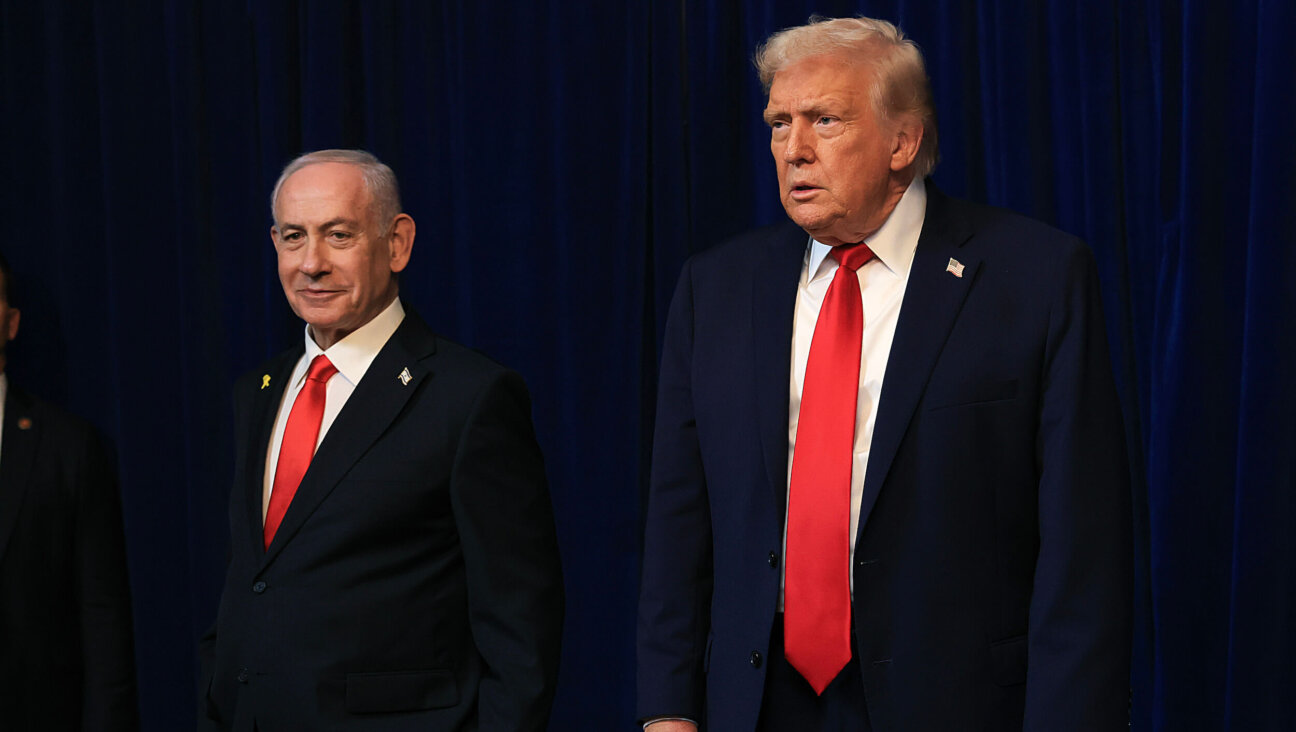
Trump himself has been ambivalent about recognizing a Palestinian state alongside an Israeli one, saying at a press conference with Israeli Prime Minister Benjamin Netanyahu last year that “I’m looking at two-state and one-state and I like the one that both parties like….I could live with either one.”
Recognizing a Palestinian state as part of an Israeli-Palestinian peace deal had been official American policy during the George W. Bush and Barack Obama presidencies.
The report was first noted in English by the Times of Israel.
Contact Aiden Pink at [email protected] or on Twitter, @aidenpink
Did you know that only 2% of Forward readers donate to support our nonprofit newsroom? That 2% make it possible for millions to read the Forward without a paywall or subscription — removing any barriers to the full and fair Jewish story.
But while the Forward is free to read, it isn’t free to produce. Big stories — like deep dives into the antisemitism data, political scoops or reporting trips to college campuses — take months of research and fact-checking. All while we keep you informed of what you need to know each day.
— Rachel Fishman Feddersen, Forward Publisher & CEO
Support our mission to tell the Jewish story fully and fairly.