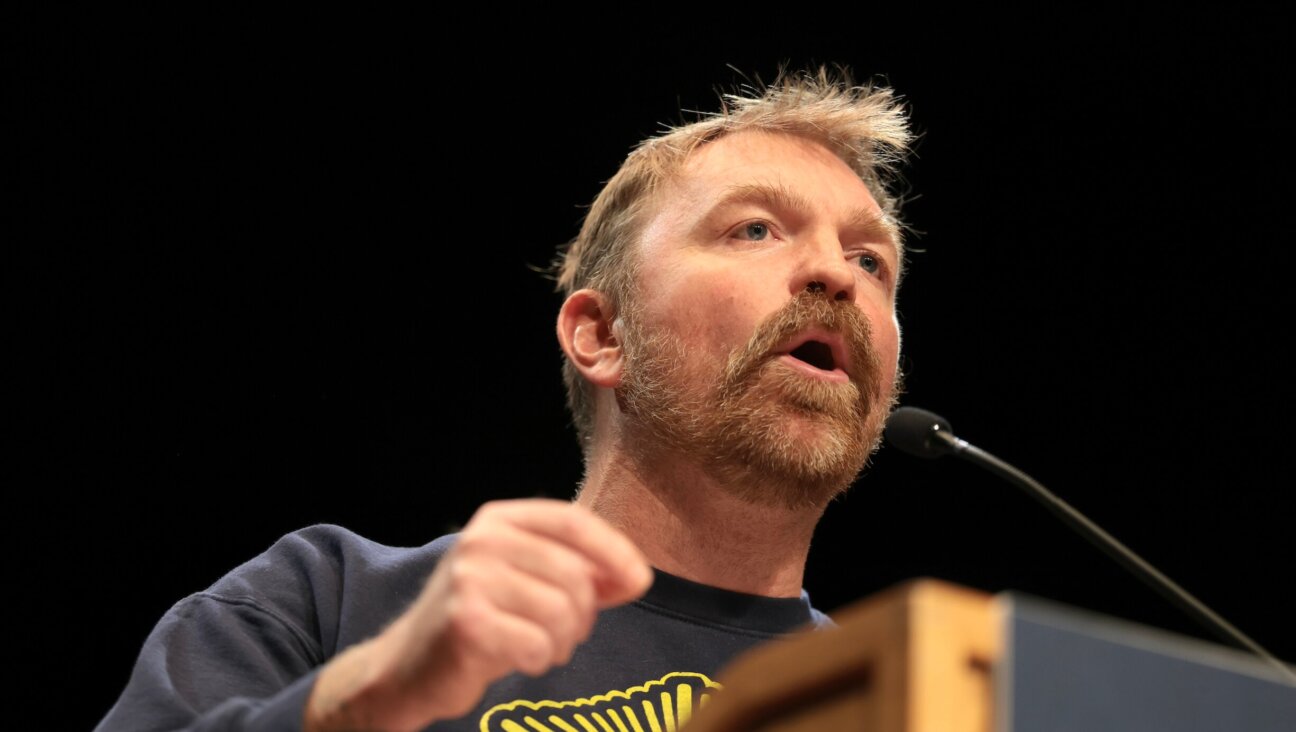
Marc Maron

Image by Getty Images
Marc Maron is living proof that American lives do have second acts. When Maron, 50, started doing a podcast in his garage in 2009, it was an act of desperation. His comedy career had ground to a halt, he had been through two divorces and he was starting to consider suicide.
Fortunately, his “WTF” podcast took off and the suicide option was put on hold. But that doesn’t mean that Maron doesn’t talk about it — or about any other aspect of his personal life. This year, Maron’s confessional style expanded to include a new book, “Attempting Normal” and a TV show, “Maron.” And his belated success — millions of listeners often push “WTF” to the top of the iTunes charts — has also revived his stand-up career.
Although Maron seems willing to talk about every aspect of his life, from finances to relationships, from fear of aging to the difficulties of success (or lack thereof), it’s his Jewishness that keeps coming up. With Jewish guests (in the past year, he’s talked to Mel Brooks, Seth Rogen and Hank Azaria, among others), he tries to bond over a shared background. At a recent stand-up show in Brooklyn, he devoted a substantial part of his set to talking about his estrangement from the borough’s Hasidic population and to what that says about his Jewish identity.
But Maron is candid about not understanding, exactly, what this means. Being Jewish is important to him, but, more than any other comedian, he is upfront about not knowing why. As with everything he does, it’s a refreshing example of extreme emotional honesty.
I’m personally matching all gifts to the Forward, up to $36,000. Can I match your gift now?

Hello, fellow Forward reader! I’m Joel Brown, a Forward reader and supporter for more than 15 years, and currently the chair of the board of directors.
I’m an avid Forward reader because it ticks so many of my essential boxes: excellent journalism, Jewish focus and diverse viewpoints. In today’s political climate, what I most appreciate is the Forward’s independence — made possible by the generosity of its membership.
The Forward is committed to bringing you unbiased, nuanced Jewish news. From my position as board chair, I see an exciting future as we expand our position as the definitive independent voice of contemporary American Judaism.
— Joel Brown, Forward board chair
Support our mission to tell the Jewish story fully and fairly.