Her body has been unidentified for decades. Her Ashkenazi DNA may explain why
European Jewish genetics pose challenges for investigators trying to identify remains
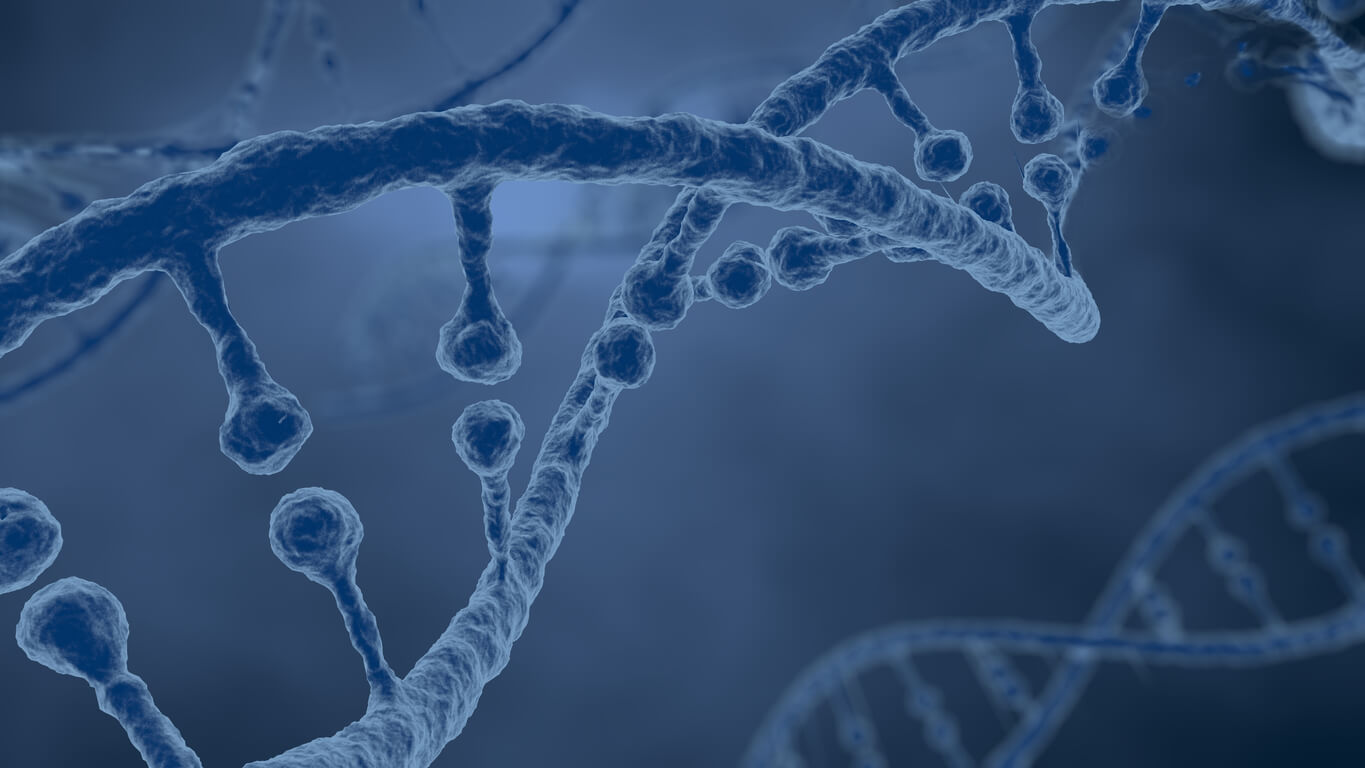
A rendering of helical DNA structures. Photo by onlyyouqj/iStock
By Hannah Feuer May 5, 2026
Murder investigators in Arizona are encountering a stubborn obstacle to solving a decades-old cold case involving an unidentified dead body: The woman’s Ashkenazi Jewish DNA.
In 1989, an unclothed dead body was found on the side of a highway in northwest Arizona. The woman was never identified, though small details offered clues about her life: red nail polish on her fingers and toes, faux diamond stud earrings, and a handmade floral blouse found under a nearby tree.
The woman appeared to have been beaten, found with a broken nose and possible hematoma on the left side of her skull, though the medical examiner did not determine a cause of death. An autopsy determined the woman was between 25 and 30 years old.
In 2021, authorities reopened the case and uploaded the woman’s DNA profile to genetic databases available to law enforcement, hoping for a breakthrough. Instead, they hit a wall.
“Investigators learned that the victim was 96% Ashkenazi Jew, which made it extremely difficult to trace her ancestry and locate family members,” the Mohave County Sheriff’s Office said in a statement.
Ashkenazi Jews who try to track down relatives through genetic testing are familiar with the problem that the sheriff encountered: DNA testing, usually a powerful tool for finding relatives, often does not yield usable results for them.
Adina Newman, a professional genealogist and co-founder of the Holocaust Reunion Project, which uses DNA testing to help connect Holocaust survivors and their relatives to lost family, says two factors explain why genetic testing has limited use for many Jews. One is what’s known as the founder effect, when a population can be traced back to a small number of ancestors — as few as 350 people in Ashkenazi Jews’ case. The other is endogamy, the practice of marrying within a community over many generations.
As a result, a person with 100% Ashkenazi DNA can have more than 200,000 DNA matches in popular genetic databases, according to Newman. From such a large pool, it can be difficult to pinpoint close relatives.
“Ashkenazi Jews are all DNA cousins. But am I going to find it meaningful in a [family] tree?” Newman said. “Mostly no. We’ve just kind of accepted that it convolutes things.”
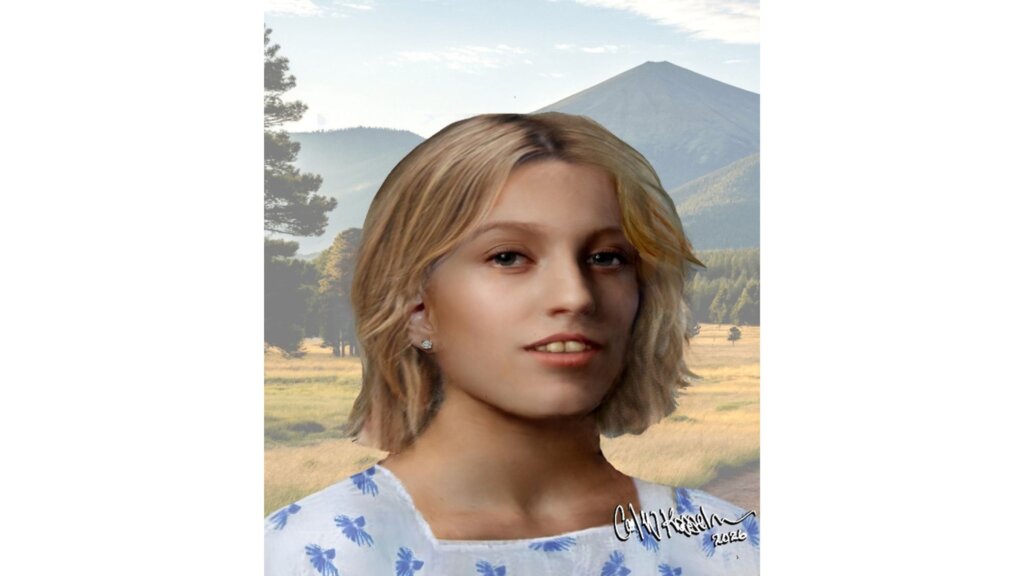
Investigators, however, aren’t giving up. The Mohave County Sheriff’s Office enlisted the help of the Investigative Genetic Genealogy Center at Ramapo College in New Jersey, which last week released an artistic rendering of what the woman may have looked like based on her remains.
“This doesn’t mean that cases of Ashkenazi Jews are impossible to solve,” David Gurney, director of the Investigative Genetic Genealogy Center, told the Forward. “It just is going to take a lot more effort.”
Jewish Jane Does
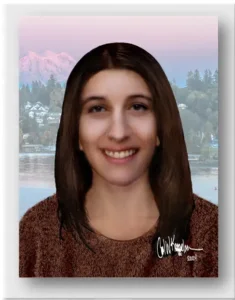
The 1989 case in Arizona is not the only time Ashkenazi DNA has posed a challenge in identifying remains. Another active case, an Ashkenazi Jewish woman whose dead body was found in 1981 in Olympia, Washington, remains unsolved.
Other cases have taken years to crack. In 2024, investigators working with the DNA Doe Project finally identified the body of a Jewish woman found murdered in a California vineyard in 2011 as Ada Beth Kaplan. It also took more than a decade to identify Mitchell Mendelson, a Jewish man whose body was found in a wooded area near his home in Lancaster, Pennsylvania in 2012.
In both cases, the deceased’s Ashkenazi DNA made the process more laborious for investigators, though DNA also eventually led investigators to be able to make the identifications.
To be sure, Ashkenazi Jews are not the only population that exhibits endogamy, which is also common among Pennsylvania Dutch communities, Icelanders, French Canadians and other tight-knit societies.
But the combination of Ashkenazi Jews’ genetic overlap and a complex historical record can make Jewish identification especially difficult cases to crack, Newman said.
For instance, in Newman’s own family, records changed from listing Vilna as being located in Russia, then Poland, then Belarus over a short period of time. But her family members hadn’t moved; the borders were changing around them. Last names in her family were also altered to sound more anglicized.
“You have to know these things. And it’s hard because a lot of genetic genealogists, even the best ones, are not familiar with that,” Newman said, “They need people who understand the Jewish genealogy aspect.”
Even when genealogists have such expertise, limited data can slow progress. Lingering trauma from the Holocaust has made some Jews hesitant to upload their DNA to public databases, Newman said.
Others have privacy concerns: In 2024, 23andMe settled a class-action lawsuit for $30 million in which customers accused the company of failing to notify customers with Ashkenazi Jewish heritage that they appeared to have been specifically targeted by hackers, who sold their information on the dark web.
Yet unless they have a search warrant, law enforcement agencies are constrained to cross-referencing DNA profiles with just two databases: GEDmatch and FamilyTreeDNA, which collectively host about 3 million profiles. By contrast, Ancestry.com has more than 29 million DNA profiles, according to its website, and 23andMe has roughly 15 million.
Ancestry.com and 23andMe users who wish to make their profile visible to researchers can upload their information to GEDMatch or FamilyTreeDNA for free.
“We always depend on members of the public taking consumer genetic genealogy tests to solve any case,” Gurney said. “That’s even more important in cases of endogamy here.”

Those challenges compelled Rabbi Mendel Super, who leads Chabad of Lake Havasu City in Mojave County, Arizona — about an hour’s drive away from where the woman’s body was found in 1989 — to spread the word about the case in the Jewish community. After Super learned of the woman’s Jewish ancestry, he contacted the local sheriff’s department to offer his help.
He’s since connected authorities with experts in Jewish genealogy and is publicizing the case on social media, hoping his Jewish network can help identify a relative.
“There’s millions of people who it could be, but there’s only a few million Jews in the world, and fewer in this country,” Super told the Forward. “So I think there’s got to be someone who knows something.”
Newman, too, sees broader participation as key. She encourages Jews to share their DNA profiles, noting that researchers view far less information than many expect — just the amount of shared DNA needed to construct family trees, not a complete genetic profile. People can even upload DNA profiles anonymously, she said, giving researchers the option to contact them only if there’s a notable match.
“These people deserve dignity, to have their names,” Newman said. “It could really be you, especially in the Jewish community. You could be the one that helps solve the case and gives us her name back.”

Hello, fellow Forward reader! I’m Joel Brown, a Forward reader and supporter for more than 15 years, and currently the chair of the board of directors.
I’m an avid Forward reader because it ticks so many of my essential boxes: excellent journalism, Jewish focus and diverse viewpoints. In today’s political climate, what I most appreciate is the Forward’s independence — made possible by the generosity of its membership.
The Forward is committed to bringing you unbiased, nuanced Jewish news. From my position as board chair, I see an exciting future as we expand our position as the definitive independent voice of contemporary American Judaism.
That’s why I’m paying it Forward, by matching $36,000 of reader gifts. It’s an investment in the Forward’s newsroom, to continue telling the American Jewish story with truth and independence.
— Joel Brown, Forward board chair
Support our mission to tell the Jewish story fully and fairly.