The boycott of Israel is increasingly targeting individuals
Nadav Lapid’s case was only the latest — and perhaps most confounding — incident in a growing trend

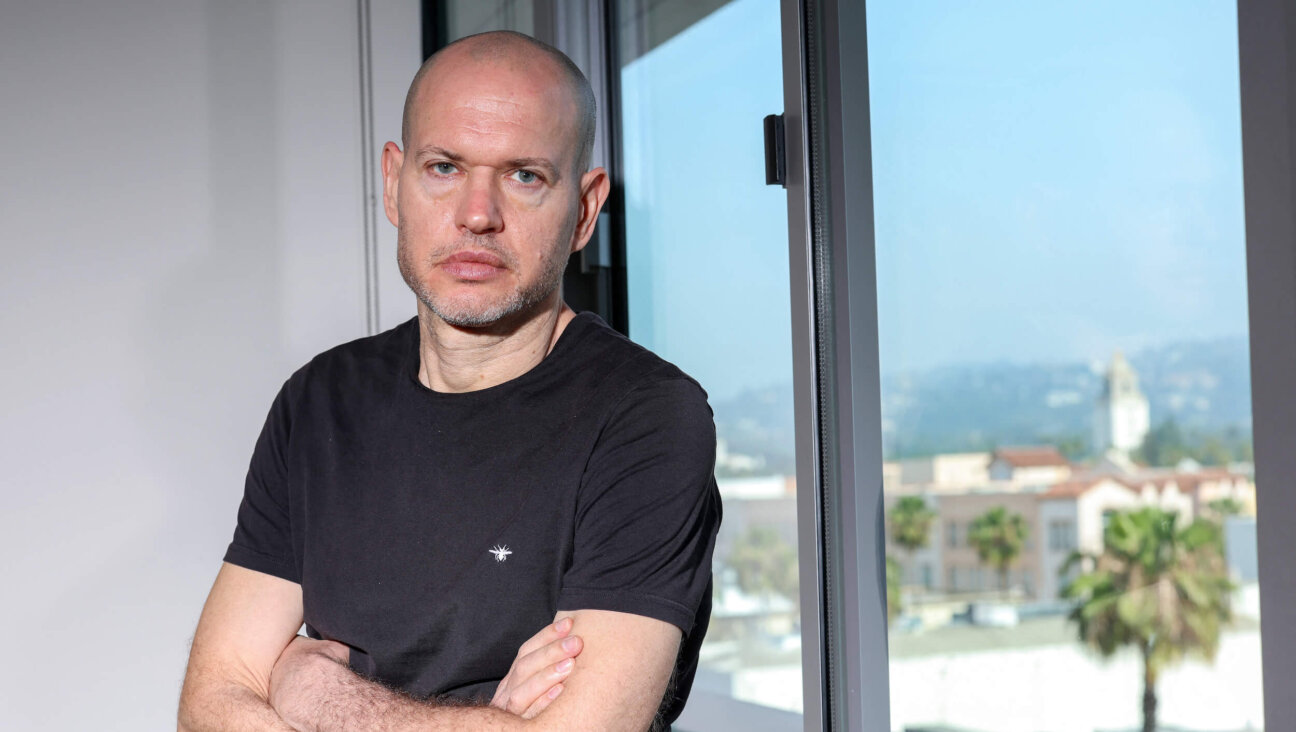
Nadav Lapid attends the “Yes” promotional event at UGC Cine Cite des Halles on September 12, 2025 in Paris, France. Photo by Marc Piasecki/Getty Images

By Arno Rosenfeld June 17, 2026
As Israel’s international pariah status grows, the movement intended to boycott and isolate the country is starting to target individual Israelis — including many with little or no connection to Israel’s actions, and in some cases those who are aligned with its international critics.
Organizers of the boycott, divestment and sanctions movement, which seeks to isolate Israel, have focused on organizations and companies that they contend support the Israeli state, whether or not they are located in Israel, while cautioning that “it does not call for or condone boycotts of individuals because of their Israeli or Jewish origin.”
But that doesn’t stop it from happening.
Nadav Lapid, an Israeli filmmaker and dissident living in France, was the latest victim of this trend. But it has also hit Israeli celebrities who have posted perfunctory statements of solidarity with the country, Israeli musicians with no controversial statements and Israeli chefs operating restaurants in the United States. Israelis have been assaulted for speaking Hebrew abroad, and Israelis studying at American universities have reported being ostracized by classmates.
R.F. Kuang, an American author, even faced backlash from fans for including an Israeli character in her latest novel.
Sometimes the Israelis who face opprobrium are genuine advocates for the country. Others are just Israelis who have expressed warm feelings toward their homeland. Deni Avdija, a star forward on the Portland Trail Blazers, is a prime example of this. He has not shared his political views about Israel or its actions in Gaza, once wrote “Am Yisrael Chai” on his sneakers and wrapped himself in an Israeli flag courtside after Oct. 7.
“I obviously stand for my country, because that’s where I’m from,” he told the Athletic. “I don’t really get into politics, because it’s not my job.”
He scoffed at “all this hate” from fans who act “like I’m deciding things in the world.”
***
The justification for this kind of targeting varies, but it centers on a few key arguments. One is a misunderstanding of the boycott movement and its demands. An Israeli Harvard graduate student recounted a classmate who requested not to work with the Israeli student because “they had pro-Palestinian politics that required them to avoid normal relations, such as collaborating on a school group project, with an Israeli.”
This is not what the BDS movement classifies as “normalization,” which it describes as Israelis and Arabs sharing a public platform together.
Other arguments for shunning Israelis raise thornier issues.
Two major claims center on the premise that Israeli Jews are uniquely complicit in their country’s human rights abuses. If you believe that Israel is a settler colony operating under an apartheid regime, then the country’s Jewish citizens are benefiting from this dynamic in ways that, say, Russian or Chinese citizens do not inherently benefit from their own government’s problematic actions.
And, more tangibly, Israel’s policy of mandatory service in the Israel Defense Forces means that most of its Jewish citizens serve in the military — helping the government maintain its policies toward the Palestinians regardless of their personal political views.
This can be distilled into a neat story of collective guilt — Israelis are all settlers on stolen land, and none of them are true civilians because they are either future or former soldiers — that was used by some extremists to justify Hamas attacking Israeli civilians on Oct. 7 and is used more casually to hound Israelis in the diaspora.

Some Israeli celebrities are sympathetic to those who expect answers from them about their stance on Gaza. “For many people to have me say something about that publicly is really important, like, ‘OK you’re from Israel what do you think about that?’” Noga Erez, one of Israel’s most popular musicians who has played multiple international tours, told the Associated Press two years ago.
But Erez has declined to share her own views, instead expressing a vague desire for peace.
This may be partly due to the social cost that Israelis can pay at home for speaking out abroad. Five years ago, Erez told a British magazine that “BDS did an important job in putting the spotlight on the situation” but that she hoped the movement would shift to “discourse and connection.”
After an outcry in Israel — where supporting the boycott movement is illegal — Erez hastened to insist that “I love Israel and do not support any kind of boycott of my people and my country.”
The incident underscored the relatively scant room in Israel for dissent over how the country treats Palestinians.
While Israeli Jews express plenty of disdain for Prime Minister Benjamin Netanyahu, only the tiniest fraction (1%) agree with the core contentions of anti-Zionist activists abroad that the country should be replaced with a Palestinian or binational state. And 82% support expelling the population of Gaza, while 76% agree that “there are no innocent people in Gaza.”
This is part of what happens when you have two ethnic or national groups engaged in a century of often vicious violent conflict. Seventy-one percent of Palestinians in the West Bank and Gaza recently ranked the humanity of Israeli Jews at a flat zero on a scale of one to 100.
But the point is that if you’re opposed to Israel’s existence on political grounds, the odds are quite high that you’re also diametrically opposed to the political views of most Israelis — something that is not true when it comes to American Jews.
That is a key distinction because even if one believes that Israel is an apartheid state that committed genocide against the Palestinians in Gaza, it should still be easy to avoid harassing American Jews with no connection to the conflict.
But almost all Israelis have a bona fide connection, meaning that whether you find it problematic to demand answers from Israelis likely depends on your view of the conflict itself.
If you accept, for example, that the IDF has committed repeated war crimes and is otherwise oppressing Palestinians, then the objections from Palestinian students at Columbia and other universities to being in class with Israeli veterans may sound reasonable.
On the other hand, if you understand the IDF to be the world’s most moral army that sought to avoid civilian casualties in Gaza, then any objection to working with Israeli veterans would smack of absurdity and perhaps antisemitism.
At the same time, the kneejerk tendency to assume that any Israeli is an enemy, solely based on their place of birth, can quickly slip into dangerous territory.
Lapid, the filmmaker, is perhaps the most absurd case of this. He has lived in self-imposed exile in France since 2021 and has accused his own government of “genocidal” actions but was nevertheless was by French activists after a film festival in Marseille named him to its panel of judges.
His supposed crime? Accepting funding from the Israel Film Fund for his movie Yes, a biting satire whose protagonist is recruited by a billionaire to write an anthem celebrating the mass murder of Palestinians in Gaza after the European Union’s cultural fund turned him down because they thought the film was too anti-Israel. This prompted 10 filmmakers to pull their projects from the festival.
“What exactly do they want? That I stop making films? Should I leave France,” Lapid asked Le Monde.
For many of Israel’s supporters, Lapid’s experience is proof that the demonstrators don’t make any distinctions between Israelis like Lapid — a longtime thorn in the government’s side — and a celebrity like Gal Gadot, the Wonder Woman actress who has said she wants to “help obtain worldwide support” for Israel.
“Nadav Lapid doesn’t understand that Israel’s haters don’t differentiate between us, no matter how much he tries to curry favor with them,” Miki Zohar, Israel’s culture minister, wrote on X. “He will always be, to them, a Jew from Israel.”
But Lapid himself, who bowed out of the festival voluntarily rather than fighting the boycott directly, found himself reassured by two letters of solidarity from hundreds of French film industry leaders.
“Whatever crimes their state may commit,” the first letter argued, “no one can be reduced to a passport.”
Did you know that only 2% of Forward readers donate to support our nonprofit newsroom? That 2% make it possible for millions to read the Forward without a paywall or subscription — removing any barriers to the full and fair Jewish story.
But while the Forward is free to read, it isn’t free to produce. Big stories — like deep dives into the antisemitism data, political scoops or reporting trips to college campuses — take months of research and fact-checking. All while we keep you informed of what you need to know each day.
— Rachel Fishman Feddersen, Forward Publisher & CEO
Support our mission to tell the Jewish story fully and fairly.