My father was in the Hungarian resistance. Orbán’s defeat reminds us why it mattered
Resistance is always possible, even in situations that seem impossibly bleak
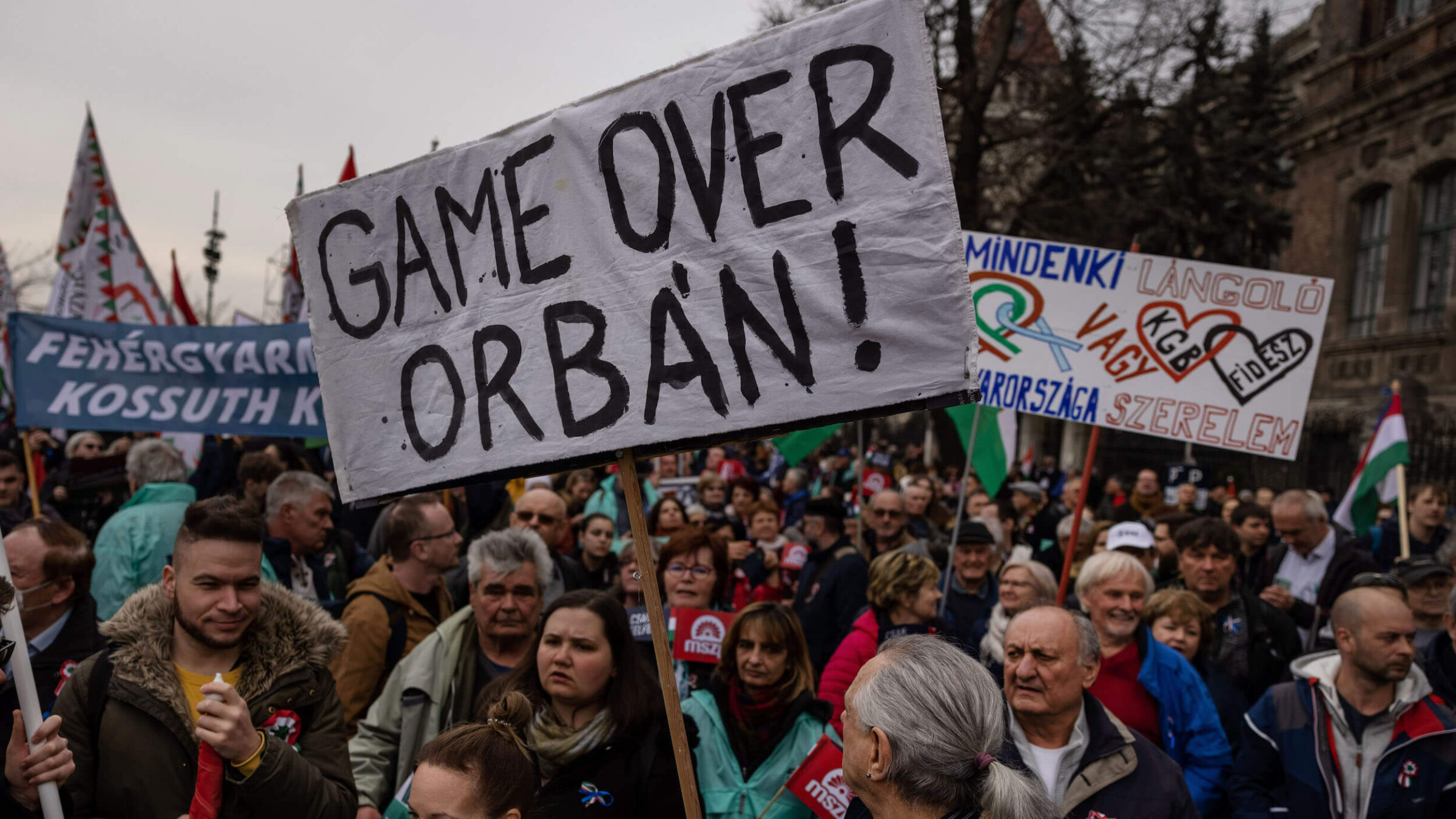
A protester holds an anti-Orbán placard during a demonstration in Budapest, Hungary on March 15, 2022. Photo by Janos Kummer/Getty Images

Jonathan Jacoby April 13, 2026
My father resisted the Nazis in Hungary. I thought of him — and how he would have rejoiced — when the Hungarian people voted out Prime Minister Viktor Orbán on Sunday, after 16 years of authoritarian rule.
Only a week before Hungarian voters made their choice, the outcome of the elections seemed far from certain. I remember watching in dismay last Tuesday, when Vice President JD Vance flew to Budapest to try to help prop Orbán up. There, he spread the same kind of blood-and-soil nationalism that has haunted the history of Hungary, and helped enable the horrors through which my father lived.
In his campaign rally with Orbán, Vance decried “far-left ideology” as “a shared threat from within that both of our nations face,” adding that its followers “view the very foundations of our shared civilization as illegitimate.” He also said that Orbán had kept Hungary from being “invaded” by immigrants.
The second-highest elected official in the United States, the country that gave so many Jews refuge after the Holocaust, embraced an ethno-nationalist leader who has suggested that Hungary’s “enemy” is a group who “does not believe in working but speculates with money; does not have its own homeland but feels it owns the whole world.”
What would my dad have made of that blatantly antisemitic moment?
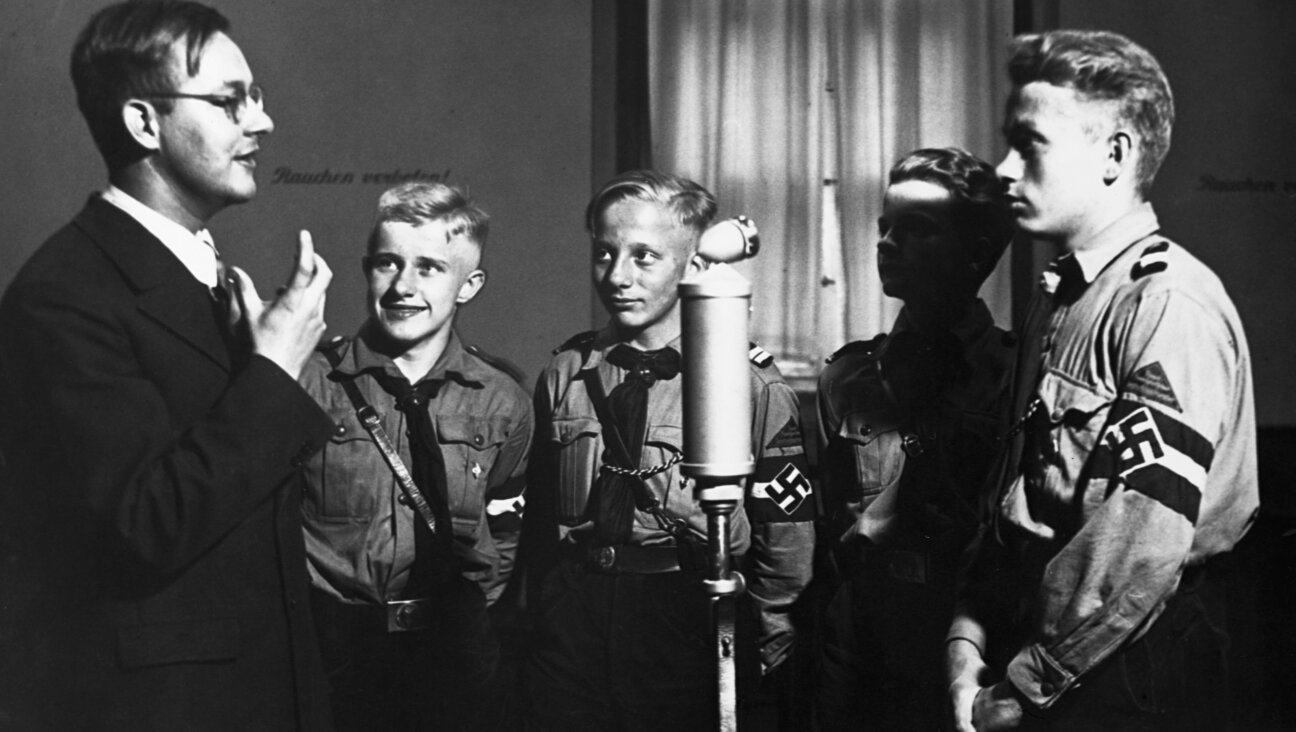
In 1943 and 1944, my father operated underground in Budapest and Bucharest. As part of an illegal religious Zionist youth movement, he helped organize rescue efforts for Jews under Nazi rule. He traveled to Hungarian villages, warning Jews of advancing German forces, and helped smuggle Jews from Hungary to Romania and onward to Mandatory Palestine.
My father lived in a time when ideas and rhetoric like those advanced by Orbán and Vance had existential consequences. He resisted a regime that hunted Jews and other minorities, stripped them of rights, and sent them to their deaths. For him, resistance meant survival.
My father risked everything — his safety, his freedom, his life. With Hungary’s model in front of us, all who live under the threat of authoritarianism today must ask: What will we risk?
While our reality is different from my father’s, we are nevertheless on a dangerous path — one we ignore at our peril. Across the globe, antisemitism is on the rise. Democracy, which has safeguarded vulnerable communities from fascism, is under assault.
Hungarians pushed back against rising authoritarianism on Sunday, ousting Orbán in a true feat of resistance. In doing so, they dealt a blow to the network of European far-right leaders who trade in antisemitic tropes and beliefs. And they rebuffed Vance and President Donald Trump — who dispatched Vance to campaign in Hungary, having closely allied himself with Orbán — and an increasingly influential circle of American intellectuals who promote antisemitism-tinged arguments about civilizational decline and hidden elite influence.
How should we respond to this normalization of antisemitic language and imagery?
My father’s story taught me not to take the easy route. It’s tempting to retreat, at least temporarily, into private life, focusing only on our families and communities. We may want to minimize what we see, to convince ourselves it isn’t as bad as it seems. We may grow insular or fatalistic.
But disengagement will only postpone the danger to a later date, leaving us exposed and unprepared. It is the opposite of resistance. My father understood this, and bet on the power of resistance and perseverance.
Real resistance — to authoritarianism, to antisemitism, to the forces that feed both — means using the tools of democracy that are still available to us: voting, organizing, and speaking out to hold leaders accountable. It means using our power as citizens to stand behind our values — just as the citizens of Hungary did yesterday.
Real resistance means rejecting dangerous ideas carried by far-right movements into positions of power, amplified by the highest offices in the land. Those same movements are simultaneously assaulting the very democratic institutions that have made America one of the safest places Jews have ever lived.
Real resistance means standing up when democratic norms are eroded; when Jews and other minority communities are cast as threats; and when governmental institutions employ rhetoric with unmistakable antisemitic resonance — all phenomena that unfolded in Hungary under Orbán, and are unfolding in the U.S. under Trump. It means standing in the way of unchecked power and opposing legislation and policies that limit constitutional liberties and academic freedom. It means strengthening the ties that bind us together — building alliances against all forms of hatred, between communities targeted for their religion, ethnicity, identity or beliefs. It means staying in coalition to fight for a strong democratic future, even when doing so can be uncomfortable.
Orbán, Trump, Vance and their fellow proto-authoritarians have bet that we will ultimately comply. With Orbán’s defeat, they have new reasons to fear that we won’t. That’s as it should be, and my father would be proud.
My father had every chance to escape the Nazis. But after each mission, he came back to rescue more. He never stopped fighting for a better future for his fellow Jews. Neither should we.

Hello, fellow Forward reader! I’m Joel Brown, a Forward reader and supporter for more than 15 years, and currently the chair of the board of directors.
I’m an avid Forward reader because it ticks so many of my essential boxes: excellent journalism, Jewish focus and diverse viewpoints. In today’s political climate, what I most appreciate is the Forward’s independence — made possible by the generosity of its membership.
The Forward is committed to bringing you unbiased, nuanced Jewish news. From my position as board chair, I see an exciting future as we expand our position as the definitive independent voice of contemporary American Judaism.
That’s why I’m paying it Forward, by matching $36,000 of reader gifts. It’s an investment in the Forward’s newsroom, to continue telling the American Jewish story with truth and independence.
— Joel Brown, Forward board chair
Support our mission to tell the Jewish story fully and fairly.