Liberal Zionists are under attack. A new book proves their work has never been more important
Ariel Beery’s ‘Being Israeli After the Destruction of Gaza’ gives voice to Israelis who are anguished — and still fighting
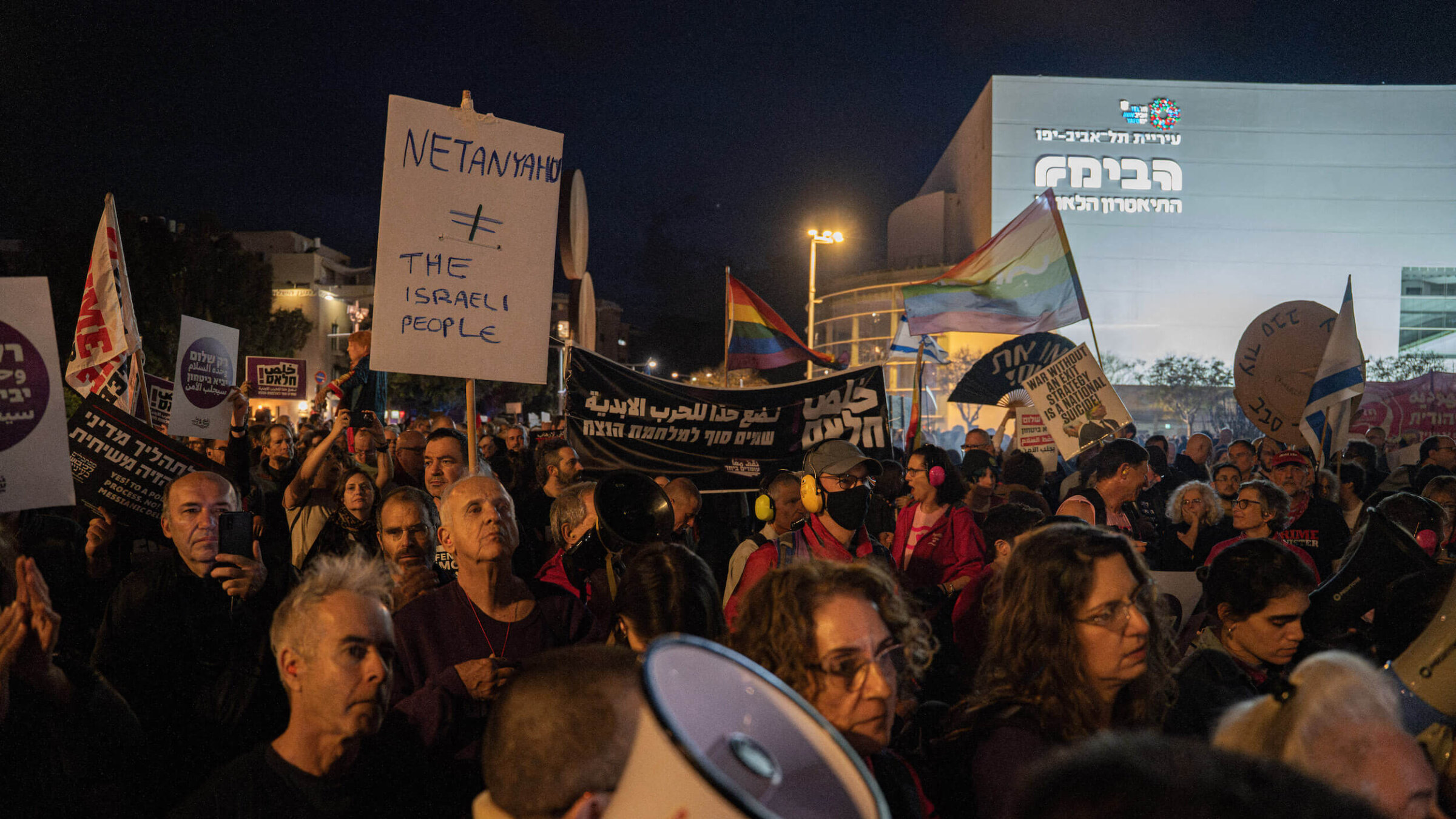
Israeli left-wing activists hold placards during an anti-war and anti-government demonstration in Tel Aviv, Israel, on April 11. Photo by Ori Aviram / Middle East Images via AFP / Getty Images

Senior Columnist Rob Eshman May 5, 2026
As much as American Jews may care about what happens in Israel, we’re in the bleachers, watching what Israelis are up to on the field.
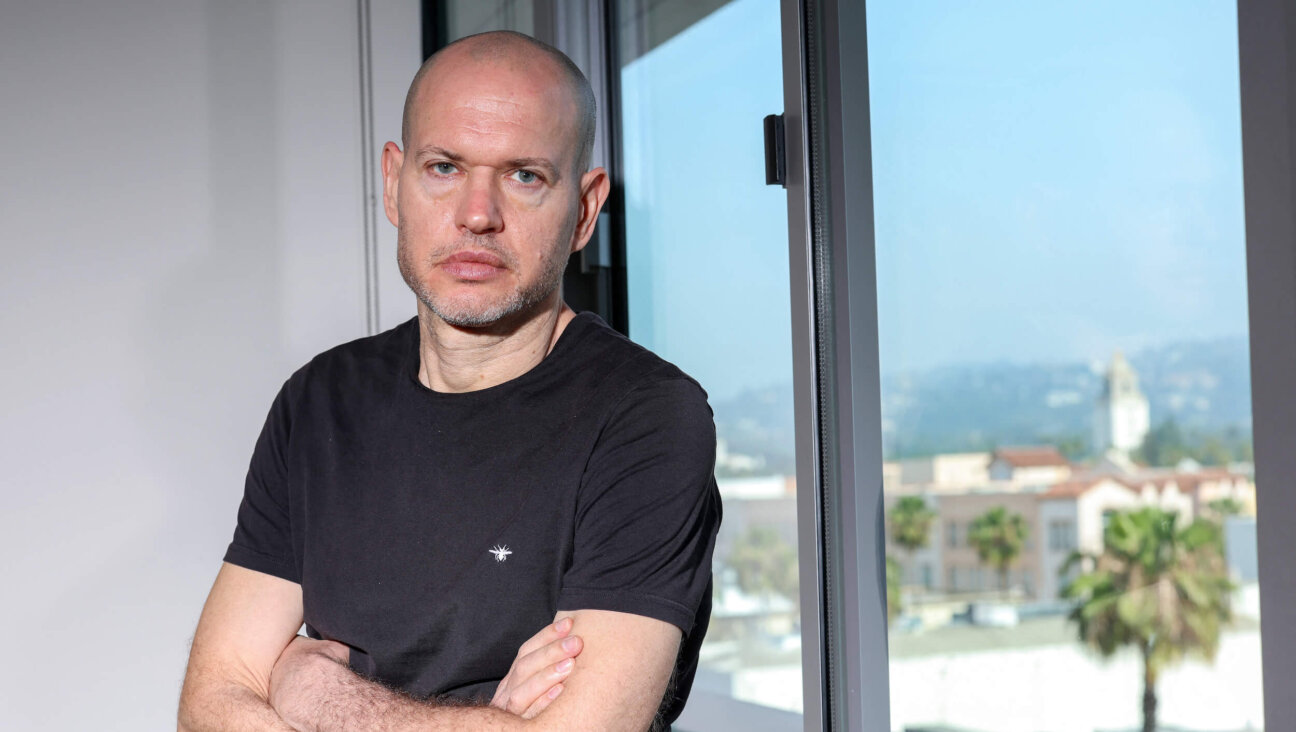
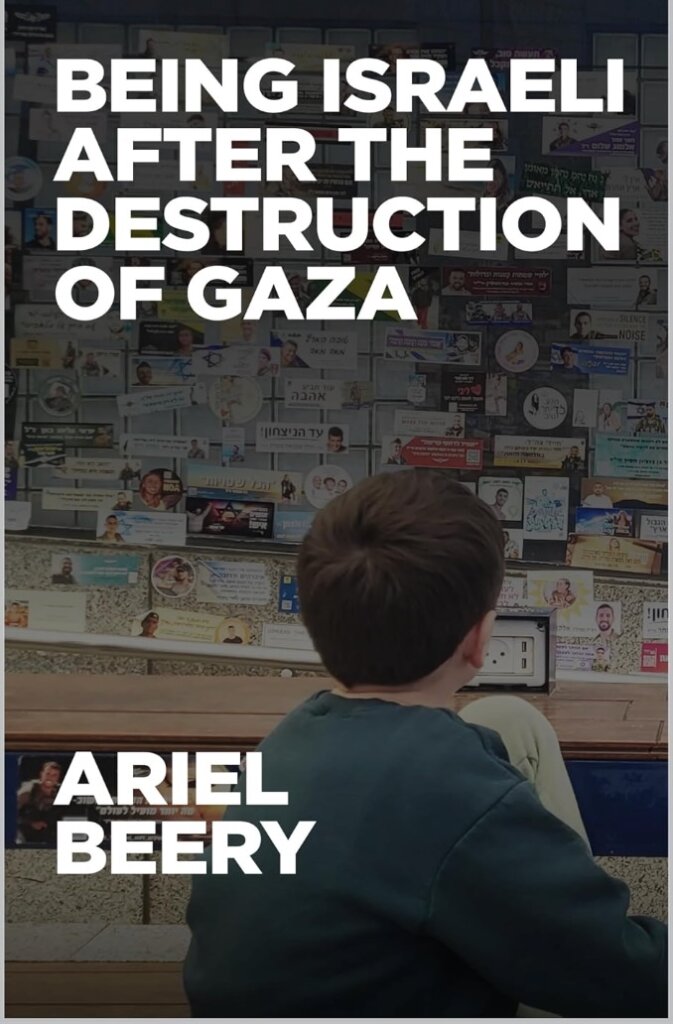
That’s what makes Ariel Beery’s new book, Being Israeli After the Destruction of Gaza, so timely and necessary. “I wanted to explain to the English-speaking world what we liberal democrats in Israel are experiencing,” Beery wrote me in an email, “and give voice to liberal democratic Israelis that may help them speak to their global friends about the present moment.”
The book is based on long interviews that Beery — a 46-year-old American-born tech and social entrepreneur who has lived in Israel since he was 19 — conducted with 11 thoughtful, articulate Israeli Jews. All of them, like him, struggle with the terror and carnage of Oct. 7, Israel’s conduct in Gaza, and the ongoing challenges to Israel’s democracy — but still maintain that Israel must be a secure home for Jews and a democracy for all its citizens.
The book is a lesson in what liberal Zionism looks like within Israel, illustrating pragmatic approaches to the Israeli-Palestinian conflict at a time when, in the United States, the loudest pro- and anti-Israel voices tend to drown out those that are most rational.
Beery’s book is a lifeline, because it proves American Jewish liberal Zionists are not alone — and neither are our Israeli counterparts.
The politically homeless liberal Zionist
American Jews are deep into a post-Gaza War reckoning.
Liberal Zionists like myself are politically homeless. The left writes us off as apologists for what they call a genocidal ethnostate, and the right is either embracing full-bore Candace Owens-style antisemitism or treating Palestinian suffering as a non-issue.
Mainstream American Jewish organizations, which were once the standard-bearers of liberal Zionism, have largely remained mum about Gaza, Prime Minister Benjamin Netanyahu’s assault on democracy and the pogroms that West Bank Jews carry out against their Palestinian neighbors.
That sense of homelessness can make us feel more disconnected from Israel. Even many Israelis who share the traditional liberal Zionist vision of coexistence have, post-Oct. 7, rejected compromise with Palestinians.
But we are not alone. We share, like so many of the people Beery spoke with, a post-Oct. 7 shattered faith in Israel’s government and its military.
“It felt like the murder-suicide of your parents,” Alina Shkolnikov, the former head of the Russian desk at the IDF spokesperson unit, told Beery. “You found out that the two entities you trusted most all of your life, and gave service to — that they were nothing.”
Nor are we alone in the sense that the war that came after was both just, and criminal.
“Gaza is our Dresden,” the journalist Bernard Avishai told Beery. “World War II was a just war, but the firebombing of Dresden was still a war crime. The fact that the war was just doesn’t mean that everything done in the prosecution of the war was just. Those are two different questions. And we have to be able to hold them both.”
By mid-2024, Avishai and others in the book point out, Hamas was militarily crippled and Hezbollah neutered. Where was the justification to continue? “The surgery was done. What we needed was immunotherapy. And instead of immunotherapy, the government kept cutting.”
‘I’m the Free French’
As in the U.S., Israeli liberal Zionists are in despair over the country’s lack of political leadership.
“What does it mean, at the level of consciousness, for a state that says I don’t fix things, I just live from crisis to crisis?” said Yau Levy, a tech entrepreneur. “No Palestinian state, no concessions, no political process, no day-after plan.”
And yet none of the interviewees have given up.
“The mindset I have is: I’m the Free French,” said Aliza Inbal, a former diplomat who served as a speechwriter for the late Prime Minister Yitzhak Rabin. “The battle for an enlightened Israel, whatever Israel may look like in the future, is not something that’s going to be won in a year or two. But we have to fight the fight.”
That sentiment encapsulates the big difference between the handwringing here in the U.S. — where Jews either live within a static fantasy of their preferred Israel, or are free to wash their hands of it for good — and there. It’s apt that Beery’s title wryly echoes that of Peter Beinart’s Being Jewish After the Devastation of Gaza, which became a lightning rod for asserting that Zionism itself is the problem, reflecting the growing American anti-Zionist movement. American Jews have the privilege of engaging in theoretical conversations; Israelis have no choice but to believe in a better future, and work to make it happen.
The possibility of a better future sounds pie-in-the-sky given the facts on the ground. Hamas is still a major force in Palestinian life. Younger Israelis, according to the most recent poll, have shifted right. The massacre of Oct. 7 convinced many Israelis once open to compromise with the Palestinians that coexistence is for suckers.
But there are 14 million people between the Mediterranean and the Jordan River, and nobody is going anywhere. There is no military solution. There is only finding a way to live together fairly, or apart.
“I don’t expect the Palestinians I work with to be anything other than Muslims who, at the end of the day, might want us to leave,” Meredith Mishkin Rothbart, who works on Arab-Jewish civil society initiatives, told Beery. “But the people who work with me, as much as they would like me to leave and get out of their face and even if they believe we should never have come here to begin with, they’re choosing peaceful means to try to fix it and come to a new reality. Just like I am.”
The question Israel’s leadership refuses to answer, Yau Levy said, is “Not what we oppose, but what do we actually want? What are we building toward? What is the positive vision that justifies the sacrifice?”
American Jews don’t really have to answer that question. They can drift away from thinking about Israel when it gets too ugly, or cheerlead as Israel’s most retrograde politicians destroy it from within. But Israelis cannot opt out, not out of the country where they live, nor out of its demographic realities. Their hopes for their future, and their children’s future, are bound to striving for a better outcome.
The asymmetry should give us humility — and spine. If Israel’s liberal Zionists haven’t given up, neither should we.

Hello, fellow Forward reader! I’m Joel Brown, a Forward reader and supporter for more than 15 years, and currently the chair of the board of directors.
I’m an avid Forward reader because it ticks so many of my essential boxes: excellent journalism, Jewish focus and diverse viewpoints. In today’s political climate, what I most appreciate is the Forward’s independence — made possible by the generosity of its membership.
The Forward is committed to bringing you unbiased, nuanced Jewish news. From my position as board chair, I see an exciting future as we expand our position as the definitive independent voice of contemporary American Judaism.
That’s why I’m paying it Forward, by matching $36,000 of reader gifts. It’s an investment in the Forward’s newsroom, to continue telling the American Jewish story with truth and independence.
— Joel Brown, Forward board chair
Support our mission to tell the Jewish story fully and fairly.