A Witness To His Time

By A.J. Goldmann May 5, 2006
‘A filmmaker must be a witness of his times,” said great French director Jean-Pierre Melville, widely acknowledged as the grandfather of the French New Wave, in an interview about his 1969 movie, “Army of Shadows.” The film, a gloomy existentialist set piece of espionage that details the heroism of French partisans in the face of certain defeat, is currently having its long-overdue American premiere in a limited engagement at New York’s Film Forum.
In addition to being a neglected masterwork by one of the world’s major filmmakers, “Army” is one of the first cinematic depictions of an occupation that left a stain on the French national consciousness. For Melville — who was born Jean-Pierre Grumbach to a Jewish family in Alsace and was himself a member of the Resistance — the film had profound personal significance. As a veteran of Free France, he wanted to pay tribute to the brave men and women whose courage in the face of occupation was repaid with death. And as a French Jew, he felt a certain sense of duty to collapse the myth of a mass unified front against the Nazi occupation. When the film first opened in France, it generated weak box-office receipts and mixed critical reaction, with certain critics accusing Melville of making “Gaullist film art” and others of portraying the resistance fighters like gangsters.
“Army of Shadows” is singular in Melville’s oeuvre as a document of the artist’s experience: “For the first time in this film I show things I have known and experienced,” he wrote in the volume “Melville on Melville” (Secker and Warburg, 1971). Still, Melville also stressed that the film was not to be taken as the whole truth. For instance, he claimed he had no intention of making a film about the Resistance. Perhaps in his determination not to make a “picturesque” film about the war, the finished product verges on abstraction. Melville called it “a film which wasn’t intended to be abstract, but happened to turn out that way.”
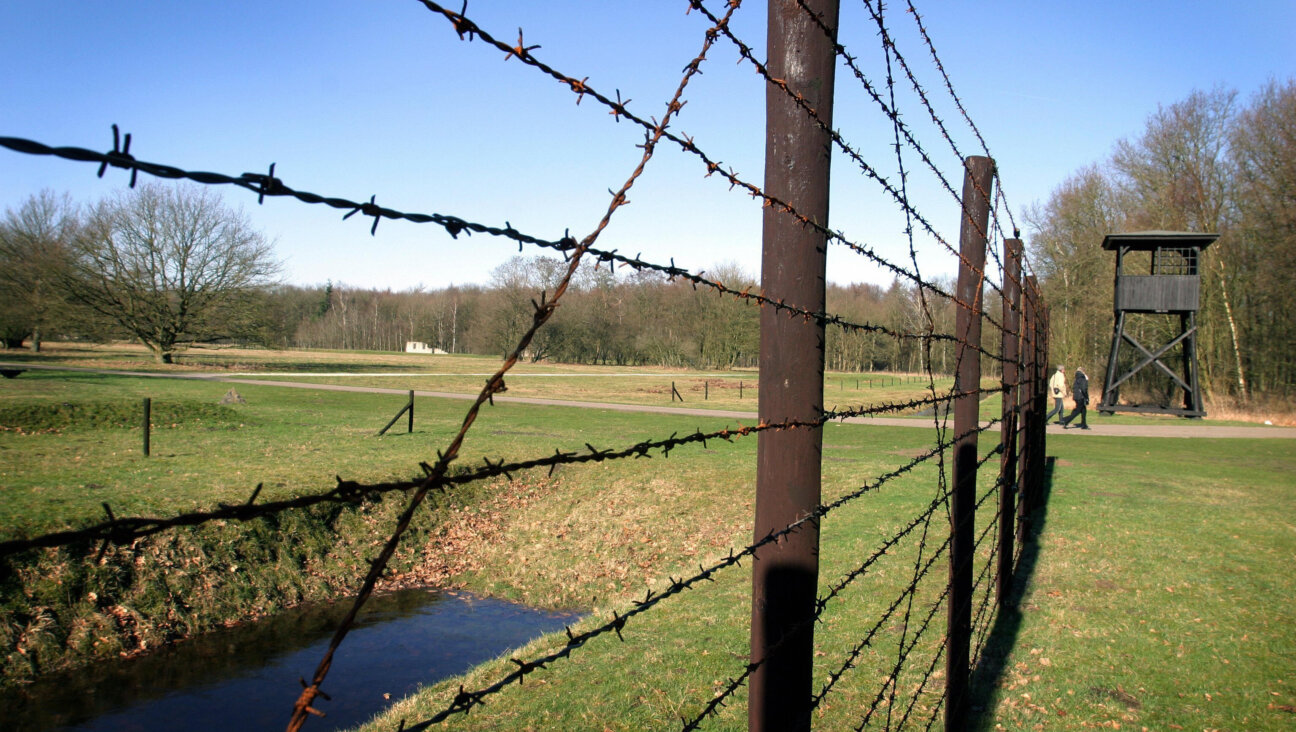
“With one exception — the German occupation — I excluded all realism,” he said. This shows in opening scenes, where the main character is interned briefly in a French concentration camp. Melville filmed those scenes in a former concentration camp that had been partially reconstructed for the film. But outside of this commitment to historical accuracy in portraying the occupation, he did not aim to make a movie about the French resistance because, as he claims, the France of 1969 was not ready for such a film.
At the same time, however, Melville articulated the fascination with the World War II era that would occupy some of the brightest lights in French film of the emerging generation throughout the 1970s and ’80s. As he writes in “Melville on Melville”: “When I think of everything that happened in those days, I’m amazed that the French don’t make more films about the period.”
A.J. Goldmann is a writer living in New York.
This is a moment of great uncertainty. Here’s what you can do about it.
We hope you appreciated this article. Before you go, we’d like to ask you to please support the Forward’s independent Jewish news. All donations are still being matched by the Forward Board - up to $100,000 until April 24.
This is a moment of great uncertainty for the news media, for the Jewish people, and for our sacred democracy. It is a time of confusion and declining trust in public institutions. An era in which we need humans to report facts, conduct investigations that hold power to account, tell stories that matter and share honest discourse on all that divides us.
With no paywall or subscriptions, the Forward is entirely supported by readers like you. Every dollar you give is invested in the future of the Forward — and telling the American Jewish story fully and fairly.
The Forward doesn’t rely on funding from institutions like governments or your local Jewish federation. There are thousands of readers like you who give us $18 or $36 or $100 each month or year.
Support our mission to tell the Jewish story fully and fairly.