A farewell to Hampshire College, site of my Yiddish awakening
For the Forward’s archivist, the 1980’s in Amherst, Massachusetts, was a little like ‘Yentl’ come to life
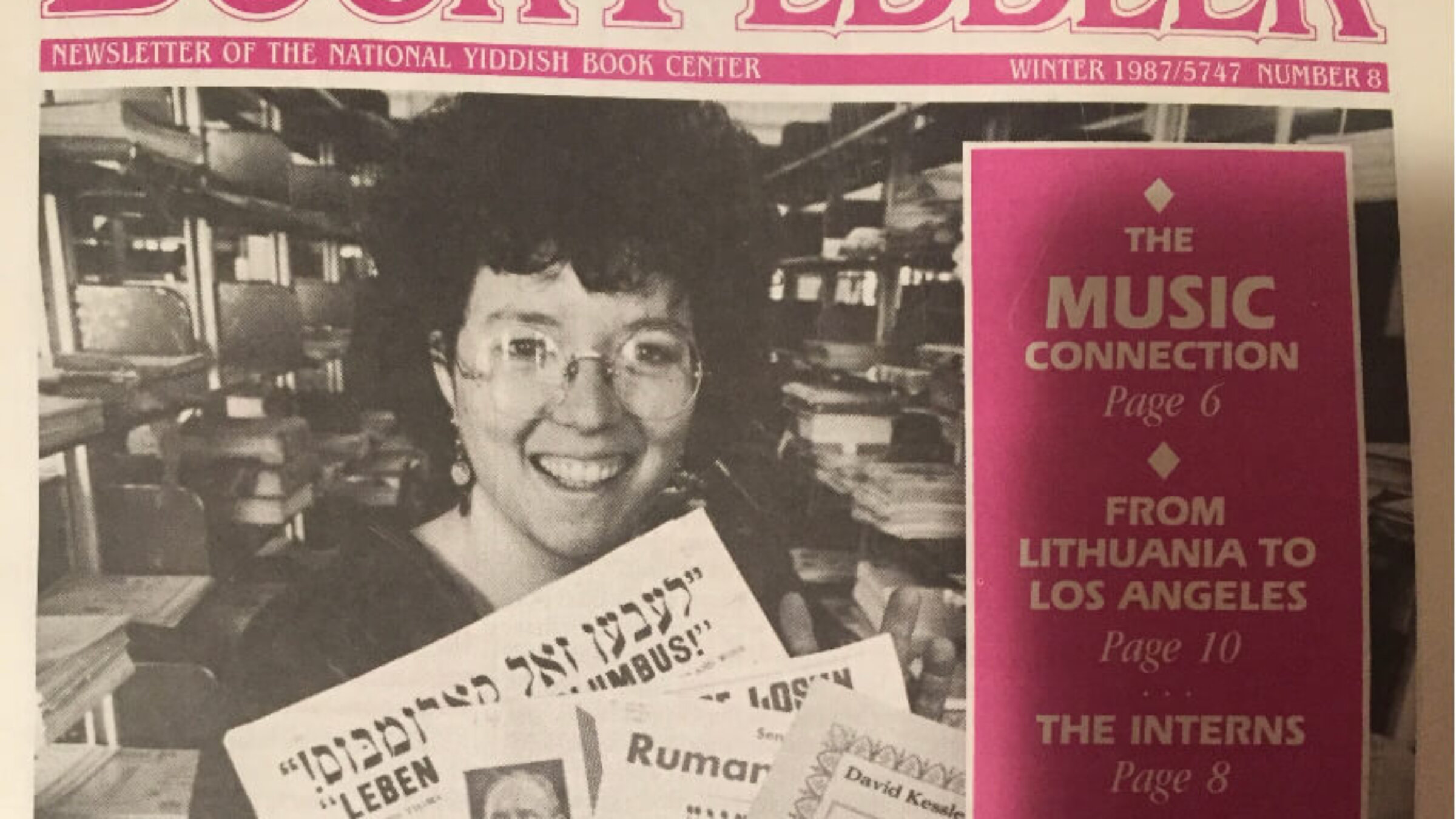
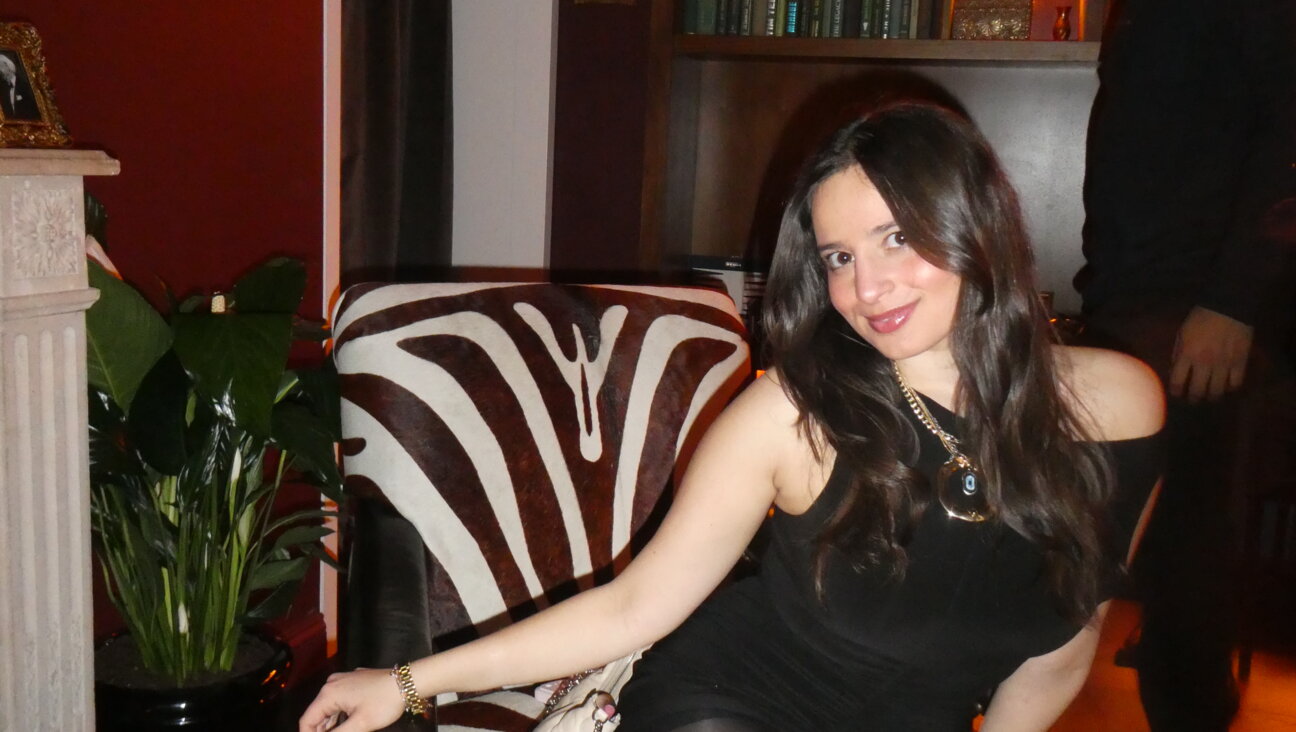
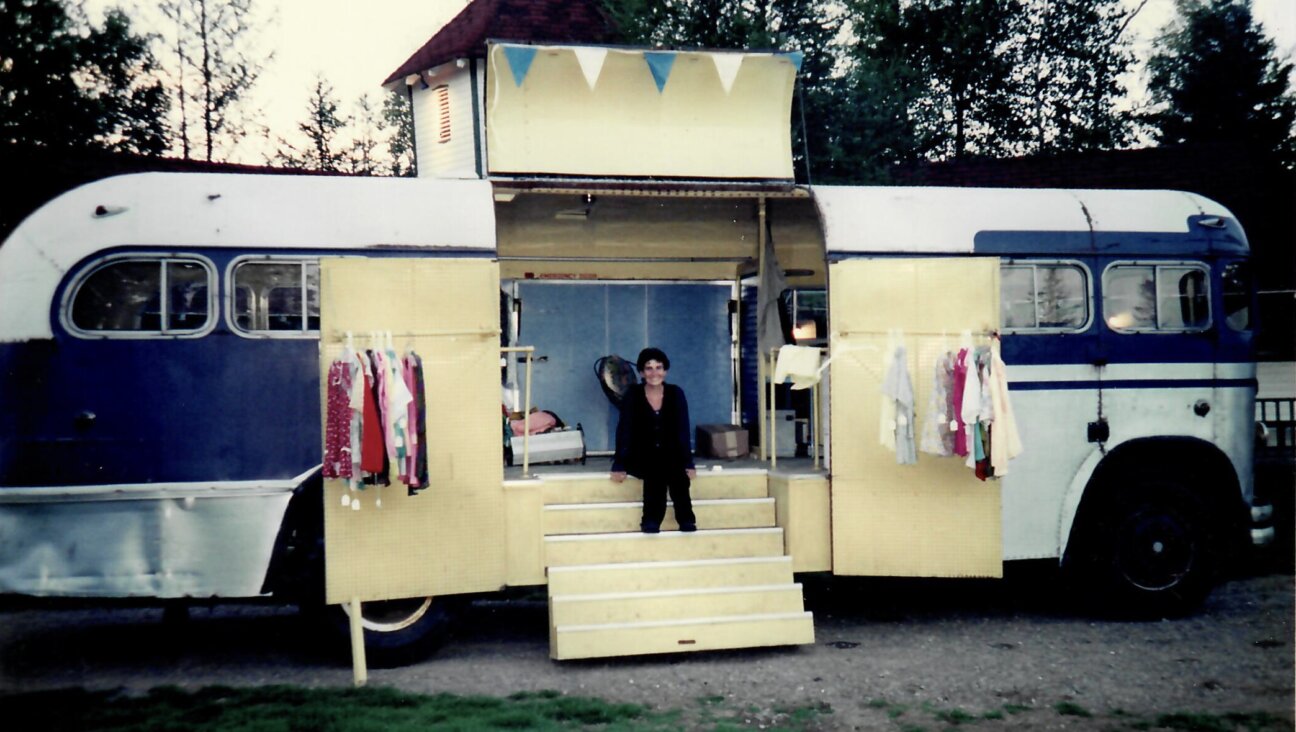
The author makes an auspicious debut on the cover of ‘The Book Peddler.’ Courtesy of Chana Pollack

By Chana Pollack April 15, 2026
Zay gezunt Hampshire College. That’s where as an undergrad student worker, I first studied Yiddish at the OG Yiddish Book Center of Amherst, Massachusetts, down the road from the genteel Lord Jeffrey Inn, across the street from uber-sensitive poet lady Emily Dickinson’s alte heym.
In nearby Holyoke, in an old mill turned Yiddish book storage loft, away from the genius of Dickinson’s dybbuk, I earned my way shelving the Book Center’s staggering amounts of the collected works of Sholem Aleichem — most likely purchased as a subscriber premium by turn of the century Forverts readers — and only surpassed by the unspeakable numbers of Yiddish volumes of Guy De Maupassant. I hoisted those onto shelves as well while getting educated about Nico and the Velvet Underground which blared from speakers. Back in the 1980’s that was multitasking.
And dayge nisht, no worries — I got my klezmer awakening there too, via a Walkman and audio cassettes while laboring as a photo history slide librarian for my advisor and favorite professor, filmmaker Abraham Ravett, who is set to retire next month (can you retire if your workplace closes?).
Splayed out across acres of stunning apple orchards that once belonged to the Stiles family, Hampshire College had neither a Hillel chapter nor a Chabad nor any organized sports nor fraternities — but there was a coed sauna, plenty of rolfing on the snow outside said sauna, a successful student run food coop, an acclaimed ultimate frisbee team and a beloved outdoor program that led to my first heron sightings just like in the movie On Golden Pond.
It also had Len Glick, Elvis’ former induction physician who co-taught modern Jewish history, along with his younger historian colleague Aaron Berman, whose office door was anointed with a poster that offered a Marxist view of baseball. It was 1984 and I was hot off seeing Streisand’s film version of Yentl. I’d polished off most of Bashevis’ tomes back home, memorized my bubby’s photo album of Eastern European Jewry as envisioned in Visniac’s A Vanished World, and collided into Marlene Booth’s documentary about the Yiddishists of Raananah who took up space in an audacious dream of a utopian summer community in Orange County, New York. Tayere Leyener, dear reader, that’s all it took.
I knew my final paper was going to be about women and Yiddish. Well, I recall Len saying, if you want to investigate Bashevis’ inspiration for his Yentl and research women writers and women’s lives in Yiddish, you’re going to have to learn Yiddish; there isn’t much about that available in translation. Why don’t you go over to the Yiddish Book Center, he continued, and talk to them. And just like that, I found myself on the top floor of an old elementary school in Amherst, spending evenings learning Yiddish and my days trying to grasp enough of it to complete my assignment.
I’d love to tell you that just like Yentl, I too spent hours bent over tomes, deep in study, but as previously disclosed, Hampshire had much to distract and much to offer. And besides, I had books to shelve, boxes to unpack and roads to travel, joining the center’s trips to pick up YET MORE Yiddish books. My mazel was that Hampshire hosted the Book Center’s first summer seminars. Once longtime staffer Frieda Howards and I finished inspecting attendees’ dorm rooms, making sure the beds had hospital corners, I was warmly invited to attend lectures.
Hampshire hosted artists and activists like Yippie founder Abbie Hoffman. When Hampshire alum and Yiddish Book Center founder Aron Lansky talked about him, he highlighted all the Yiddish influences in Hoffman’s Steal This Book, as well as the Yiddish-inflected tensions of the Chicago 7 trials. All this came to a head when I met Yiddish lesbian poet, child survivor and hero to Jewish feminists Irena Klepfisz. A Bundist descendant, keeper of the flame, she — vu den — called a hastily gathered group into action. If we wanted Yiddish women’s writing to be translated, we were the translating liberators we were waiting for, so to speak. It was on us.
Tayere leyner/dear reader, I could, like so many Yiddish authors, go on in depth without so much as a break for a comma or a paragraph, such was the depth of my mazel at Hampshire. Ok, a bisl more. There was the weekend trip with Lansky and local poet and Book Center staffer Gene Zeiger to the Newport Folk Festival to hear Joan Baez sing. There was the summer Yiddish genius Naomi Seidman was a fellow at the Book Center — thanks to Seidman, that was my summer of Nico, the Velvet Underground, of reading Ginsberg’s “Howl,” and much much more. That was the summer I interned for the filmmaker Marlene Booth who was making a film about that Yiddish newspaper everyone talked about, the one I recalled picking up for my bubby. I spent time in my cooperative household on campus, bent over an audio transcription machine, typing out interview after interview with Forverts readers, spellbound by their love for it and activism on its behalf as it fell on hard times.
And reader, though Hampshire will likely close for good, you and I now know that if not for Hampshire College, where now upon a nice parcel of that former apple orchard sits the Yiddish Book Center in all its well earned koved, I and many like me, would not spend our days bending over our morgue of Forverts photos, back issues and more, reaching back over time to keep remembering our past and making it available for future generations.
Editor’s Note: The Yiddish Book Center is an independent non-profit and its operations will not be impacted by the closure of Hampshire College

Hello, fellow Forward reader! I’m Joel Brown, a Forward reader and supporter for more than 15 years, and currently the chair of the board of directors.
I’m an avid Forward reader because it ticks so many of my essential boxes: excellent journalism, Jewish focus and diverse viewpoints. In today’s political climate, what I most appreciate is the Forward’s independence — made possible by the generosity of its membership.
The Forward is committed to bringing you unbiased, nuanced Jewish news. From my position as board chair, I see an exciting future as we expand our position as the definitive independent voice of contemporary American Judaism.
That’s why I’m paying it Forward, by matching $36,000 of reader gifts. It’s an investment in the Forward’s newsroom, to continue telling the American Jewish story with truth and independence.
— Joel Brown, Forward board chair
Support our mission to tell the Jewish story fully and fairly.