The visionary Jewish poet who survived the Holocaust but not its aftermath
Anna Arno’s intelligent and intricate biography tells the tragic story of Paul Celan
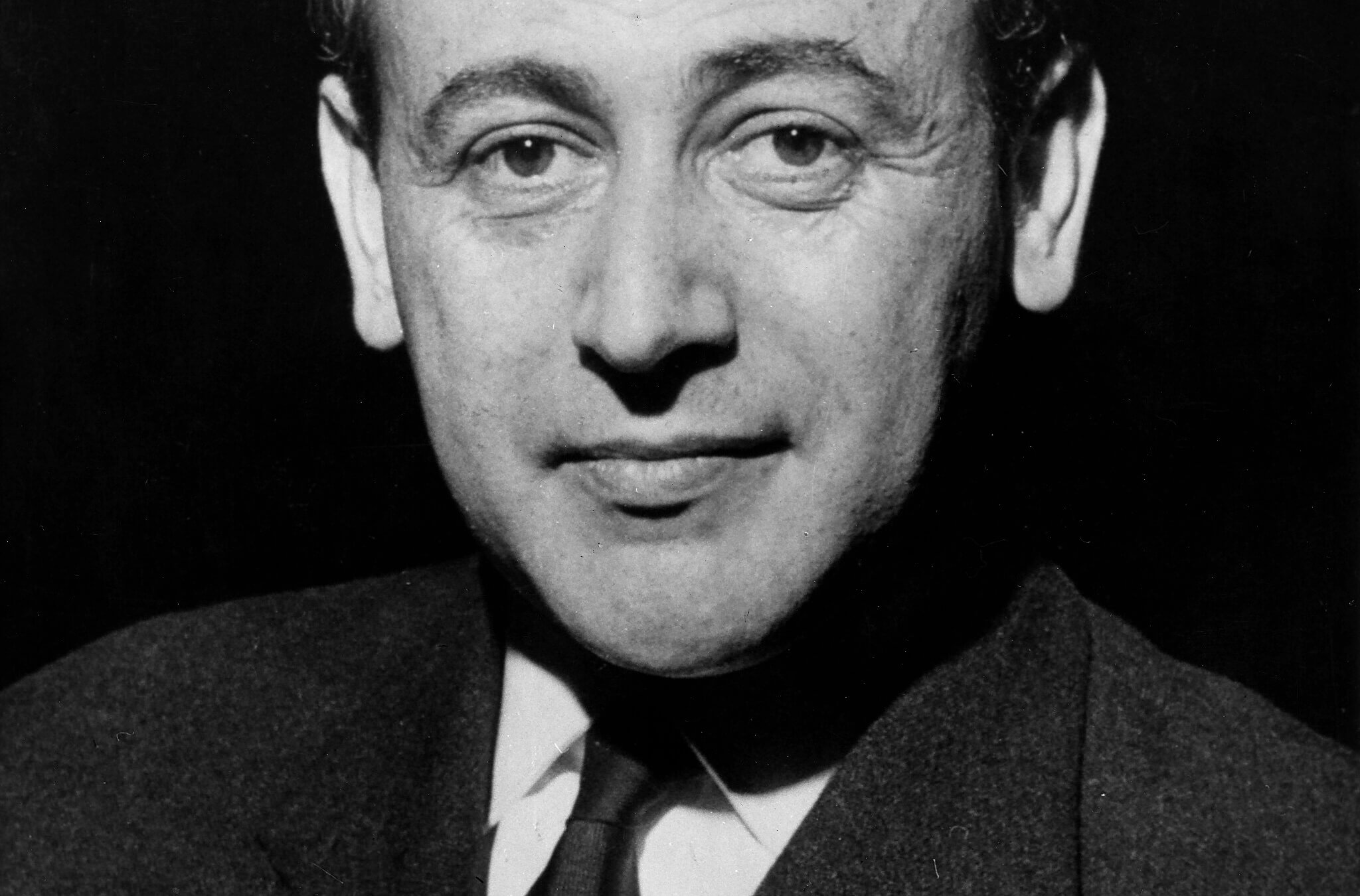
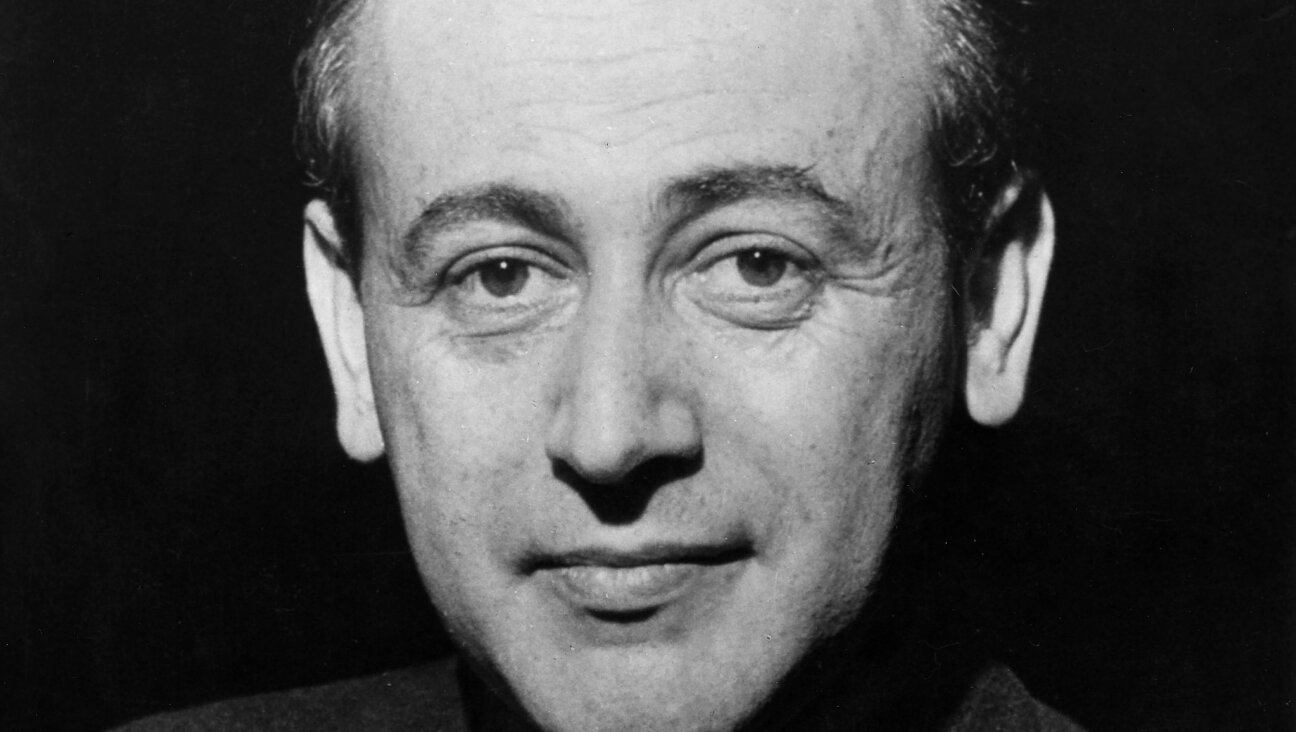
Paul Celan, circa 1962. Photo by Getty Images
By Julia M. Klein June 8, 2026
Paul Celan: A Life
By Anna Arno
Translated by Soren Gauger
Belknap Press/Harvard University Press, 416 pages, $35
During a 1969 poetry reading in Israel, Paul Celan’s audience requested “Deathfugue,” his most famous poem. With its hypnotic images of death as “a master from Deutschland,” prisoners drinking the “black milk of dawn” and smoke rising to “a grave in the clouds,” it remains one of the most powerful artifacts of the Holocaust.
But like a rock star weary of endlessly repeating his greatest hits, Celan declined. Instead, he offered other poems, scorned by some commentators as “hermetic, esoteric, divorced from reality.”
So we learn from Anna Arno’s intelligent, intricate biography, Paul Celan: A Life, ably translated from the Polish by Soren Gauger. Interweaving literary criticism with Celan’s life story, Arno quotes liberally from Pierre Joris’ English translations. Even so, she can’t quite do the work justice. In translation and wrenched from their poetic context, Celan’s innovative verses, credited with a radical remaking of the German language, come across as cryptic and impenetrable.
Arno covers Celan’s schooling, wartime experiences, work history, travels, friendships, psychiatric ordeals and overlapping romantic interests, at times departing from strict chronology. Though defensible, the narrative strategy renders the book somewhat convoluted.
One thread is Celan’s intermittent, decadeslong involvement with the accomplished Austrian poet and novelist Ingeborg Bachmann. That relationship, more passionate and enduring for Bachmann, preceded his mostly happy marriage to the French artist Gisèle Lestrange and continued during it. In an odd twist, Bachmann and Lestrange, bonded by both their love for Celan and their anxiety about his well-being, developed “a kind of impossible sisterly friendship.”
Despite Celan’s devotion to his wife, “other women,” Arno writes, “were always drifting through his life.” A chapter toward the end of the biography details some of Celan’s most important romantic relationships. Other chapters focus on his inventiveness as a translator and his worsening mental illness.
Celan was born Paul Antschel in 1920 in Czernowitz, Romania (officially Cernăuți, and now Chernivtsi, Ukraine) on the fringes of the recently defunct Austro-Hungarian Empire. The French-sounding Celan is a pen name, an anagram of Ancel, a Romanian version of Antschel.
Celan’s parents were German-speaking Jews, and German was Celan’s native language. But he was a polyglot, a talent that shaped his poetry and enabled his career as a translator. Along with Romanian, in which he wrote some early poems, and French, the language of his postwar life in Paris, he learned Russian (under Soviet occupation) and English. He had at least “a passive knowledge of Yiddish,” picked up enough Hebrew for his Bar Mitzvah and studied Italian, Latin and Greek. “His intellectual ease gave him a sense of superiority,” Arno writes.
World War II interrupted Celan’s medical studies in France, and back home he enrolled in Romance language courses. The Soviet occupation was brutal but, for Jews, the Romanian fascist regime that succeeded it was worse. Celan’s parents were deported and died in a Nazi labor camp. Celan, separated from them, survived forced labor, but remained “wracked with grief” over his parents’ fate. He would describe “Deathfugue,” written in 1945, as his mother’s epitaph and grave. The poem may have influenced Theodor Adorno, who famously described poetry after Auschwitz as “barbaric,” to modify his views.
After leaving a ruined Czernowitz for Bucharest, where Celan translated, wrote poetry, flirted with Surrealism and “bounced from one relationship to the next,” he traveled to Vienna. “Young, dashing, full of charm,” he eventually settled in Paris and became a naturalized French citizen. But he chose German as his poetic language, despite the emotional dissonance that entailed.
Over the years, he traveled to Germany to read his work and accept prizes. In the process, he developed relationships with leading postwar German writers, including Heinrich Böll, Hans Magnus Enzensberger and Günter Grass. But the 1950s were a tricky time. “He could have crossed paths with a murderer at every step,” Arno writes.
Celan recoiled viscerally at what he saw as persistent antisemitic currents in German culture, which hadn’t yet reckoned with the magnitude of Nazi crimes. He interpreted bad reviews as instances of antisemitism, and Arno suggests that he wasn’t always wrong.
Even more traumatic were accusations of plagiarism leveled against him by Claire Goll, the widow of Yvan Goll, whose poetry he had translated. Arno describes the charges as both malicious and baseless, and “probably an act of revenge for her spurned advances.”
They nevertheless affected Celan’s reputation and threatened his health. “Claire Goll’s smear campaign was to become the main cause of the poet’s mental breakdown,” Arno asserts. It’s a strong statement. Certainly, he had endured other losses: the murder of his parents, the death of his day-old infant son, François, after a botched delivery.
On the cusp of middle age, Arno reports, Celan experienced bursts of paranoia. “He could not always separate justified precautions from obsessive mistrust, vigilance from a fit of persecution mania,” she writes. “His deeply buried despair, moral severity, and tempestuous personality all caused sudden and violent fits.”
In 1962, he had what Arno calls “his first bout of psychosis,” which included hallucinations and violent episodes. He was hospitalized and medicated and underwent psychotherapy. Insulin injections, a since-discredited treatment, damaged his motor skills. Even during his hospitalizations, he continued to write poetry. (His productivity in the throes of mental health crises calls to mind Sylvia Plath.)
Arno, noting that Celan’s medical records remain sealed and his journals unavailable, doesn’t offer a diagnosis. The hallucinations and paranoia suggest schizophrenia, but Arno also mentions mania and depression, along with numerous suicide attempts. He tried his best to stay connected to his only child, Eric. But his instability cost him many friendships and ultimately his marriage.
In 1970, the 49-year-old poet drowned himself in the Seine, joining a sad company of writers who survived the Holocaust but not its emotional aftermath. What exactly triggered Celan’s suicide is impossible to know. Arno says only: “He was no longer capable of supporting the weight of the past as it flushed to the surface.”
I’m personally matching all gifts to the Forward, up to $36,000. Can I match your gift now?

Hello, fellow Forward reader! I’m Joel Brown, a Forward reader and supporter for more than 15 years, and currently the chair of the board of directors.
I’m an avid Forward reader because it ticks so many of my essential boxes: excellent journalism, Jewish focus and diverse viewpoints. In today’s political climate, what I most appreciate is the Forward’s independence — made possible by the generosity of its membership.
The Forward is committed to bringing you unbiased, nuanced Jewish news. From my position as board chair, I see an exciting future as we expand our position as the definitive independent voice of contemporary American Judaism.
— Joel Brown, Forward board chair
Support our mission to tell the Jewish story fully and fairly.