They helped elect Los Angeles’ first Black mayor; but to him, they were just Bob and Shirley
In “L’Chaim America,” Joshua Silverstein honors the Jewish couple who helped elect Tom Bradley
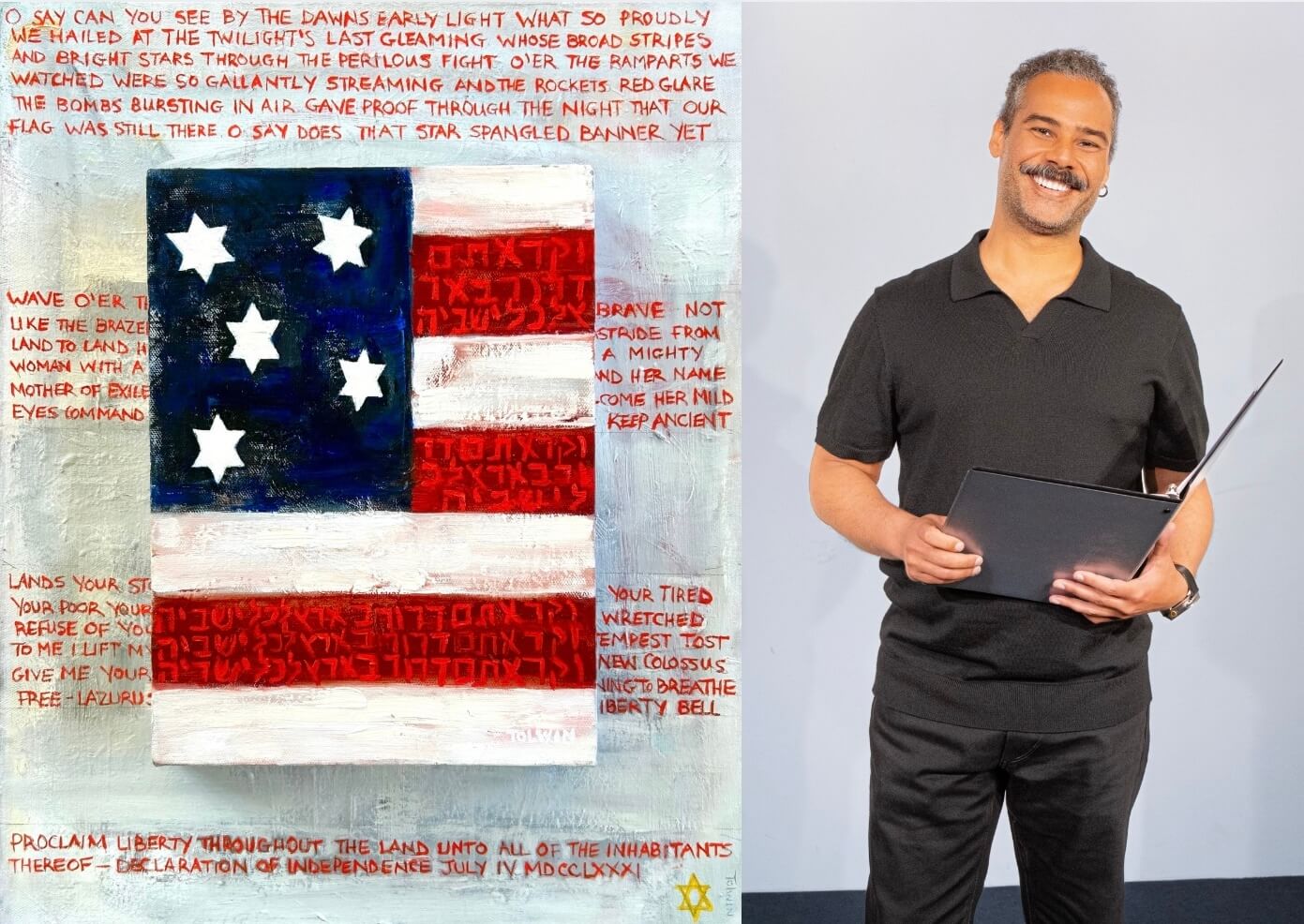
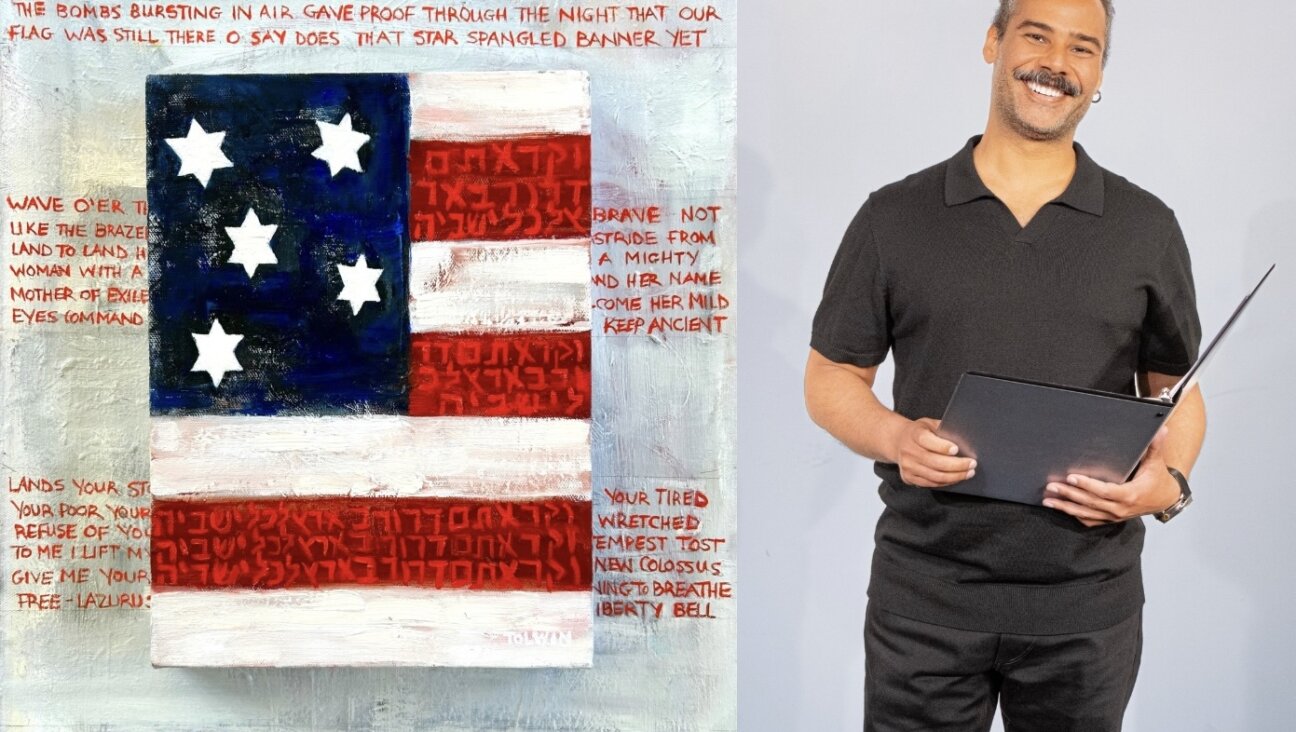
Collage photo of Joshua Silverstein alongside the show art for “L’Chaim America” Image by Marilee Tolwin, David Chiu
When Joshua Silverstein, a Black Jewish theater artist, was growing up in Los Angeles, he recalls one Ashkenazi couple, to whom he refers as Bob and Shirley, that had a particularly profound effect on him.
Bob and Shirley were the type of people who greeted everyone they saw on the street; Silverstein grew up going to their get-togethers that were welcome to everyone in the neighborhood. They loved music and literature, they were “way into Theodore Bikel,” and they had a plethora of Billie Holiday records.
Bob and Shirley were also instrumental in the fight to elect Los Angeles’ first Black mayor, Thomas Bradley.
“LA’s Bob and Shirley,” which Silverstein wrote and is performing as part of a new theater compilation of Jewish stories, begins in 1946 when the couple moved to the west coast from New Jersey. Bob was a carpenter — he had wanted to be a professor, but his Jewish background made it challenging to get hired at a university. Instead, he constructed buildings across Los Angeles, only to find out that the same apartments he worked on didn’t allow Jews or other minorities to live there.
The couple ended up near Central Avenue, an epicenter of African-American culture where they rubbed shoulders with legendary Black performers and intellectuals — Duke Ellington, Langston Hughes and W.E.B Dubois. The neighborhood was in danger, though; real estate agents were pressuring residents to leave so their properties could be refurbished and sold to white homeowners.
Together, Bob and Shirley co founded the Alta Loma Democratic Club, where Thomas Bradley began to show up to meetings. At the time, he was a lieutenant in the police department who, as a Black man, experienced bigotry of his own. Bradley had a vision to preserve the neighborhood, and inspired by Bradley’s vision and spirit, Bob and Shirley encouraged Bradley to run for city council.
“At first he said no,” Silverstein said. But Bob told Bradley, “If you do it, we will get you elected.”
If it hadn’t been for the Alta Loma Democratic Club, “Tom Bradley would not have then gone on to be mayor,” Silverstein said. “LA being this place where we feel like it’s diverse took a lot of work, and this is because of what Tom Bradley did.” His 20-year term was the longest in Los Angeles’ history.
Silverstein’s piece is just one of the many stories told in L’Chaim America, a commemoration of the United States’ 250th anniversary produced by The Braid, a Los Angeles theater company with the mission of telling Jewish stories.
“Our show is really a celebration of the diversity that makes up what America is. It is this beautiful love letter to the hope for the future,” Silverstein told me.
The Braid is a story-telling theater, and L’Chaim America is a minimalist production. Armed only with binders and their words, performers share stories commissioned by writers or solicited from community members: Author Emily Bowen Cohen explores her dual Jewish and Native American identities, Solomon Dueñas, an El Salvadoran immigrant, reconnects with his Jewish roots. Silverstein is the only writer performing his own work.
Silverstein told me his mission was twofold: He hoped to share an untold piece of Los Angeles’ history and, having Black and Jewish identities himself, to shed light on the historic Black-Jewish alliance.
“What people don’t hear often is how there were Ashkenazi Jews who were radical in their support of Blackness and other marginalized voices,” he said.
Until he started researching his piece, Silverstein never fully understood the role Bob and Shirley played in Los Angeles’ history. For him, and for members of the audience who knew and loved people like Bob and Shirley, Silverstein’s piece was a way of appreciating what they managed to achieve.
“The coalition that came together to get him elected to mayor was a coalition of Jewish people,” Silverstein said. “This wasn’t about religion. It wasn’t about culture. It wasn’t about ethnicity. It was about human beings recognizing that this is a city they love and to come together to change it for the good.”
Silverstein believes his work is significant in how “it recognizes the ugly,” but does not shy away from it in order to reveal a more realistic, yet more inspiring, picture of America. This America requires looking “at the areas that have been challenging — at the areas that have been hard and terrible — and not closing our eyes to it, but promising to do better.”
“L’Chaim America” is being performed in theaters in and across Los Angeles through June 17. On June 7, the Skirball Cultural Center will host a special production of the performance as part of a community-wide celebration in partnership with other Jewish organizations, including the Jewish Federation of Los Angeles and the Jews of Color Initiative. Additional performances will be held in Irvine on June 28 and in New York City on July 12.
I’m personally matching all gifts to the Forward, up to $36,000. Can I match your gift now?

Hello, fellow Forward reader! I’m Joel Brown, a Forward reader and supporter for more than 15 years, and currently the chair of the board of directors.
I’m an avid Forward reader because it ticks so many of my essential boxes: excellent journalism, Jewish focus and diverse viewpoints. In today’s political climate, what I most appreciate is the Forward’s independence — made possible by the generosity of its membership.
The Forward is committed to bringing you unbiased, nuanced Jewish news. From my position as board chair, I see an exciting future as we expand our position as the definitive independent voice of contemporary American Judaism.
— Joel Brown, Forward board chair
Support our mission to tell the Jewish story fully and fairly.