Israelis have no idea where the Iran war is going. But they know it’s part of Netanyahu’s campaign
Amid a faltering ceasefire, nothing is sure in Israel except for the prime minister’s machinations
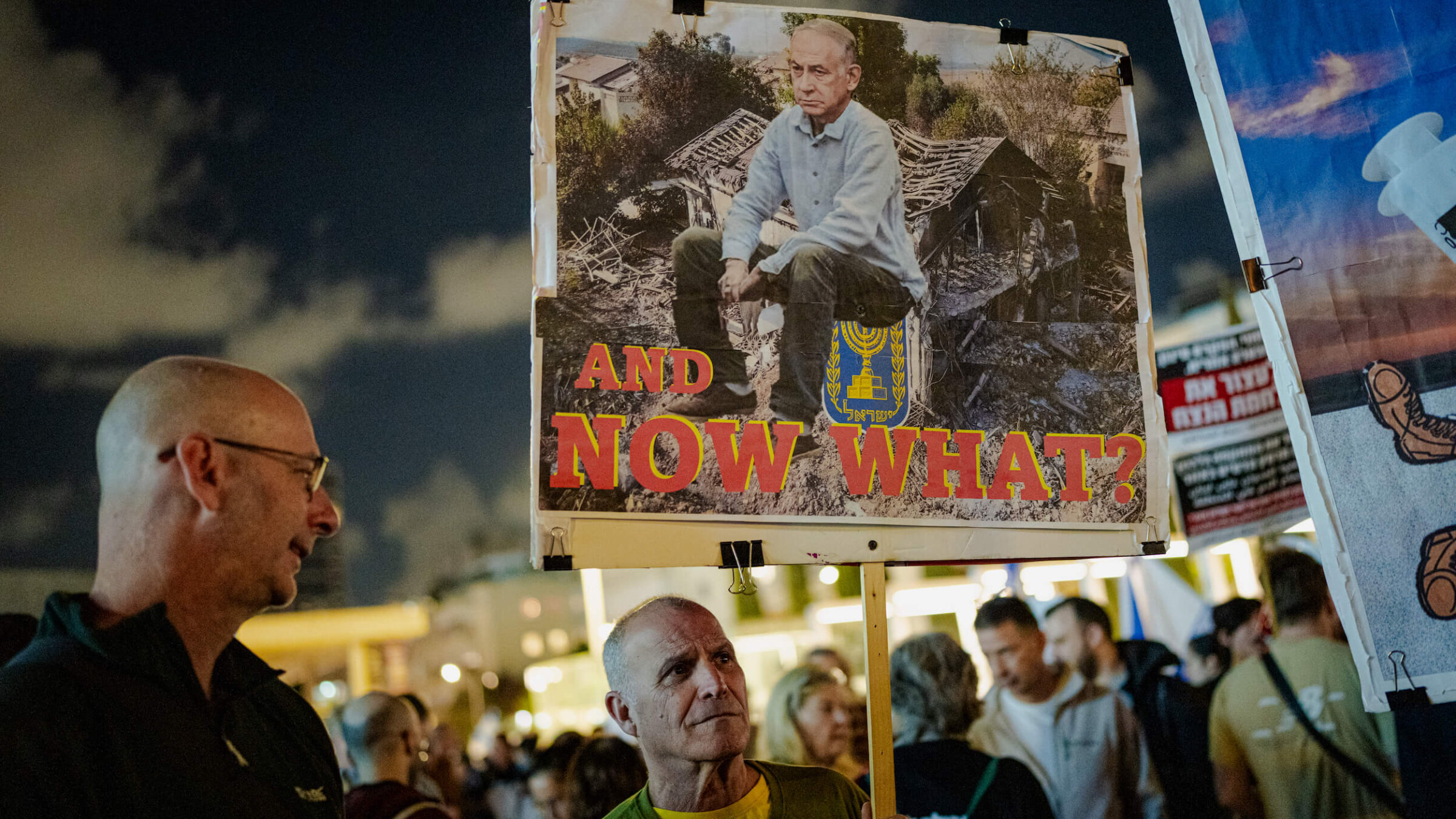
Left wing demonstrators protest against war and the Israeli government on April 11 in Tel Aviv. Photo by Erik Marmor/Getty Images

Columnist Dan Perry April 13, 2026
Israelis are not used to uncertainty. This is a country where, on most questions, people hold strong opinions with remarkable confidence — about security, politics, even identity.
Yet in the aftermath of the recent war with Iran, they find themselves on unfamiliar ground: confused and in suspense.
With the suspense comes a sense of strategic paralysis. The war with Iran has nominally paused — although the United States is now blockading the Strait of Hormuz — but without the resolution or clarity that Israelis were led to expect was attainable.
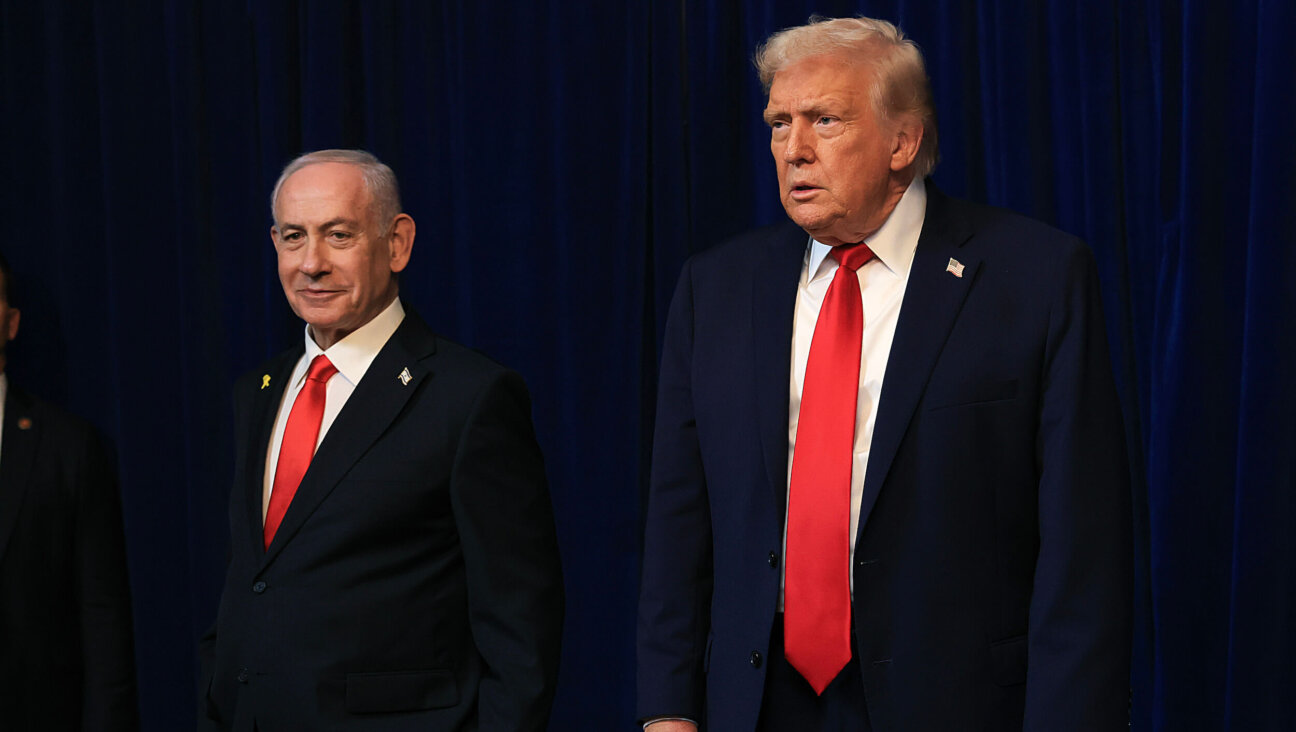
For weeks, the public was primed for something decisive: a fundamental shift in the balance with Iran, perhaps via the collapse of the regime itself. President Donald Trump told Iranians that the war would set them up to reclaim their country, a message that Israeli Prime Minister Netanyahu reinforced. From the war’s onset they instilled the expectation that the regime, with its supreme leader and many of his adjutants assassinated, could be compelled to change its ways.
But the idea that fanatical jihadists can be persuaded of anything was always a stretch. So it should have come as no surprise that what emerged was something far murkier: a profoundly fragile ceasefire layered over a volatile reality, with the core threat not eliminated but merely weakened.
The result is a surly public mood. Polls suggest widespread dissatisfaction with the war’s outcome to date — in one, only 22% said that victory was achieved. Israelis sense that something was left unfinished, yet there is no consensus on what “finishing the job” would even mean, or what price they would be willing to pay to try.
A war that was supposed to be unnecessary
This directionlessness stands in marked contrast to the aftermath of the 12-day war with Iran last June.
Back then, the very idea of attacking Iran, a volatile and well-armed country of 90 million people, seemed astoundingly brazen. Israelis were amazed that for almost two weeks they controlled Iran’s skies. They were quite content to end that bout with Iran’s abilities to make trouble curtailed, and its problematic leadership perhaps chastened.
Part of that contentment came in response to Netanyahu’s promise that the brief war had eliminated Iran’s missile and nuclear threat “for generations.” This new war has shown how false that promise was. The U.S. is demanding in vain that Iran hand over enriched uranium, and Israelis who spent a sleepless month-plus living under Iranian missile strikes are fearing a resumption of that barrage.
They don’t know who or what to believe about the real threats posed by Iran, or the real goals of a resumed war, but it probably isn’t Netanyahu.
Redirected regional focus
All this confusion is compounded by what is happening beyond Israel’s borders.
The crisis in the Strait of Hormuz, which began when Iran effectively restricted global shipping through the heavily used waterway, has shifted the conflict’s center of gravity away from Israel. As that’s happened, a war that began as a direct confrontation between Israel, the U.S. and Iran has evolved into something broader, more complex and potentially more dangerous. Oil prices are spiking, global powers are maneuvering and the risk of further escalation remains high.
From Israel’s perspective, this creates a strange dynamic. Since the Hamas attack of Oct. 7, 2023, Israelis have grown accustomed to shaping the strategic environment through initiative. Some endeavors have been spectacular; some have been deemed by critics to be criminal; but Israel has always appeared to command the strategic field.
Now Israelis find themselves watching as the U.S. and Iran test each in a complex negotiation that might have already fallen apart, in which they are not directly involved. It became clear over the weekend that Iran is not prepared to accept the American terms — which they see, not unreasonably, as effective to surrender. Trump’s announcement of a total blockade of Iranian ports is a way of raising the ante in an attempt to disabuse the Iranians of their hubris — and Israel is not part of it.
This leaves Israelis on edge and feeling powerless amid the very real possibility of renewed missile fire from Iran, with hope that a resumption of the war might change anything remaining low.
Yet the reality is unsatisfactory — a form of cognitive dissonance.
A political fracturing
Domestically, this state of waiting collides with a political system already under strain. Elections, which must take place before the end of this year, loom in the background. All polls suggest that Netanyahu’s coalition would fall well short of a majority if elections were held today.
Plus, Netanyahu has just watched the stunning electoral defeat of Hungarian Prime Minister Viktor Orbán — the leading international figure of the illiberal movement with which Netanyahu has aligned.
Orban seems to have gone quietly, but Israelis know Netanyahu will not do the same. Partly it is his mania for power; partly his ongoing bribery trial. Orbán’s defeat has given many Israelis hope; it has also made the country’s political environment even more fragile.
Israelis expect Netanyahu to wheel out every conceivable trick to better his odds. They expect efforts to curb Arab political participation and attacks on the courts and media. And, sadly, one cannot rule out maneuvers attempting to delegitimize the elections themselves. Netanyahu knows how quickly emergencies can be created — or at least framed. If polls continue to point in the wrong direction, the temptation to declare some form of national emergency to delay the elections will be considerable.
Which has led, perhaps, to the most dire sign of all at this tenuous moment in the war. Many Israelis expect that Netanyahu’s decisions surrounding war and peace in Iran and in Lebanon, as well as the West Bank and Gaza, will all be made through the filter of his desperate campaign.
It’s a grim sign of how badly Israel’s democracy has deteriorated. Combine that with a paused war with no clear goals and the possibility of massive escalation to come, and those who care about the Jewish state have plenty of reasons to worry.

Did you know that only 2% of Forward readers donate to support our nonprofit newsroom? That 2% make it possible for millions to read the Forward without a paywall or subscription — removing any barriers to the full and fair Jewish story.
But while the Forward is free to read, it isn’t free to produce. Big stories — like deep dives into the antisemitism data, political scoops or reporting trips to college campuses — take months of research and fact-checking. All while we keep you informed of what you need to know each day.
— Rachel Fishman Feddersen, Forward Publisher & CEO
Support our mission to tell the Jewish story fully and fairly.