How young people once used Yiddish personal ads to find a partner
One ad was from a foreman’s assistant, who hoped to open his own factory with the help of his future bride’s dowry
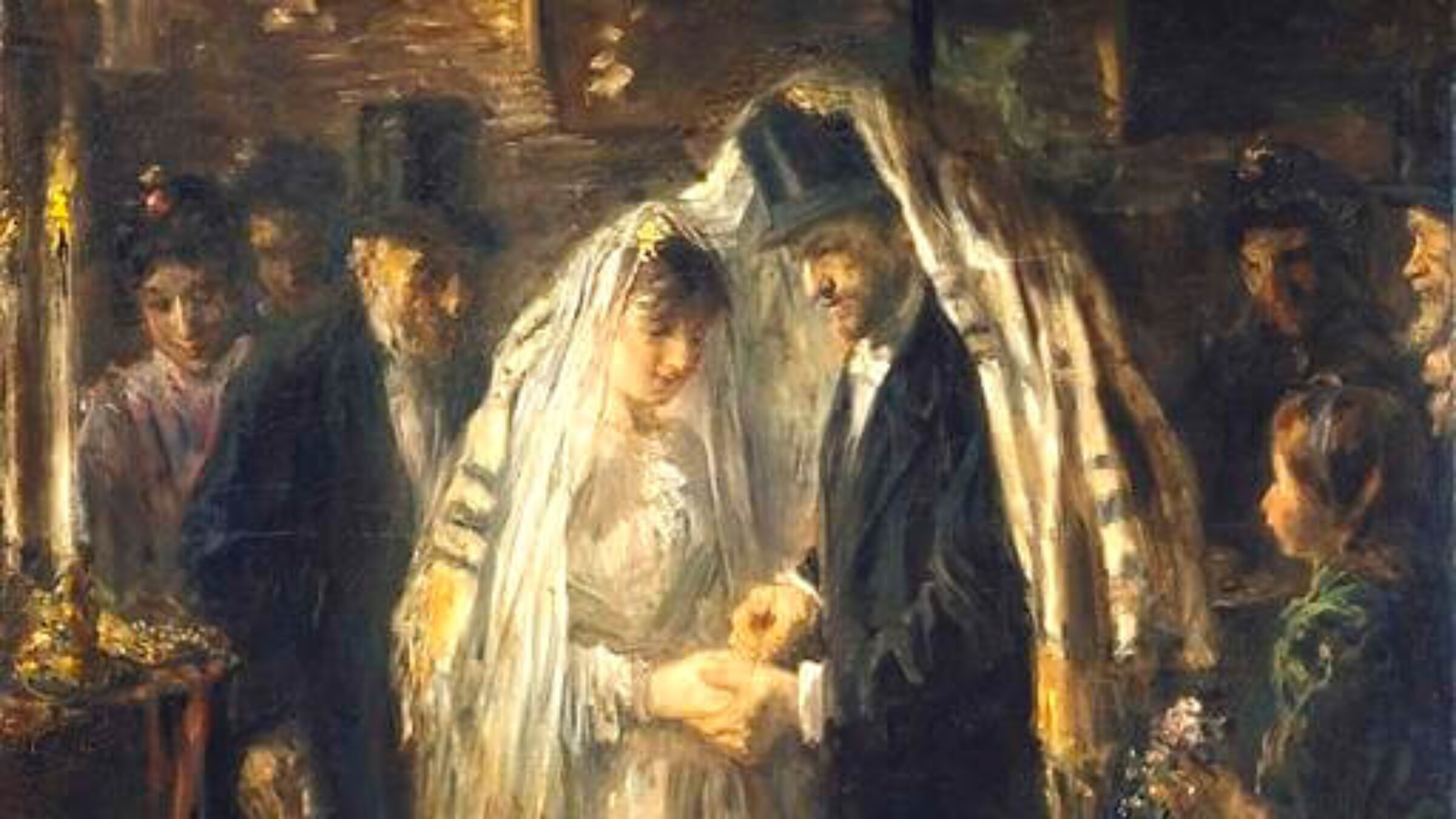
“Jewish Wedding,” a painting by Jozef Israëls (1903) Photo by Wikimedia Commons
In today’s hyper-connected world, the quest for a partner often begins with a swipe or a click. But a century ago, our great-grandparents began their search differently. While a shadkhn, or matchmaker, continued to bring most Jewish couples together in the old country, by 1908, a fascinating innovation had taken root in the big cities of Warsaw and Vilna: the newspaper marriage ad.
Among the many newspapers that were printed in Yiddish in Eastern Europe, one focused exclusively on helping people, mostly men, find a spouse. Called “Lands-shadkhn” (“Land Matchmaker”), it included dozens of paid advertisements by young people embracing these novel “matchmakers.” Experienced matchmakers may themselves have used these newspapers as a tool in their search for brides and grooms.
The Lands-shadkhn was a premium product, costing 18 kopecks per issue, a significant sum compared to the more common one-kopeck papers. Customers bought it, not to read the news but to find a romantic partner, similar to today’s Tinder Platinum.
Yet, even within this highly regarded paper, there was always the danger of scammers, as we read in Yiddish literature, including Sholem Aleichem’s stories. That’s why correspondence was routed only through the editorial office. Instead of direct contact, people used anonymous nicknames like “A Worker,” “A Dentist,” “A student,” or a fictional name like Clara.
Although the newspaper was published in Warsaw, its circulation of 5,000 copies was likely distributed to other cities in Eastern Europe, as seen in one ad that mentioned Odessa, Ukraine.
One ad was from a foreman’s assistant, who hoped to open his own factory with the help of his future bride’s dowry. Originating from Lithuania, he sought a bride from a misnaged (religious but non-Hasidic) family. His monthly earnings of 100 rubles were quite high for that period. The common salary of highly-qualified workers then was 25-35 roubles, and unskilled workers could be paid as low as 10 roubles.
One young dental student was seeking a wife whose parents would support his studies at a dentists’ institute. This profession was already respected back then and promised a good income. It was customary at the time for the Jewish parents of a young married daughter to take care of their son-in-law while he was receiving his education so that he could eventually support his family.
One 37-year-old hatter from Rostov-on-Don was seeking a woman that could be not only his wife but also a good assistant for his goldene gesheft (successful business).
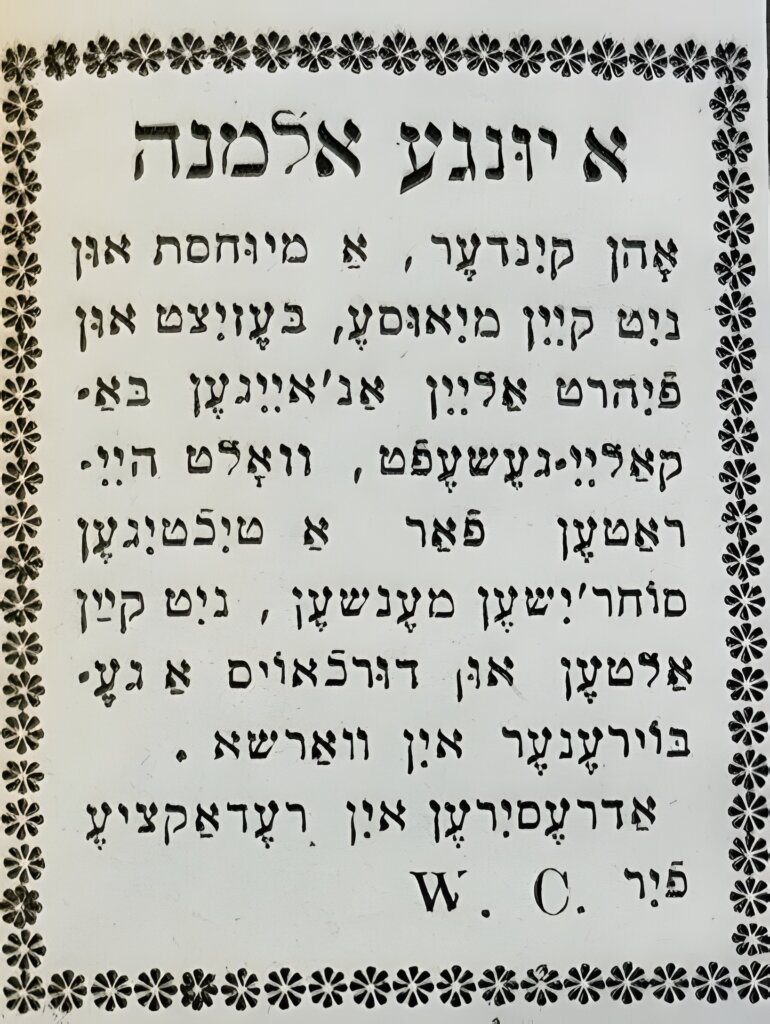
In most cases, the ad buyers were young Jews within the average marriageable age. One stark exception was a 50-year-old bokher (bachelor) who described himself as “young and strong, well-respected and well-to-do.” He said that he wasn’t seeking a dowry, but “a loving heart.”
The 50-year old bachelor says he is a statskiy sovetnik (State Councilor, in Russian). A position of this stature was considered highly prestigious in the Russian Empire, especially for Jews. Only a few Jews achieved this privilege.
One striking ad was from a spirited 20-year-old woman who wrote explicitly that she didn’t want to marry “a bourgeois man.” For a woman to actively seek a husband on her own was a bold move then.
These ads are more than mere historical curiosities; they are intimate windows into the lives of real people, providing insights into Jewish society of prewar Eastern Europe. Through them we learn about young women who read and wrote in Polish, Russian and Hebrew, about men’s occupations and even their clothing. One man, for example, said he wore long clothing (a sign of religious modesty), but was “not a fanatic.”
The word nadn (dowry) echoes through nearly every ad. In those days, there was no Jewish marriage without a dowry, which consisted of about several thousand rubles. Interestingly, the word nadn is one of the few Hebrew words that the spouse seekers used in the ads. Another Hebrew term is yikhes, a high pedigree.
Most of their Yiddish, though, is loaded with borrowed German words, as a way of “proving” the speakers’ supposed sophistication, a common practice among upwardly mobile Yiddish speakers of that period. The word khasine (wedding), for example, is replaced by the German Hochzeit.
It’s not clear whether the German-inflected text was the customer’s own language, or perhaps inserted by the editor in order to make the wife seeker look more fashionable. Or maybe the customer had simply hired literate people to create an attractive ad for them.
These century-old advertisements provide a fascinating peek into the mindset of young people seeking marriage at the turn of the 20th century. It makes us wonder what future generations might say, when reading today’s profiles of people seeking a partner on OkCupid.
I’m personally matching all gifts to the Forward, up to $36,000. Can I match your gift now?

Hello, fellow Forward reader! I’m Joel Brown, a Forward reader and supporter for more than 15 years, and currently the chair of the board of directors.
I’m an avid Forward reader because it ticks so many of my essential boxes: excellent journalism, Jewish focus and diverse viewpoints. In today’s political climate, what I most appreciate is the Forward’s independence — made possible by the generosity of its membership.
The Forward is committed to bringing you unbiased, nuanced Jewish news. From my position as board chair, I see an exciting future as we expand our position as the definitive independent voice of contemporary American Judaism.
— Joel Brown, Forward board chair
Support our mission to tell the Jewish story fully and fairly.