How Yiddish and Savta Sarah shaped my Jewish journey
Sarah taught me how Yiddish articulated resilience through cynicism, poking fun at everything in life from the tragic to the banal
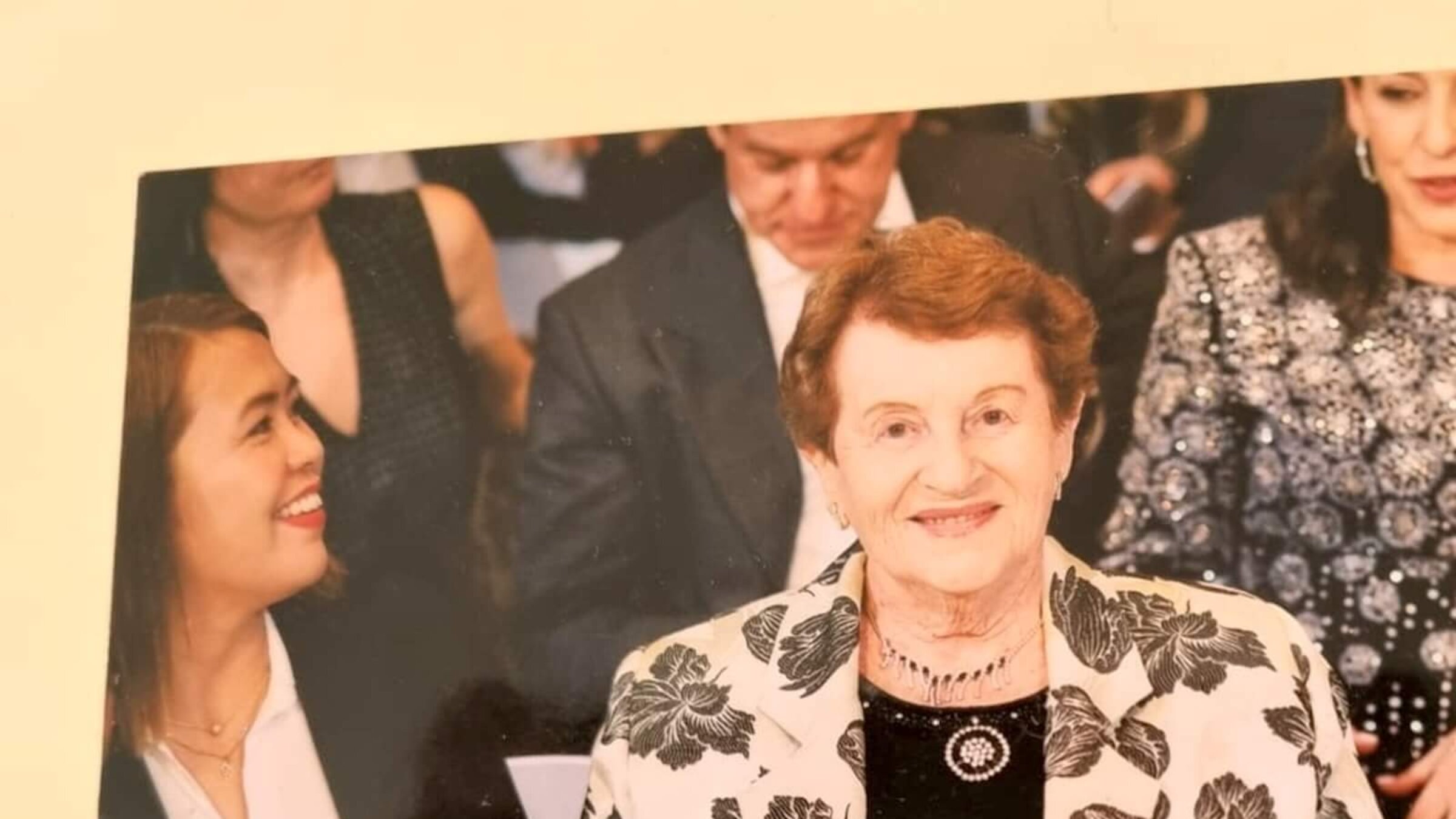
A photograph of Savta Sarah, 2019 Courtesy of Zvi Levine
I first fell in love with Jewish languages as a Fulbright fellow at Tel Aviv University.
I was fascinated by the many languages that had converged in Israel: Hebrew, Arabic, Yiddish, Darija, Russian, Amharic and Ladino. I learned about different communities’ language and history, which built meaningful connections with the people who brought them to life in the present.
Learning Yiddish felt especially profound: the knowledge that it had once been the most widely spoken Jewish language in the world, and that millions of its speakers had been killed in the Holocaust.
I was a Roman Catholic from Texas. Moving to Israel was my first sustained exposure to Jewish life, and I was welcomed into it with a warmth that felt both casual and profound — Shabbat dinners, holiday tables and conversations that stretched late into the night.
About a year into my time there, I met my now-husband, Sagi. Through him, I met his grandmother, Sarah. He called her Savta Sarah (savta is Hebrew for grandmother), so I did too.
On Shabbat afternoons, we’d visit her home. She spoke Yiddish, Polish, Russian and by that time, primarily Hebrew – always with a Yiddish inflection – and little English. My Hebrew was still rudimentary. But I knew German, which is still intelligible to a Yiddish speaker. This became our shared language.
Savta Sarah taught me words like nudnik, mentsh, takhles, shtinker, meshugas, fargin — and pointed out how Yiddish lived on in Israeli slang over the decades. Yiddish, she told me, was a language of cynicism and humor, a way of making life’s tsuris bearable.
Sarah taught me how Yiddish articulated a sense of resilience through cynicism, poking fun at everything in life from the tragic to the banal – for example – “Ikh vil dos nisht haltn, efsher vet emitser dos ganvenen” (“I don’t want to keep this, but hopefully someone will steal it”) can be used when you’ve been given something you don’t want, but feel too guilty about throwing it away.
I also loved “der mentsh trakht, un got lakht” (Man supposes but God disposes)” – used when bad things happen, to remind the hearer, mostly with humor, of the futility of mortality, but it can also refer to a sense of faith, despite the circumstances.
Cynicism was how people survived. This mentality existed alongside warmth in a culture rich with hospitality that always made sure to pause on weddings, bris-milah, holidays and Shabbos to celebrate life.
Sarah embodied that sensibility: perceptive and generous, yet direct and unsentimental. She was also the single Holocaust survivor of her immediate family.
Her memories occasionally surfaced without warning. We would be talking about something mundane, and suddenly she would shift into the past.
Sarah was born in the 1930s near today’s Polish-Ukrainian border. Her mother was murdered by the Nazis in a mass execution of Jewish women and children. Sarah, my mother-in-law told me, survived by luck.
Afterwards, during the chaos of a violent attack on the forced labor camp, Sarah was separated from her father, who was killed. She hid in snowy fields for days, later being taken back to the camp. There she reunited with cousins who smuggled her scraps of food. She was still a child.
After the camp was liberated by the Allied Forces, Sarah was sent to a refugee camp in Cyprus. A first attempt by Jews to escape to British Mandatory Palestine failed when the government turned back ships carrying Jewish refugees. Sarah considered joining an aunt in Venezuela, ultimately trying again to land in eretz-yisroel, at last immigrating in 1947, a year before Israeli independence. She built a life — marrying, raising children, and lovingly witnessing her grandchildren reach adulthood.
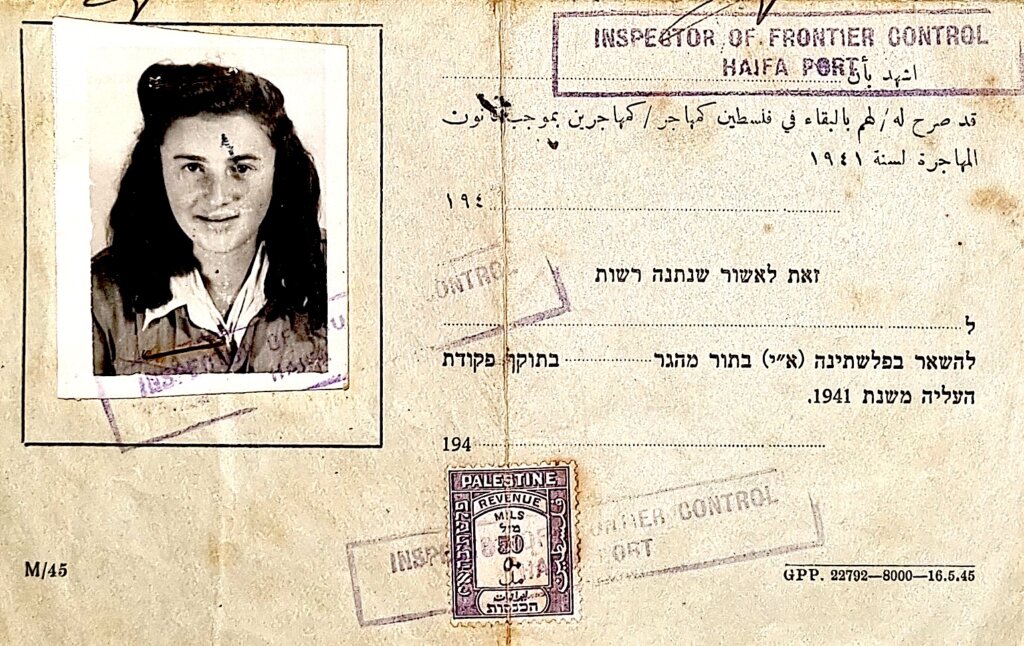
I never asked her about the Shoah, but her memories emerged in fragments during our visits. Once, Sarah recalled guarding a loaf of bread in her bed in the camp, only to wake and find it stolen. She told it plainly, without visible emotion. And yet, she joked often and radiated pride in the family she had helped rebuild.
Over time, my relationship with Savta Sarah became part of my own spiritual journey. What began as curiosity about Judaism deepened into a desire to convert. After years of learning, I entered a Modern Orthodox conversion program called “Project Ruth” and will soon immerse in the mikveh to complete the process.
There isn’t just one reason for that decision. But Savta Sarah, a very secular woman, is part of it — not because she argued for faith, but because she embodied a form of Jewish resilience and continuity through her stories and through the Yiddish she taught me. From her, I learned what it meant not just to inherit a tradition, but to participate in rebuilding it.
I have always been a spiritual person who has felt close to God, and feel drawn to Judaism’s daily prayers and the intimacy of putting on tefillin. I was drawn far less to kosher laws. But when I think of Jewish history and my journey that has led me into the Jewish people, stories woven together like the braids of a havdalah candle, it makes sense to be observant. I’m not doing it just for myself, but also as a way of honoring past generations and paving the way for future generations.
When Sagi and I left Israel in 2022, we visited Sarah one last time. By then, she understood we were a couple as two men, though we’d never needed to formally explain.
As we were leaving, she pressed several crisp hundred-dollar bills into Sagi’s hand, smiling mischievously. “This is for both of you,” she said. Then, more seriously: “Look out for each other, that’s all you have in this world.”
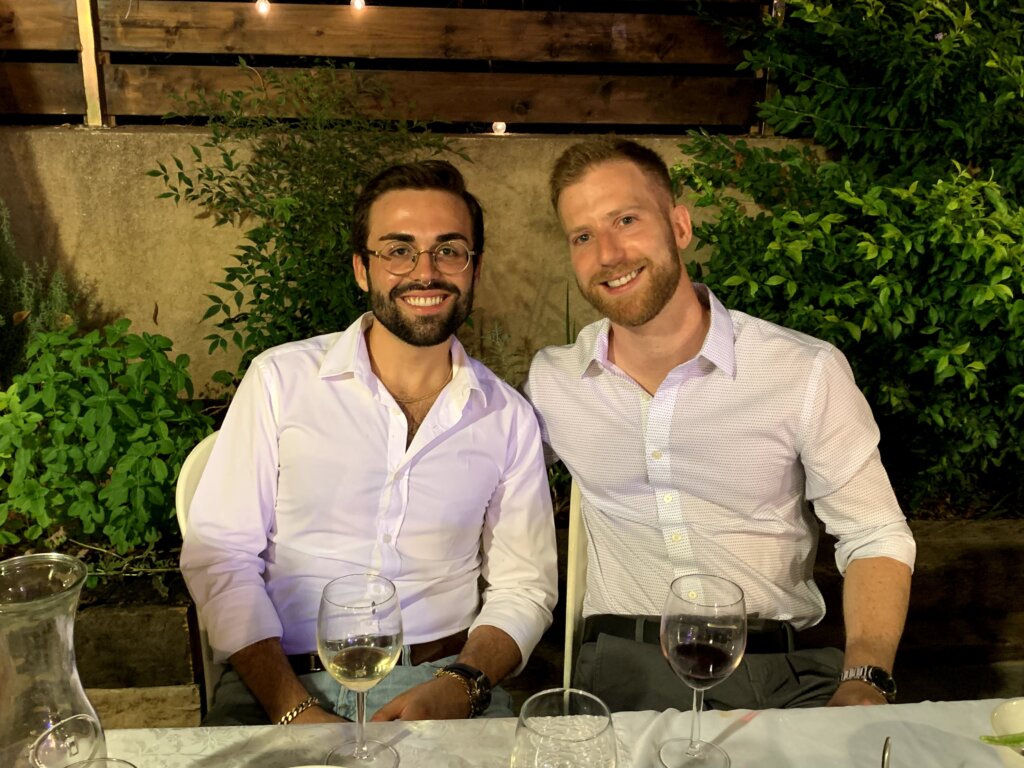
Savta Sarah died a few years later. Since then, I’ve continued learning Yiddish, slowly and informally. Language and memory have become central to how I understand my place in the Jewish story.
A century ago, Yiddish speakers in Eastern Europe could not have imagined who might one day take up their language. As fewer native speakers remain, the future of Yiddish may depend, in part, on unexpected inheritors.
And for me, that is an incredible honor.

Hello, fellow Forward reader! I’m Joel Brown, a Forward reader and supporter for more than 15 years, and currently the chair of the board of directors.
I’m an avid Forward reader because it ticks so many of my essential boxes: excellent journalism, Jewish focus and diverse viewpoints. In today’s political climate, what I most appreciate is the Forward’s independence — made possible by the generosity of its membership.
The Forward is committed to bringing you unbiased, nuanced Jewish news. From my position as board chair, I see an exciting future as we expand our position as the definitive independent voice of contemporary American Judaism.
That’s why I’m paying it Forward, by matching $36,000 of reader gifts. It’s an investment in the Forward’s newsroom, to continue telling the American Jewish story with truth and independence.
— Joel Brown, Forward board chair
Support our mission to tell the Jewish story fully and fairly.