A Jewish Expressionist artist’s life, preserved in a brownstone
Ben-Zion was a colleague of famed artists like Mark Rothko
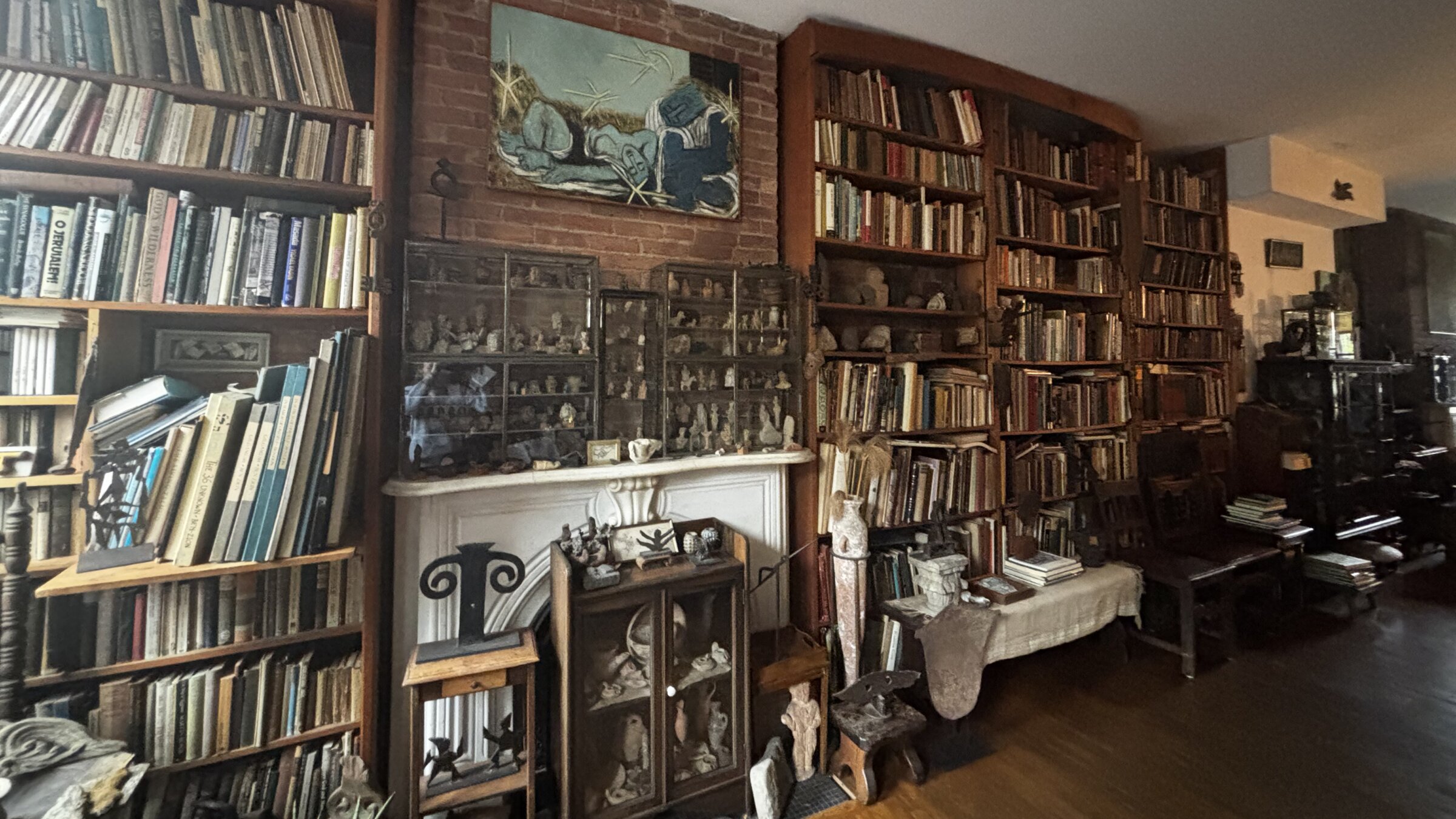
An image inside Ben-Zion’s preserved brownstone in Chelsea. Photo by Cathryn J. Prince
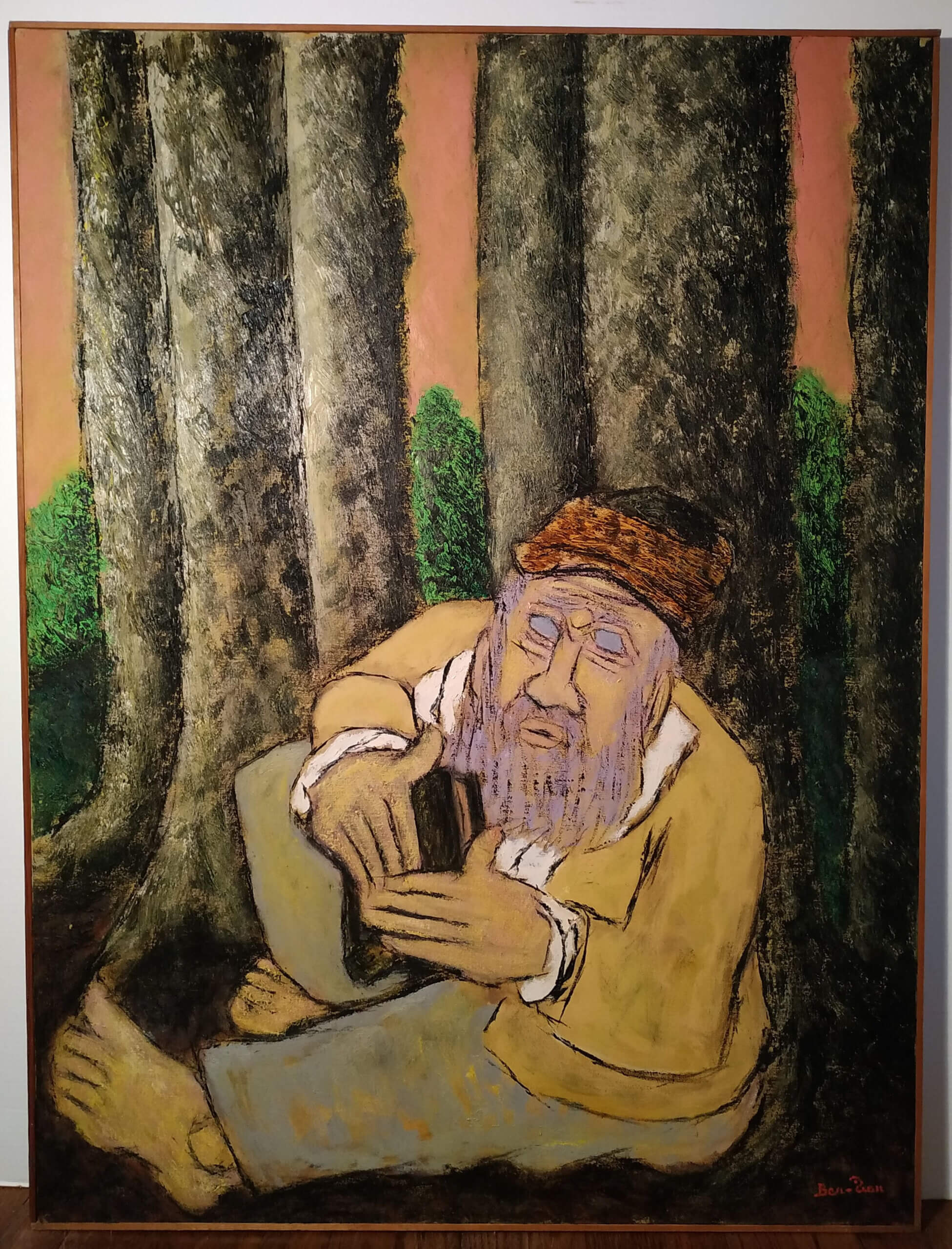
NEW YORK — Even inside a five-story brownstone crowded with paintings, sculptures and books, no single work can fully contain the spirit of Ukrainian-born artist Ben-Zion. Still, one painting comes close: a portrait of the healer and rabbi known as Baal Shem Tov, seated calmly beneath a tree. Rendered in ochre, gray and green, the canvas draws on Jewish mysticism and the natural world, themes that pulse through Ben-Zion’s life and work.
Perfectly preserved from the years Ben-Zion lived there, from 1965 until his death in 1987, the Ben-Zion House, located in Chelsea in Manhattan, is anything but a mausoleum. Instead, it feels like a living sanctuary — one that not only celebrates the Jewish artist’s life and work, but continues to inspire the writers, poets, architects, musicians and painters who pass through its rooms.
“Through the years many artists have been in the space and have expressed their awe and inspiration,” said Tabita Shalem, the house’s curator and manager while leading a tour on a drizzly Thursday in April. “The way Ben-Zion lived was intimately connected to the work he created, and artists and creatives feel that when they are in the home and studio.”
Shalem worked closely with Ben-Zion during the last decade of his life, helping to organize exhibitions and maintain the vast collection. She continued those efforts with his widow, Lillian Ben-Zion, until her death in 2012. Through Shalem’s stories, the house emerges not simply as an archive, but as an extension of the artist himself.
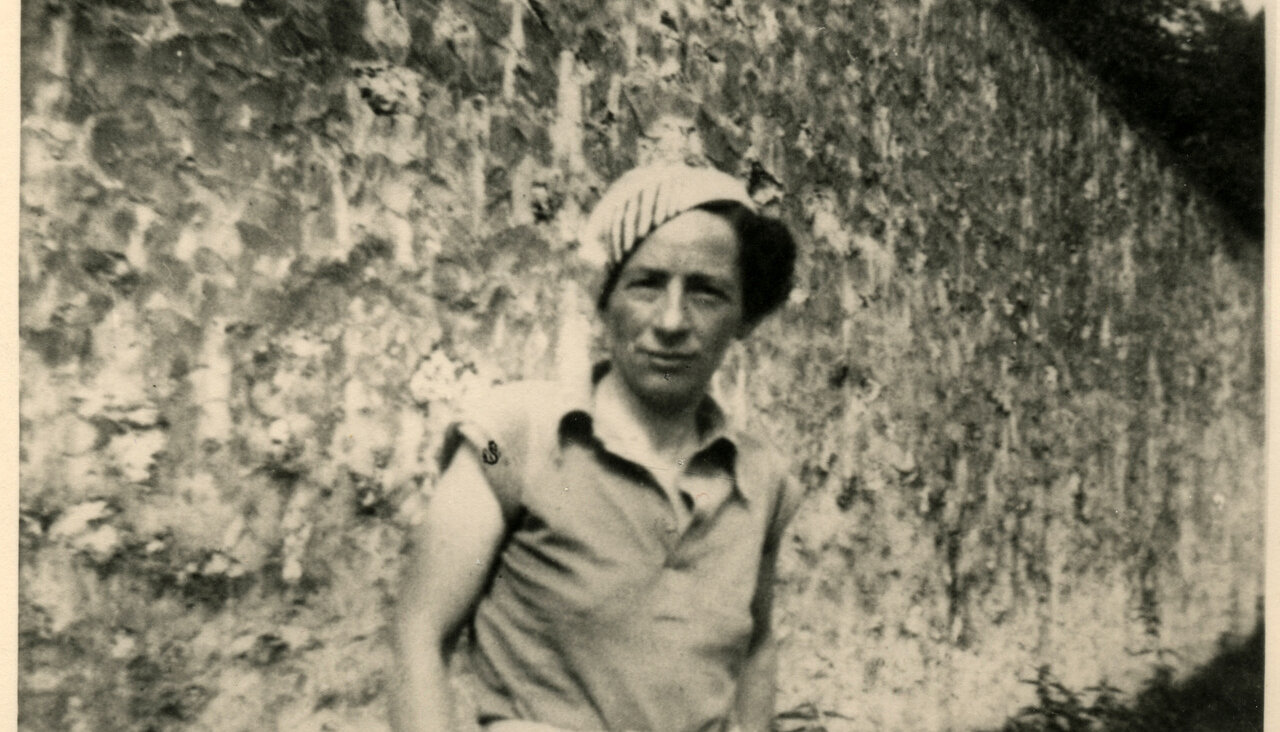
As one of “The Ten,” a cohort of artists who rejected realism in favor of experimental, expressionist work, Ben-Zion stood alongside Mark Rothko, Adolph Gottlieb and others who helped shape American Expressionism. Yet while many of his contemporaries became internationally renowned, Ben-Zion’s name lingers at the edge of obscurity — even as his work hangs in institutions such as the Smithsonian Institution, the Metropolitan Museum of Art and the Art Institute of Chicago.
In 1948, the Jewish Museum opened in Manhattan with an exhibition devoted to Ben-Zion’s work and later mounted two more shows, including a 1959 retrospective. But as Abstract Expressionism rose to dominance, interest in his work faded.
“He wasn’t interested in abstract art,” Shalem said. “He wasn’t a joiner.”
Still, his wife and friends held firmly to their belief in the value of Ben-Zion’s work, a conviction reflected in the preservation of the house itself. The home allows artists and visitors to continue engaging with the work of this important, though largely forgotten, Jewish artist. His legacy is also kept alive through guided tours, often organized in partnership with community groups, as well as open to museum and gallery curators, historians, scholars and collectors by private appointment.
Born in 1897 in Staryi Kostiantyniv, Ben-Zion grew up in an observant Jewish home. His father, Hirsh Weinman, was a cantor who, in 1909, accepted a position at the largest synagogue in Galicia. For a time, Ben-Zion considered becoming a rabbi himself.
That changed at 16, when he read about the excommunication of Baruch Spinoza for challenging rabbinic authority and questioning Jewish doctrine.
“His brain was on fire,” Shalem said. “He never went to shul again.”
Yet Ben-Zion never abandoned Judaism. After his father’s sudden death in 1920, his mother moved the family to Boston. Among the belongings he carried with him was a handwritten Purim megillah he had calligraphed at age 14.
“His Jewish identity was always a part of him. The way I think of Ben-Zion is that he was deeply rooted in Judaism, but like the branches of the trees he painted, he was free and always reaching,” Shalem said.
Feeling out of place in Boston society, Ben-Zion moved less than a year later to the Bronx, where he immersed himself in poetry, prose, painting and sculpture. The move marked the beginning of a fiercely independent artistic life, one equally nourished by Jewish tradition, philosophy and the natural world.
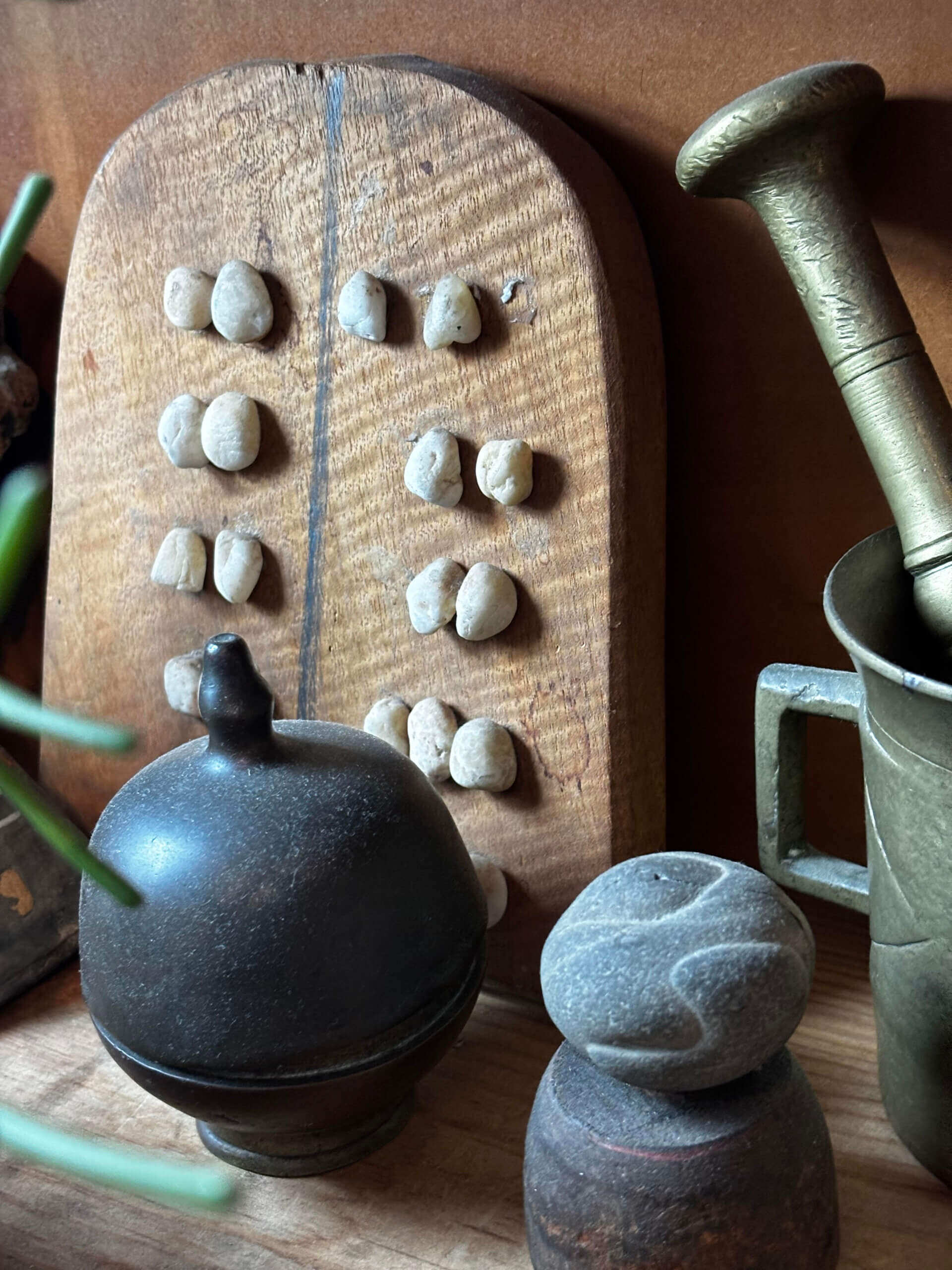
That reverence for nature reveals itself throughout the brownstone, from monumental canvases of golden wheat beneath cerulean skies to delicate pen-and-ink drawings of thistles and poppies. Walking through the house, lit almost entirely by natural light, it becomes clear that Ben-Zion was as much a collector as a creator.
A bowl of prehistoric tools sits atop one table. Nearby, miniature statues of prophets and Buddhas line a curio cabinet. Conglomerates gathered from rivers and streams are interspersed on shelves. And in another corner, his paint-scarred palette rises from a wooden table like a small mountain streaked with copper and turquoise. Behind a leafy plant, a Ten Commandments tablet features smooth pebbles instead of words.
One of the tour’s highlights comes on the garden level, where visitors descend through a trapdoor and down a steep staircase into the cellar. During Ben-Zion’s lifetime, the stone-lined basement served primarily as storage for art materials. After his death, Lillian and Shalem transformed it into a gallery-like space filled with sculptures, tools and unfinished ideas.
Rows of scissors and metal implements hang against whitewashed walls. Four masks carved from tree bark rest on a wooden table nearby.
“He saw art in everything,” said Amy Levine-Kennedy, director of the Westchester Jewish Center Koslowe Gallery, which organized the private tour and also holds several works.
Against one wall stands an iron sculpture of a circus, while nearby the 1972 work “Apocalypse (or Devastation)” rises from the floor, reflecting Ben-Zion’s recurring fascination with destruction, memory and survival.
According to Shalem, a friend of Lillian’s who had been stationed in the South Pacific during World War II shipped crates of discarded munitions to Ben-Zion after learning of the artist’s love for forged iron. Ben-Zion transformed the remnants of war into sculpture.
Though Ben-Zion studied briefly at an art school in Vienna during World War I, he was otherwise self-taught. A voracious reader, he consumed history, poetry, philosophy, Hebrew and Yiddish literature, and art history. Today the brownstone contains hundreds of books on art, history, spirituality, archaeology, and literature. “France in the Middle Ages” and “History of the Jewish Khazans” compete for shelf space with “Van Gogh in Arles” and “Jews and Arabs.”
Beyond making art and mentoring younger artists, Ben-Zion also taught through Franklin D. Roosevelt’s Works Progress Administration. At Cooper Union, where he taught from the 1930s up until the 1960s, he encouraged students to treat art not as decoration, but as a way of giving form to inner vision.
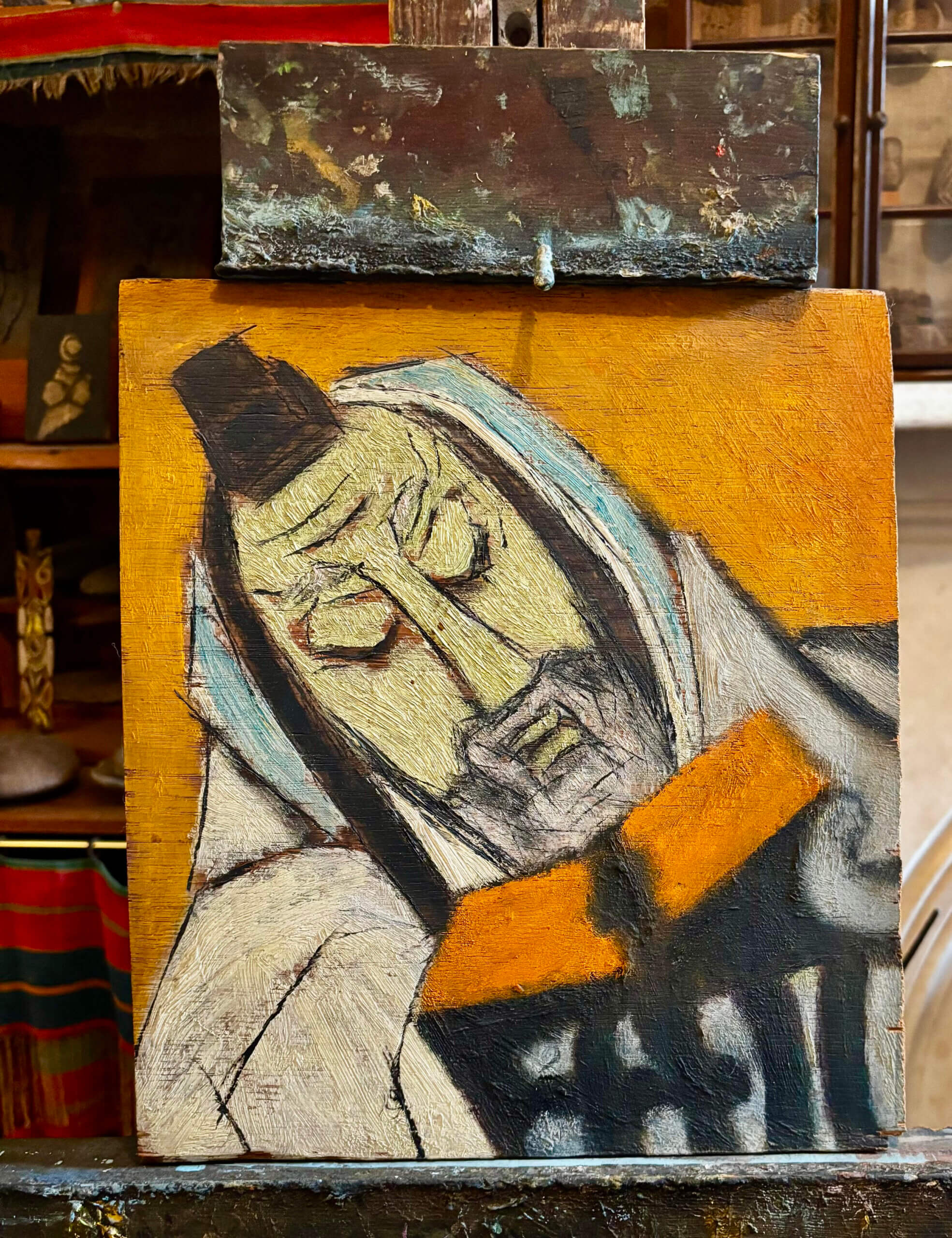
That vision lingers in the final work he created in the house. Resting on an easel on the second floor, the painting depicts a Jewish man wrapped in tefillin, his head tilted downward toward the prayer book in his hands. In broad strokes of orange, white, black, and blue, Ben-Zion distilled the themes that shaped his life: Jewish identity, learning, ritual and spiritual searching.
Did you know that only 2% of Forward readers donate to support our nonprofit newsroom? That 2% make it possible for millions to read the Forward without a paywall or subscription — removing any barriers to the full and fair Jewish story.
But while the Forward is free to read, it isn’t free to produce. Big stories — like deep dives into the antisemitism data, political scoops or reporting trips to college campuses — take months of research and fact-checking. All while we keep you informed of what you need to know each day.
— Rachel Fishman Feddersen, Forward Publisher & CEO
Support our mission to tell the Jewish story fully and fairly.