What the private equity takeover means for the bagel industry
Investment firms have majority shares in several bagel shops, and are hungry for more
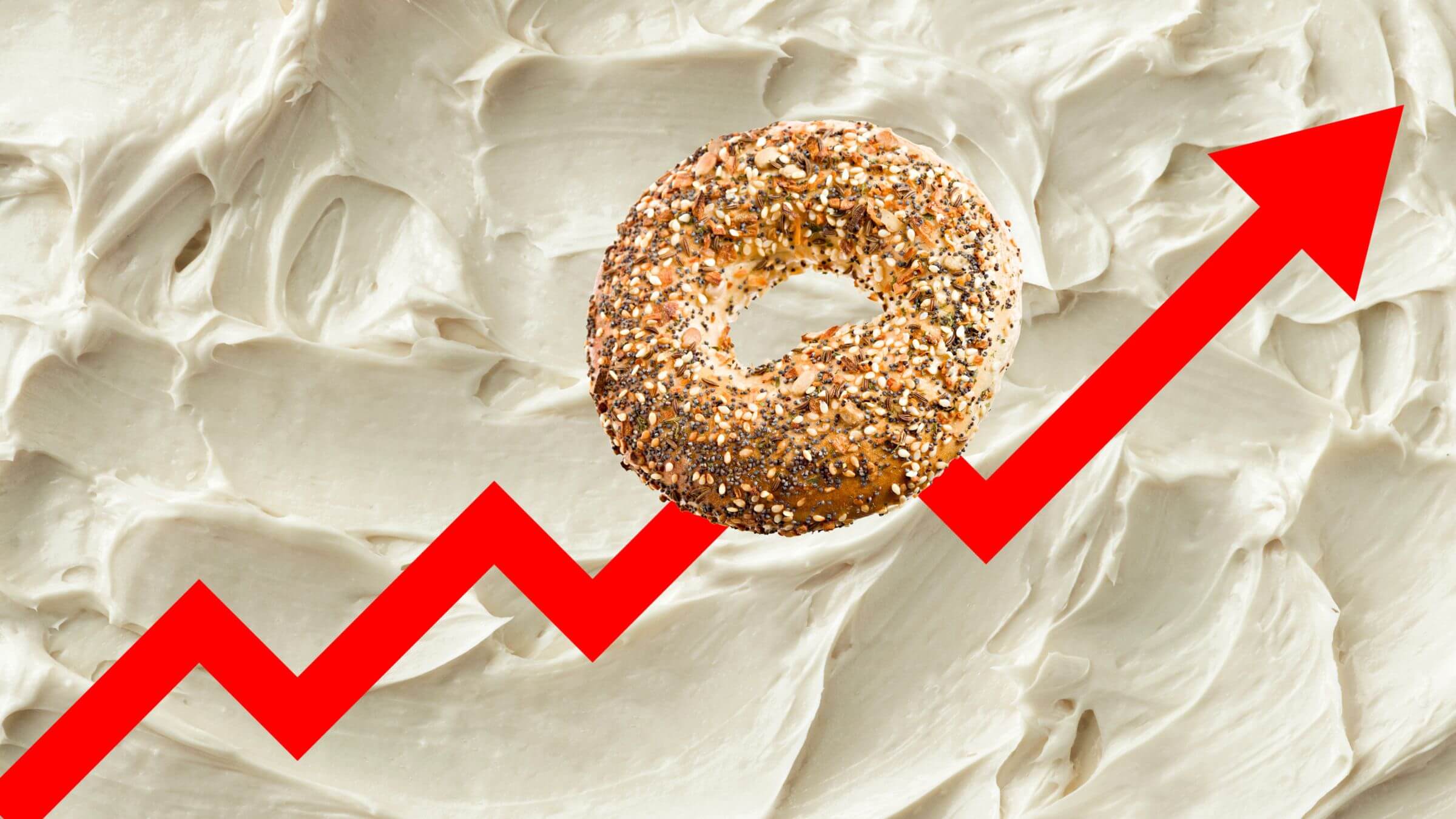
The bagel’s stock is on the rise and investors are hungry. But is that a good thing for the bagel itself? Graphic by iStock/Mira Fox

By Mira Fox May 9, 2026
The bagel’s stock is, apparently, rising — literally.
Private equity investors have decided, apparently en masse, that bagels are the new frontier for expansion.
A fund called Stripe invested $8 million into PopUp Bagels shortly after the trendy bagel shop, which hawks “rip and dip” bagels, first opened in 2023. A year later, they added $24 million to their contribution and became the majority owner. Now, PopUp Bagels boasts 30 locations.
Invus, an asset management fund, is now the majority owner of Call Your Mother, which began in D.C. but has expanded to 15 locations across the D.C. metro area and, for some reason, Denver. And Manhattan Funds, a large private equity firm, has a specific Bagel Equity Fund devoted to taking over bagelries. The industry is, they write on their site, “under-optimized at the national level.”
Even H&H Bagels, the iconic New York City institution — famed for its cameos in shows like Seinfeld and Sex in the City — has gotten shoveled onto private equity’s giant bagel baking tray. Though Wall Street investor Jay Rushin bought the brand over a decade ago, H&H, too, is beginning its boom era, opening dozens franchises outside of the city.
It’s time, these investment firms all contend, to scale bagels. But can the art of the perfect New York bagel be scaled?
Making the New York bagel in bulk is famously hard. The rings are finicky to roll out, they require boiling, and — perhaps most importantly — the long mythos to the New York bagel has at its core the premise that New York bagels cannot be made without New York water.
Many connoisseurs believe there is an alchemical process to the sought-after chew and crust only achievable with the particular water flowing in the city’s pipes, cascading down from the Catskill reservoirs almost unadulterated. Food science has somewhat debunked that concept, but the legend remains so strong that H&H is promising to par-boil its bagels in NYC water before shipping them to its new franchise locations to be finished in the oven. Even if it’s only marketing, that marketing is powerful.
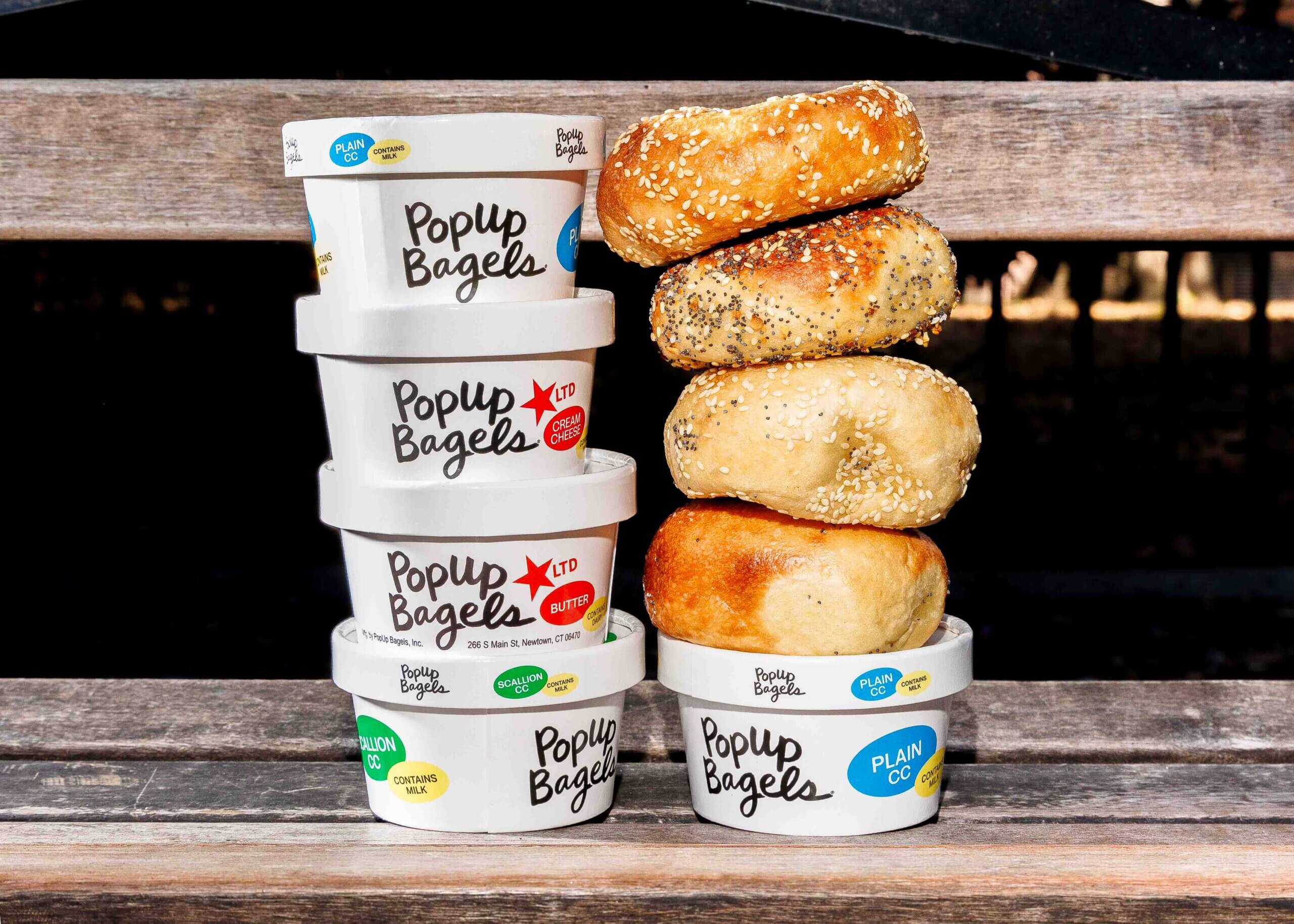
This is far from the first time that companies have attempted to scale the bagel. In fact, it has worked, in a way: “bagels” can be found, at mass scale, in every major grocery store in the country, offered in plastic sleeves of a half-dozen.
The problem is that those bagels are gross. They’re made by machine, and steamed instead of boiled, which gives a glossy surface, yes, but none of the chew of a true boiled crust. The grocery store bagels are convenient and shelf-stable, sure, but they’re the Wonder Bread of the form: mushy and milquetoast. They have none of the hallmarks of a true bagel.
It’s possible that the private equity masterminds have landed on a secret to scaling the bagel without eventually reducing it to a wan grocery store offering. The results of the Wall Street takeover of the form are still emerging, and the business model could be dependent — at least at first — on devising the perfect product, and not just a passable one.
It just seems unlikely. The investment firms are built around, well, investors, not consumers. Their goal is producing equity and capital for their investors, not making the perfect bagel.
The term “enshittification,” coined by writer Cory Doctorow, has been around for a few years. It describes exactly what it sounds like — the phenomenon of everything growing, uh, worse. Specifically, it describes the way that large companies, often funded by venture capital and private investors, make their products worse over time in the process of wringing money out of the business to serve their CEOs and investors.
Doctorow, in his book on the subject, Enshittification, focuses largely on tech platforms as he examines the term. There’s Amazon: Long gone are the days of a well-priced product you could find more easily online than in a store. Now, search results are polluted by whatever someone has paid to boost to the top of the page, and it’s not even that cheap anymore. Or Twitter, which once bought by Elon Musk, fired its content moderation team to cut costs and turned its user verification, which was once limited to public figures, into a pay-to-play feature. As a result, the platform may have more income streams, but any regular user can attest that their feed is now full of neo-Nazis who shelled out for an algorithmic boost.
But it’s not just platforms — culture and aesthetics are targets for cash extraction now, too, with bad results. Netflix now churns out a constant stream of shows that are, instead of cultural touchstones, basically interchangeable, a far cry from their acclaimed early efforts like Orange is the New Black. Clothing brands like Reformation and even high-end designers like Escala, once symbols of luxury, taste and quality, are turning to lower quality materials and production in an attempt to churn out more designs, faster, and make more money. I’m trying to buy a couch right now, and have found through my research that age-old companies once lauded for their design and durability have been bought by private equity and changed their frames from hardwoods to particle board. (That information took a lot of research because you know what else has fallen prey to enshittification? Review sites.)
That means, regardless of whether these bought-out businesses have suffered yet, bagels are likely to fare poorly in the private equity boom eventually because of the need to extract increasing amounts of cash out of the project; the product itself is ultimately secondary. The Bagel Equity Fund is running trials on steaming their bagels instead of boiling them in its projected 400 shops it runs, the exact strategy that led to the mushy grocery store bagel. And a Washington Post review for the hyped new H&H location in D.C. was brutal, calling the bagels “generally unappealing” and “flavorless.”
But the bagel itself is only part of the mystique of the food. Which brings me to the more spiritual offerings of a good bagel: an ephemeral cultural cachet. That may be at even greater risk.
Having a favorite bagel shop or loudly defending your bagel order as the only possible correct way to eat a bagel — untoasted, scallion schmear, with capers, red onion and lox, and anything else is heresy, thank you for asking — makes you a real New Yorker. Or, if you don’t live in New York, it’s the mark of a devout cultural (and maybe religious) Jew.
Other, earlier attempts to innovate on the theme, and make it trendier and more lucrative, were all one-and-done fads that eventually crashed and burned, becoming a kind of scarlet letter of cringe. (Remember the vanilla-flavored rainbow bagels that were all over social media in the 2010s? They came with funfetti cream cheese. Disgusting, and also deeply uncool.)

Bagel shops are not just places that produce chewy bread with a hole in the center. They have a cultural value. Each is often unique, with its own set of delightful quirks — the place selling Lactaid loosies behind the counter, the brusque man who nevertheless remembers your order. They’re a symbol of uniqueness and authenticity — which, of course, is definitionally impossible to buy. The more constructed something is, the less authentic.
Yet that’s really what the private equity investors are trying to monetize: the idea of a bagel. If it didn’t have that symbolic power, it wouldn’t be a particularly interesting business, given how difficult the baking is to scale well.
The Bagel Equity Fund describes its target market as “fragmented, inconsistent, and devoid of a dominant brand.” But isn’t that the charm of your local bagel place? Not to those investors, which promise to rebrand every store they take over as “Go Bagels,” likely alienating the exact “strong customer bases and community presence” at the stores they aim to acquire.
Bagels have long been a metonym both for New York and for Jewishness. See: the phrase “pizza bagel,” describing people of mixed Italian and Jewish heritage. Good bagels inspire poetic food reviews — and literal poetry — but also lengthy cultural takes. There are dissertations on its history — and I don’t mean that as a kind of humorous exaggeration, I mean actual papers filed to receive a doctorate.
They were also core to unionization of American workers. The Beigel Bakers Local, which conducted its meetings in Yiddish, led strikes over pay and conditions, and standardized the bagel’s form into the icon we all know. That union was so powerful that its members put the city, during strikes, into what is memorialized as a “bagel famine” — a near-emergency for the city’s devoted consumers. The bagel and its attendant culture is a product of the blood, sweat and tears of New York City’s Jewish workers.
The union was ultimately undone by the mechanized mass production of grocery store bagels — an inferior product, yes, but one accessible at a mass scale, exactly what private equity is attempting to reproduce. The fact that a paltry imitation of a bagel still had enough financial power to destroy a once-powerful union is also worrying. People in cities other than New York — cities, that is to say, with a poor selection of bagels — will probably eat the sub-par private equity bagels, because there’s no other option, a key element of enshittification, as Doctorow observes.
But once the big conglomerates have the power, will they be so strong that the bagels they produce take over even on the bagel’s home turf? Will they exterminate the original New York bagel, and with it, its cultural history?
I don’t want to overstate the symbolic power of private equity buying the bagel brand. But at a time when antisemitism is rising, and Jews are increasingly being accused of, once again, greed, malicious control and undue influence, it certainly can’t help. If the bagel represents Jews, and the bagel has sold out, well, that’s a bad look.
But the real deal can still shine through the enshittification haze. “I just stayed in Brooklyn for the first time and felt so alive surrounded by all those bagel shops!” wrote one user on Reddit. They were there to complain — about Denver’s newest private equity bagel. Clearly, the New York bagel’s brand remains strong, even to outsiders.

Did you know that only 2% of Forward readers donate to support our nonprofit newsroom? That 2% make it possible for millions to read the Forward without a paywall or subscription — removing any barriers to the full and fair Jewish story.
But while the Forward is free to read, it isn’t free to produce. Big stories — like deep dives into the antisemitism data, political scoops or reporting trips to college campuses — take months of research and fact-checking. All while we keep you informed of what you need to know each day.
— Rachel Fishman Feddersen, Forward Publisher & CEO
Support our mission to tell the Jewish story fully and fairly.