How a young woman smuggled weapons into the Warsaw Ghetto
Vladka Meed’s memoir ‘On Both Sides of the Wall’ challenges the myth of Jewish passivity during the Holocaust
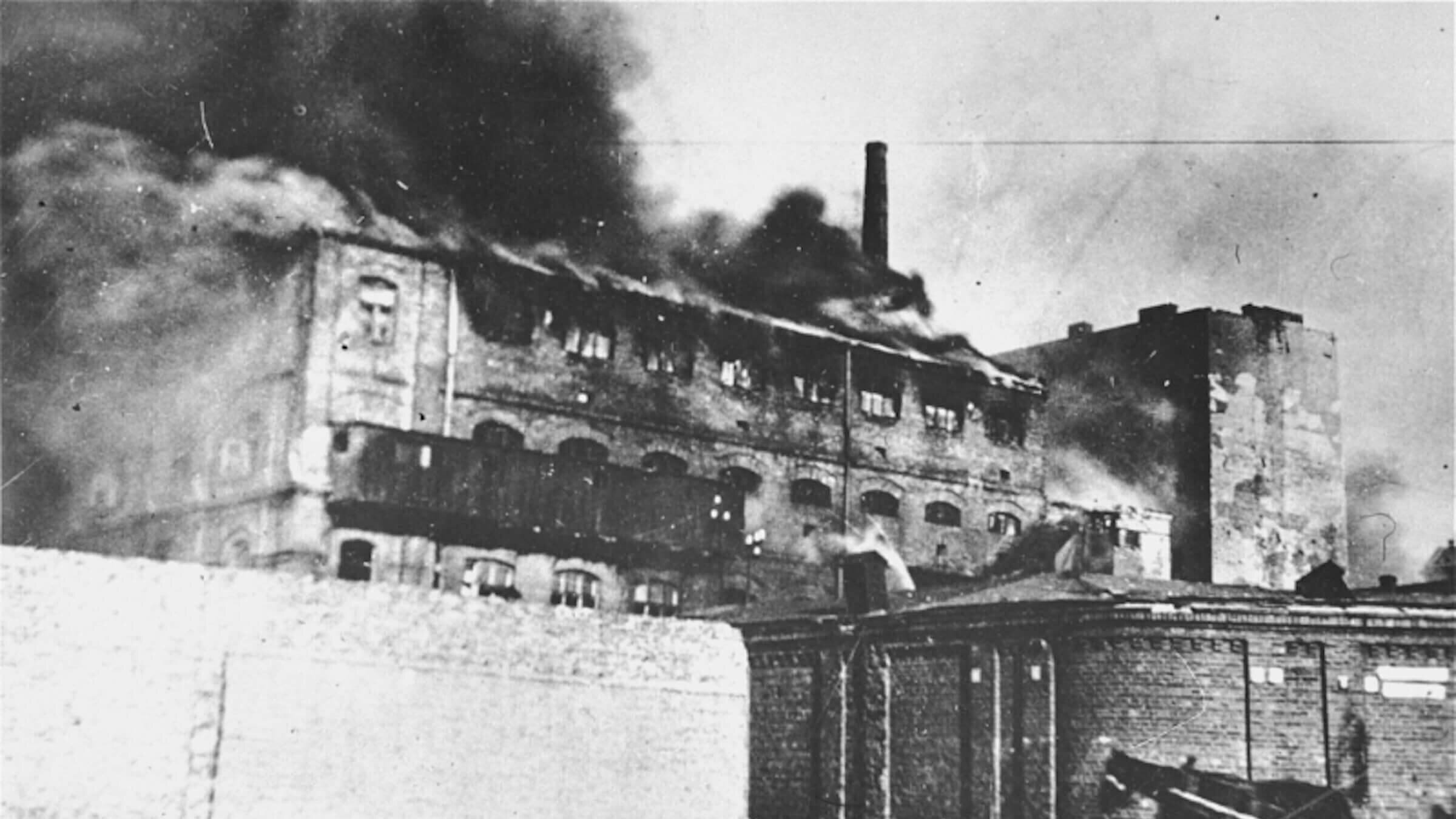
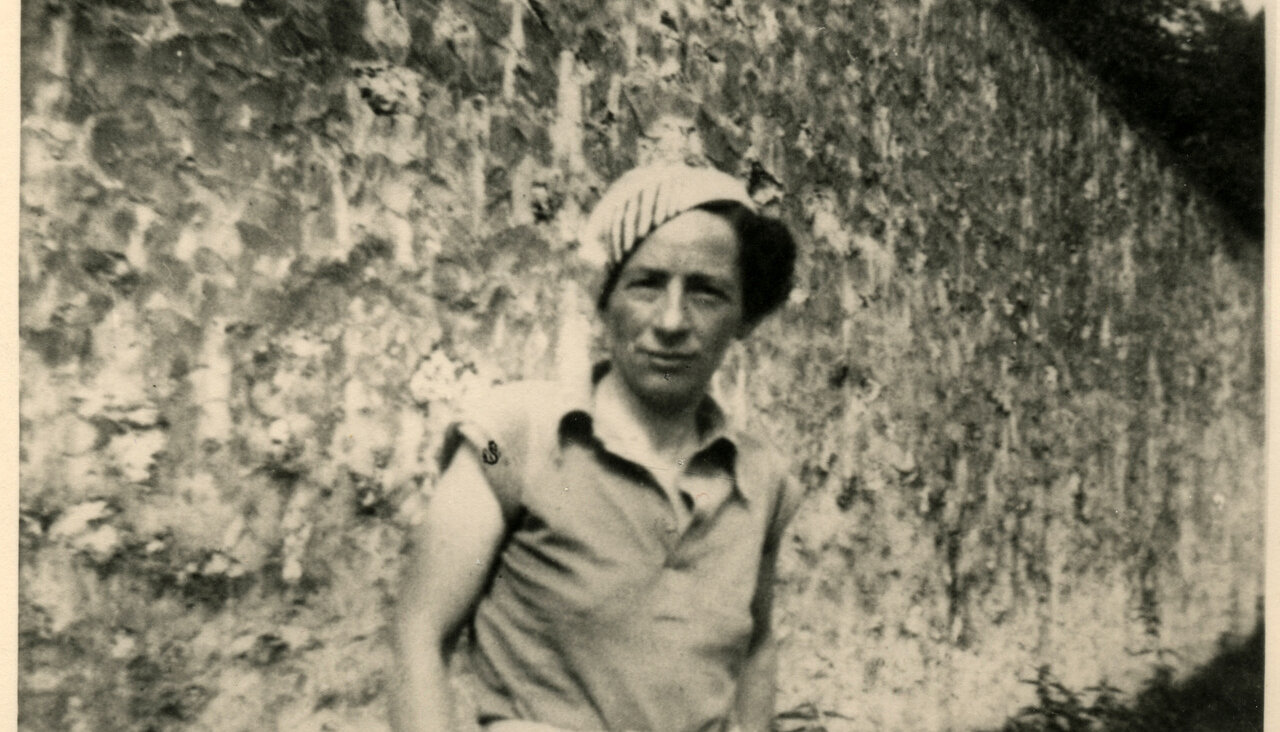
Photo by holocaustresearchproject.org/nazioccupation/stroopgallery2
By Mikhail Krutikov April 16, 2026
This is a revised version of the original article in Yiddish which you can read here.
On Both Sides of the Wall
Vladka Meed and Steven D. Meed
Citadel Press, 448 pages, $29.00.
“But surely by this morning we will learn something.” It was a sentiment that was going around the Warsaw Ghetto, overheard among the groups of Jews huddled on street corners. On occasion someone would muster up some hopeful words: “Jews, have no fear! You will all see. With God’s help, once more we shall survive the evil decree!” It was July 22, 1942: the first day of the Great Deportation. Any optimism was unfounded: On that day, the Germans led roughly 250,000 Jews to the death camps.
Thus begins the opening scene of On Both Sides of the Wall, Vladka Meed’s memoir of her life in Warsaw during World War II. Her story originally appeared in installments in the Forward shortly after her arrival in America, in 1946, under her real name, Feygele Peytel Miedzyrecki. A book-length edition was published by the educational committee of the Workers Circle in 1948.
In 1977, an English translation came out, with an introduction by Elie Wiesel. Now Meed’s memoir is available in an expanded edition, complete with an introduction by the historian Samuel Kassow and a foreword by the translator, Steven (Shloyme) Meed, Vladka’s son.
Vladka Meed takes the reader into the heart of the Warsaw Ghetto, with its charged atmosphere of hope, terror and despair. She summons the cacophony of those last ten, tragic months of the Ghetto; we hear the voices of Jews, Germans and their Ukrainian accomplices.
Fortunately, Vladka managed to avoid the daily aktsyes (deportation campaigns) when the mundir forces (“Jewish police,” in the ghetto vernacular) would capture Jews for deportation. Vladka soon found herself alone: “My mother, brother, and sister have all been taken from me to some unimaginable fate,” she writes. Vladka was lucky to find a job in one of the workshops that served the Germans.
Following the second selektsye (separation of fit and unfit Jewish laborers) in September 1942, the Jews that remained in the ghetto began preparing for an uprising. Vladka remembers their calls: “If we are to die, anyway, let us die with dignity!” “The enemy must pay a heavy price for our lives!”
As a young girl, Vladka was active in the Jewish Labor Bund, an affiliation that helped keep her alive during the Holocaust. She spoke Polish well without a trace of a Yiddish accent, and had “good Aryan looks.” The leadership of the ghetto’s Bundist underground suggested that she become a courier between the ghetto and the Aryan side. That’s how the young Jewish girl, Feygele Peltel, was transformed into a Polish woman by the name of Wladislawa Kowalska, or simply — Vladka.
Step by step, she integrated into “normal life” among Christian Poles. At first she had high hopes. “I had expected to encounter a strong interest among our Polish neighbors about life within the ghetto,” she writes. But she soon realized that her neighbors preferred very much not to know what was happening on the other side of the ghetto wall.
Vladka and her comrades on the Aryan side were charged with obtaining weapons for the ghetto. But their relations with members of the Polish underground army were poor, and little came of their interactions: “As we travel about the city, trying and failing to get arms…we beg them: ‘Help us to obtain weapons. We are willing to pay well for them!’”
Most of their requests fell on deaf ears. Often they’d hand over payment and receive nothing in return — or worse, their Polish contacts would betray them to the Germans. Even when the Jewish ghetto fighters managed to get their hands on a revolver, another challenge remained: smuggling it into the ghetto.
The book is a gripping read. Vladka Meed is a skillful narrator, and she gives a detailed accounting of her dangerous missions. Any day could have been her last: she never knew if she’d live to see the evening. Vladka had many more failures than successes, and in many cases she was saved by a fateful coincidence.
Kassow’s introduction describes the greater historical context of that period, while Steven Meed provides personal details about his mother’s life before the Holocaust, based on her interviews in the American press.
In his translation, Meed includes bracketed phrases that provide brief, helpful contextual notes. He has also chosen to preserve Yiddish words from the so-called “ghetto language”, like aktsye (action), mundirn (police forces), and blokade (blockade). The choice to keep such vocabulary gives the text an authentic feel, even as Meed’s strategy occasionally raises questions. Why, for example, did he ‘translate’ the word kristin (Christian woman) in the Yiddish as “shikse” (an often pejorative term for a gentile girl) in the English? In general, his translations in the book occasionally veer far from the original.
In the United States, Vladka Meed dedicated her life to Holocaust education. This newest edition of her book carries this mission forward, and constitutes a significant addition to the ever-growing library of documents and research on the Warsaw Ghetto.
Unfortunately, the history of Jewish resistance to German occupation still hasn’t been properly integrated into American Holocaust education, even in Jewish day schools. At the University of Michigan, when I discuss the Warsaw Ghetto uprising with students in my course on the history of the Jews in Eastern Europe, I often get this response: “Why didn’t anyone tell us about this in our Holocaust education classes? It’s so important!”
To this day we often view the history of the Holocaust with a focus on mass murder. Vladka Meed’s book, writes Kassow, “demonstrates [that] this battle to stay alive, against all odds, refuted the oft-made claim that Jews went passively to their deaths.”
Did you know that only 2% of Forward readers donate to support our nonprofit newsroom? That 2% make it possible for millions to read the Forward without a paywall or subscription — removing any barriers to the full and fair Jewish story.
But while the Forward is free to read, it isn’t free to produce. Big stories — like deep dives into the antisemitism data, political scoops or reporting trips to college campuses — take months of research and fact-checking. All while we keep you informed of what you need to know each day.
— Rachel Fishman Feddersen, Forward Publisher & CEO
Support our mission to tell the Jewish story fully and fairly.