My irrational, possibly problematic obsession with an $85 yarmulke
What the haute couture kippah tells us about where Judaism is headed
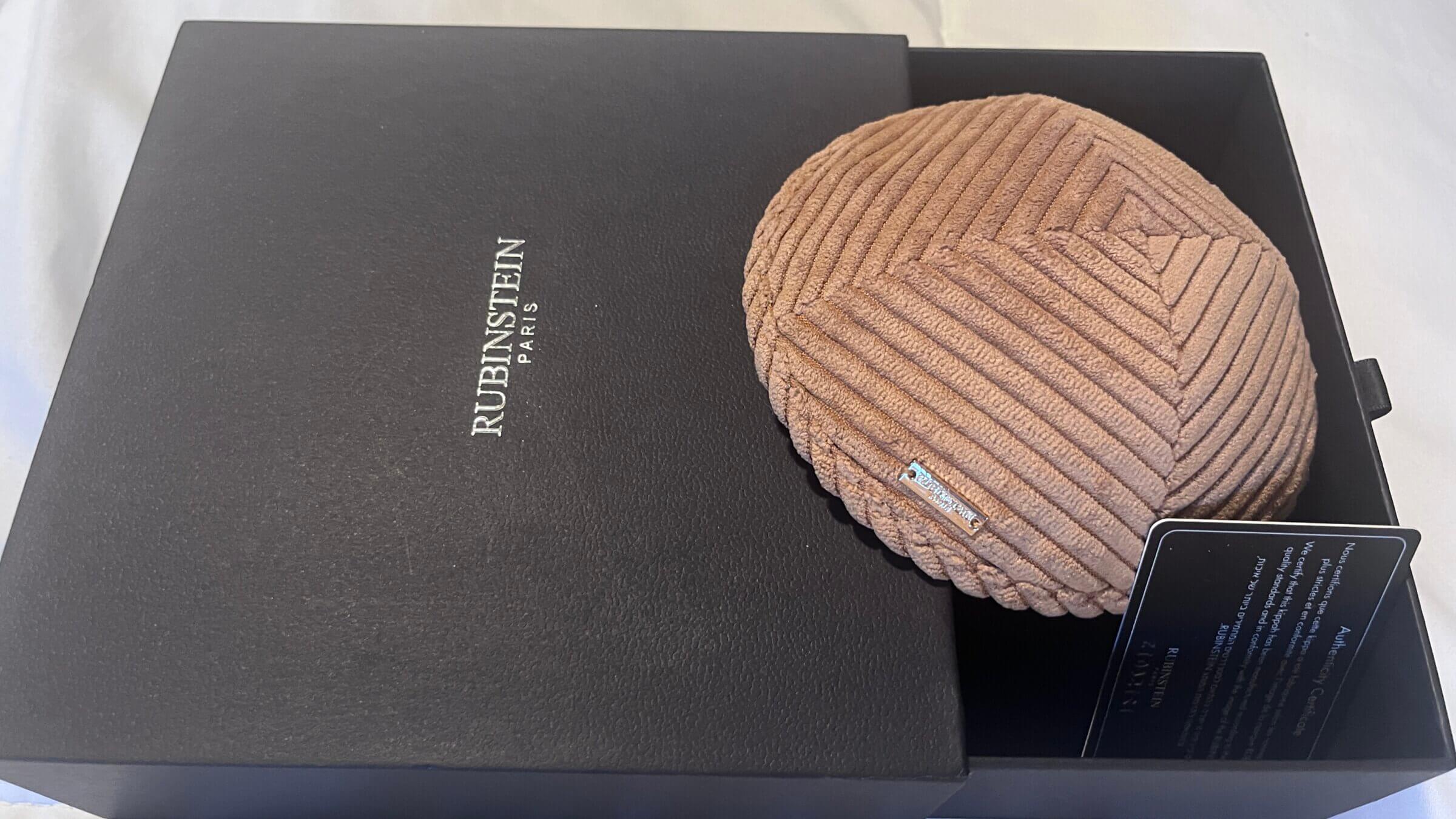
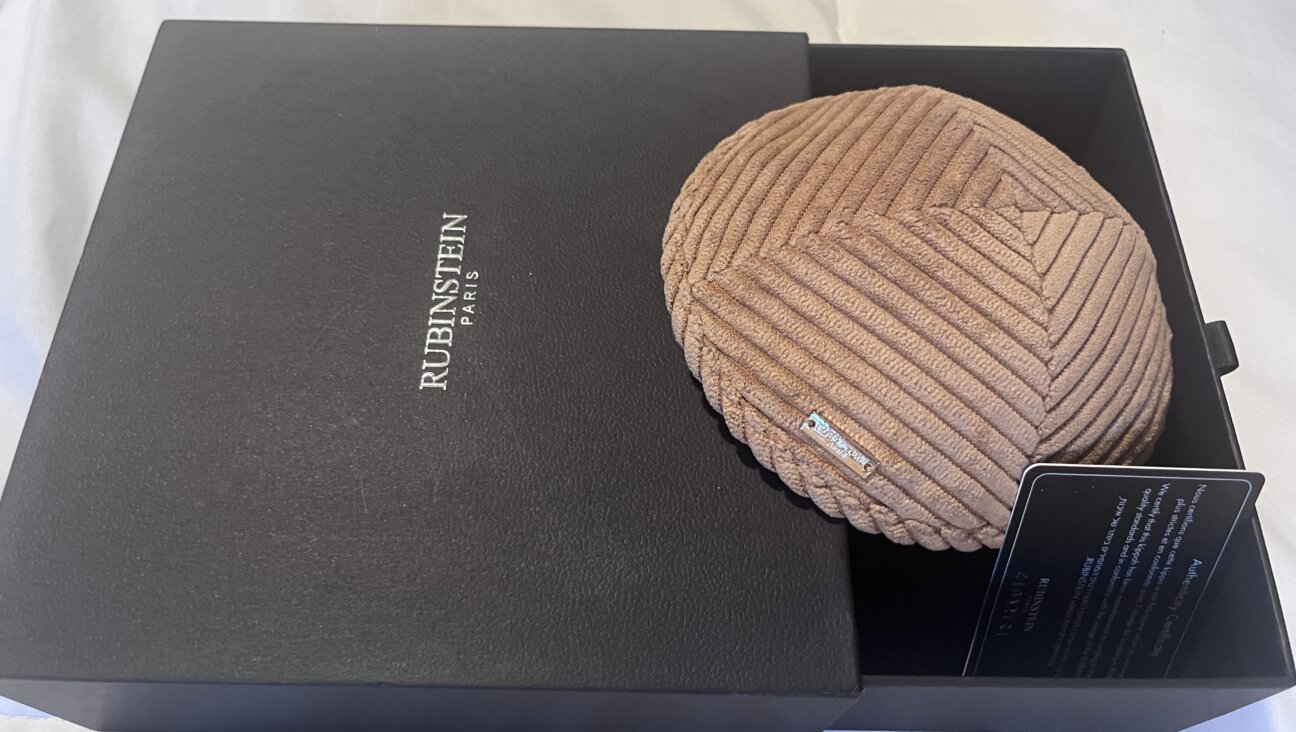
Every kippah from Rubinstein Paris comes with a branded storage box, drawstring bag and certificate of authenticity. Photo by Louis Keene

By Louis Keene June 5, 2026
Growing up, we had a rule of thumb about yarmulkes: the closer yours was to your forehead, the more strictly religious you were. The frum bochurim placed theirs practically on their noses; the boys from Conservative families bobby-pinned their kippahs on the back of their heads, like climbers gripping a rockface. The cool kids, of course, stuffed theirs in their pockets.
The Jewish skullcap, in other words, was a signifier of much more than the religious precept it embodied. Over the years not only a yarmulke’s positioning but also its style, size and material have come to place its wearer somewhere on a continuum of Jewish identity. Trends in yarmulke wearing, then, may tell us a story about where Judaism is — forgive me — headed.
So what kind of Jew wears an $85 yarmulke, and what kind of Judaism demands it? These questions gnawed at me when I first learned about Rubenstein Paris, a new kippah couturier whose ads found me on Instagram. Available in a range of expensive-looking solid colors (copper, cream, sapphire) and fabrics (velvet, corduroy, even horsehair), these kippahs are here to replace your tattered souvenirs.
“Everybody’s just walking around with their kippot from — I don’t know, Mendel and Rachel’s wedding, 2019,” Jonathan Hirsch, Rubenstein’s German-Israeli founder, told me recently. “I was like, ‘It’s such a sacred item, you know? Why isn’t there any beautiful kippah, that you can really acknowledge for what it is?’”

He’s onto something. Even as an image-conscious, Shabbat-observant millennial, I had largely neglected the yarmulke; when I wanted to look sharp, I ditched it. I was not completely out on Jew-caps, to be sure — like every other frat boy who thought Mac Miller was Moses, I went through a vintage snapback phase in college. But when I’ve had to clip up, I’ve made do with whatever I had lying around — usually something suede, dark, and folded more times than an origami fortune teller.
Hirsch offered to send a freebie, but at $85, accepting it felt compromising. The loaner we agreed to instead came in a branded drawstring bag, which was accompanied by a sleek black storage box. Though I’d secretly hoped for the horsehair model, the kippah Hirsch sent was more utilitarian: a ribbed velvet, golden brown, with the rise and structural integrity of one of those dome-houses you see in Architectural Digest. Velvet piping twisted around its circumference; its cloth inner lining depicted a globe and a shofar.
I put it on.
Skullcap semiotics

The story of the kippah begins in the Talmud, when 3rd-century sage Rav Huna proclaimed that he never walked more than four cubits without his head covered to symbolize that the divine presence was always above him. After rabbinic law codified the practice in the 1500s, the kippah evolved into a marker of Jewish cultural mores.
For example, 20 years ago, most Modern Orthodox boys wore black suede kippahs, but today, as people debate whether Modern Orthodoxy is dead, suede is disappearing, replaced by black velvet, the standard among Haredi Jews, and the kippah sruga — the crocheted yarmulke associated with the Israeli Religious Zionist movement. Pluralism out, orthodoxy in.
But it’s also a fraught moment to be displaying any marker of Jewish identity. Wearing a kippah in public makes you subject to a certain type of attention these days: the glare of being Jewish at a time when the Jewish state is embroiled in enormously unpopular and destructive wars. Hirsch, who is 29 and lives in Berlin, knows this firsthand — these days he doesn’t feel safe wearing a kippah in public.
And yet I suspect that growing Jewish isolation also puts the lie to our assimilation fantasies; it makes us more likely to wear the things that attach us to each other. Indeed, there is a renaissance in Judaica today driven by new designers and younger consumers finding joy in their heritage. The name Rubenstein is a play on Hirsch’s middle name, Reuven. But he also just thought it sounded cool.
All about the Benyamins
First ironically, then with some resignation, I found that the Rubenstein was the only kippah I wanted to wear — my fancy kippah became my everyday kippah. Putting it on was a daily treat — I was humored by the upgrade. I began picturing how gloomy and shallow life would be without it. I debated the unthinkable — ponying up to keep the loaner.
I was still conflicted about the idea of the object, which felt like a metaphor for the sticker-shock that accompanies Jewish life, especially Orthodox life, in the U.S. today. There’s the skyrocketing cost of real estate in Jewish neighborhoods, the eyewatering day school tuition, even the price of kosher meat and grape juice. Was it an $85 kippah, or a yeshiva-league Sorting Hat?
I put the questions to Hirsch. There are very few ritual objects, he pointed out, from the kiddush cup to candlesticks to one’s tallit, that we pride ourselves on buying cheap. Why should kippot be the exception? “You’re giving your humility a bigger meaning,” he said, “by the fact that you’re wearing this on your head.”
It was true — I felt more humble than ever before, and expected others to acknowledge my commitment and my sophistication. I can see you are a man of taste, they would say, presumably lowering a monocle. (I would nod, then dip my double-dark chocolate Milano cookie into a steaming teacup.)
It was true my designer yarmulke was not the conversation starter I’d anticipated. Only one person complimented me on it unprompted — that singular infallible judge of quality, my mother. Everyone else, I’m certain, was stealing covetous glances. But they didn’t need to praise, ask about, or even notice my beloved yarmulke, which I’m sure I’ll return soon. The premium fabrics, the shofar in the lining and the devotion it all symbolized were between me and Hashem.
I’m personally matching all gifts to the Forward, up to $36,000. Can I match your gift now?

Hello, fellow Forward reader! I’m Joel Brown, a Forward reader and supporter for more than 15 years, and currently the chair of the board of directors.
I’m an avid Forward reader because it ticks so many of my essential boxes: excellent journalism, Jewish focus and diverse viewpoints. In today’s political climate, what I most appreciate is the Forward’s independence — made possible by the generosity of its membership.
The Forward is committed to bringing you unbiased, nuanced Jewish news. From my position as board chair, I see an exciting future as we expand our position as the definitive independent voice of contemporary American Judaism.
— Joel Brown, Forward board chair
Support our mission to tell the Jewish story fully and fairly.