Debating Zionism is fair. Protesting Israel’s president at commencement crosses the line
Some JTS students don’t want to hear from President Isaac Herzog. Their concerns are legitimate but misguided
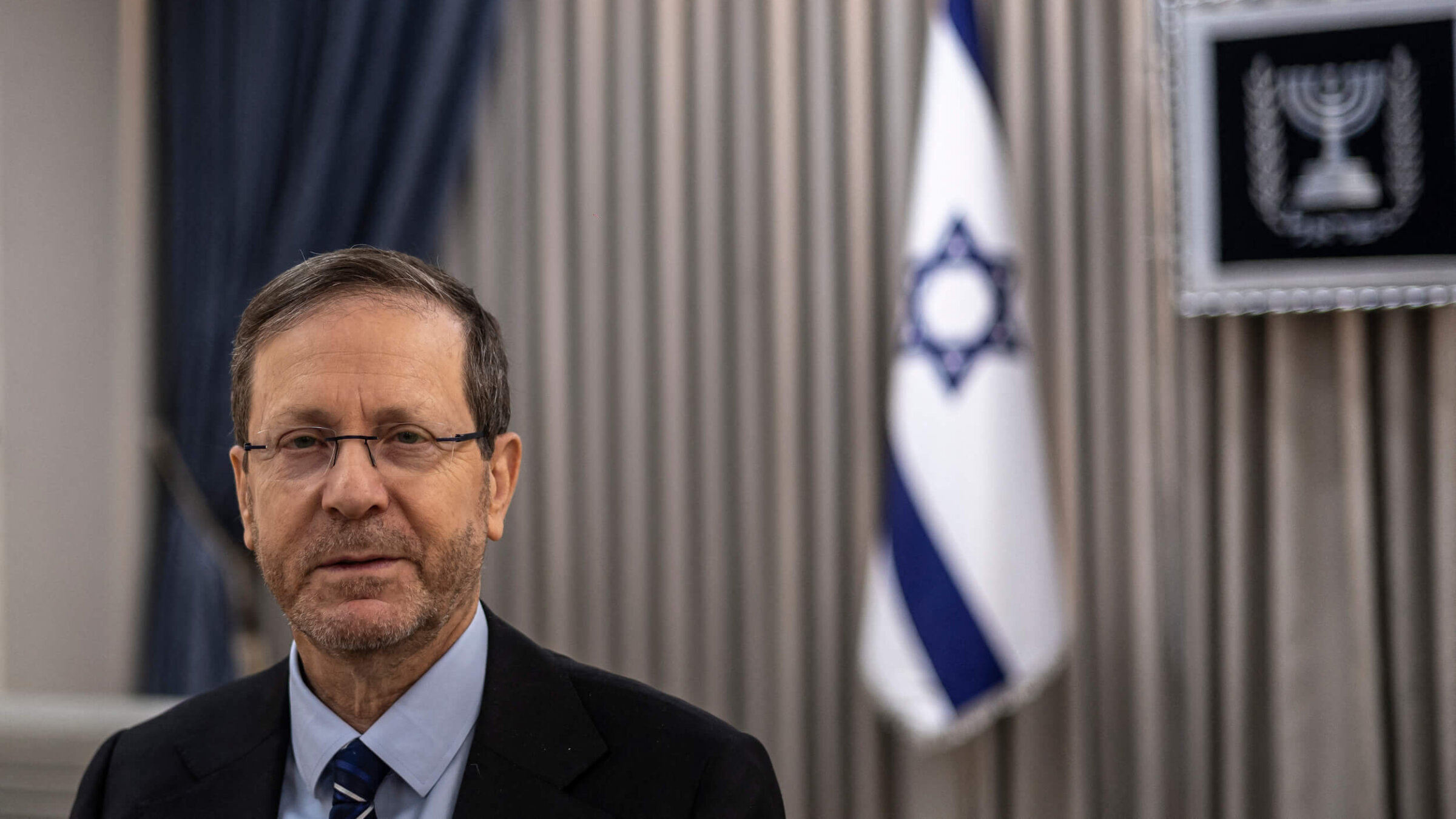
Israel’s President Isaac Herzog on March 16. Photo by Olympia De Maismont / AFP / Getty Images
By Menachem Creditor May 12, 2026
In response to “Debating Zionism is good for Jews, actually“
I am grateful for Noam Pianko’s recent essay, “Debating Zionism is good for Jews, actually.” Pianko argued that criticism of a small group of graduating seniors at the Jewish Theological Seminary who objected to JTS’s invitation to Israeli President Isaac Herzog to serve as this year’s commencement speaker was misguided, citing JTS’s long history of internal debates over Zionism.
I was among those critics. In a May 3 blog post for The Times of Israel I argued that even six students publicly opposing Herzog’s presence was six too many — not because Jewish institutions should avoid debate, but because there is a difference between debate premised on a shared commitment to Jewish peoplehood, and debate that rejects of one of Jewish peoplehood’s central expressions.
Pianko rightly reminds readers that JTS has never been ideologically monolithic. Its history includes tensions between tradition and change, particularism and universalism, theology and modernity. Those tensions are part of what has made JTS so influential in American Jewish life for nearly 140 years.
The history of debate over Zionism within the seminary’s intellectual culture does not weaken my concern. It sharpens it.
The crucial issue is conceptual precision. Expressions of skepticism about Zionism in earlier periods of JTS history were often very different from today’s anti-Zionism.
In some cases, they reflected a classical religious view that Jewish return and sovereignty would come through a messianic process rather than through human political action. That position was a theological claim about timing and agency, not a negation of Jewish national aspiration. In others, like Ahad Ha’am’s cultural Zionism, for example, an emphasis was put on Jewish renewal through language, spirit and civilization, while questioning whether political statehood should be the immediate or primary goal. That was an internal argument about how Jewish national life should unfold — not over whether such a life was valid.
Contemporary anti-Zionism, in contrast, frequently challenges the legitimacy of Jewish sovereignty itself. That is not simply another version of an older seminary debate. It is a different claim with different consequences.
To be clear, the students’ letter is not a simple declaration of anti Zionism, and it should not be caricatured as such. Their stated concerns include the devastation of the war in Gaza, the moral responsibilities of Jewish leadership, and the fear that honoring Herzog without sufficient public reckoning sends the wrong message about Palestinian suffering.
Those concerns deserve serious engagement. But seriousness also requires asking what this protest communicates in institutional context. At a moment when the Jewish people and Israel’s legitimacy are under intense assault, opposing the presence of Israel’s president at a flagship Jewish seminary risks turning anguish over Israeli policy into a symbolic rejection of Israel’s legitimacy as a central part of Jewish life. That is the line I believe JTS must be careful not to blur.
So while Pianko is right to highlight ideological range in JTS’s past, we should not flatten the past into the present.
Zionism did not become central to Jewish life by accident. It emerged as the primary vehicle through which the Jewish people reclaimed agency, safety and a collective future after centuries of vulnerability. The establishment of the state of Israel transformed Jewish existence. That fact does not erase earlier debates, but it does change the center of gravity.
Institutions like JTS have a responsibility to teach that complexity honestly — which Herzog’s presence at commencement, and thoughtful, well-informed debates around it, will help to do. Seminaries should expose students to the range of Jewish thought, including theological reservations, cultural critiques and internal disagreements about Zionism.
At issue is not whether the varieties and history of Zionism should be debated at JTS. Of course they should. Instead, this incident is a reminder that a flagship institution of Jewish learning can and should remain clear that Jewish peoplehood, Jewish sovereignty and the state of Israel are not peripheral to contemporary Jewish identity. They are central.
Did you know that only 2% of Forward readers donate to support our nonprofit newsroom? That 2% make it possible for millions to read the Forward without a paywall or subscription — removing any barriers to the full and fair Jewish story.
But while the Forward is free to read, it isn’t free to produce. Big stories — like deep dives into the antisemitism data, political scoops or reporting trips to college campuses — take months of research and fact-checking. All while we keep you informed of what you need to know each day.
— Rachel Fishman Feddersen, Forward Publisher & CEO
Support our mission to tell the Jewish story fully and fairly.