What did Purim costumes look like in a pre-war Polish shtetl?
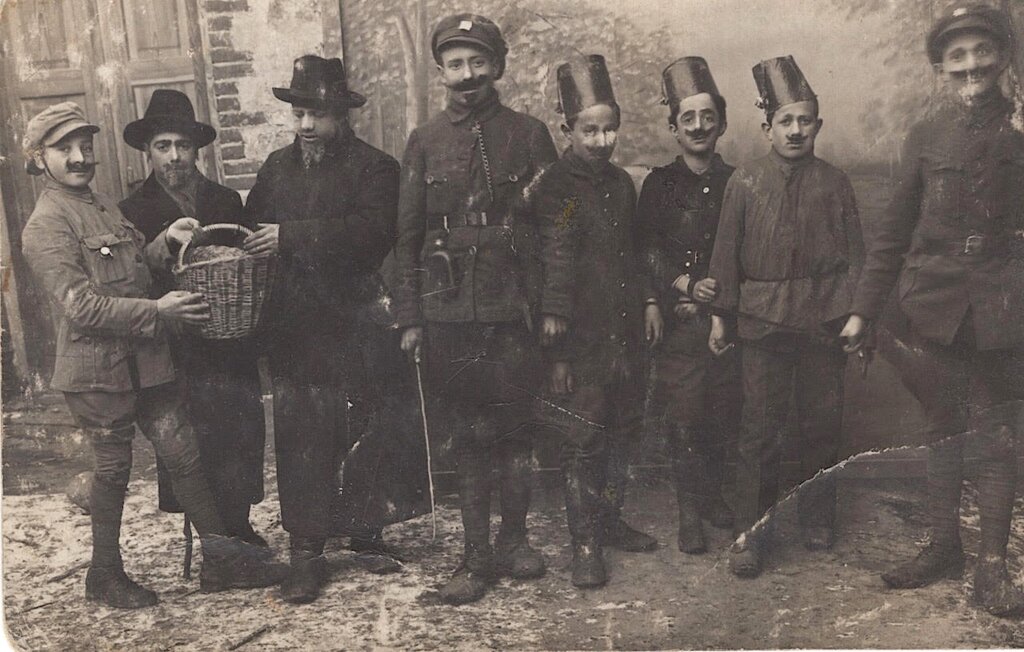
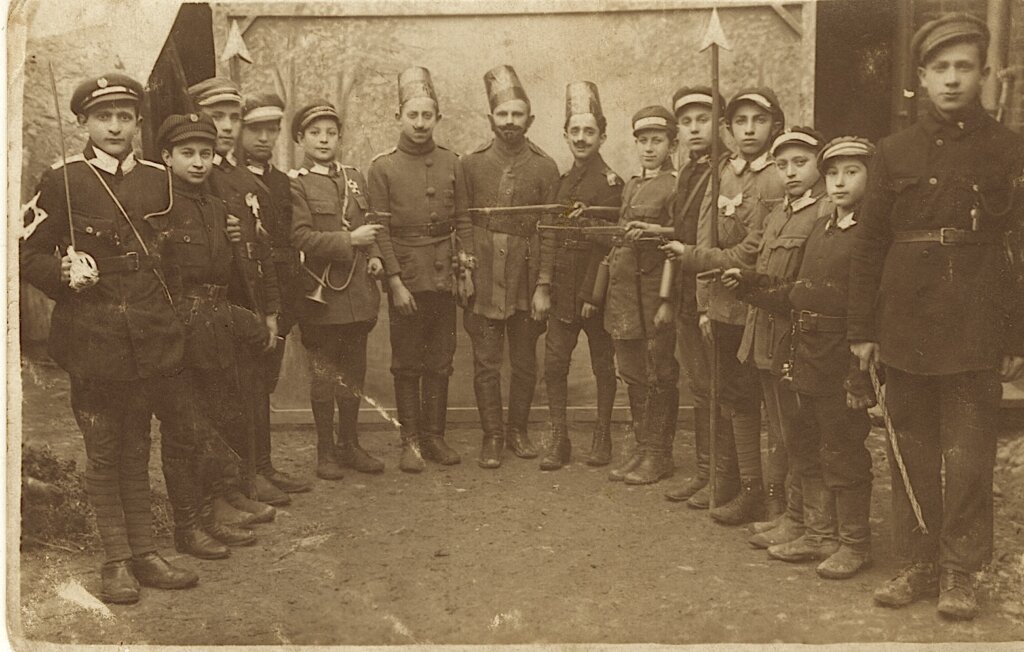
The boys in these photos are putting on a Purim shpiel (Purim play) in Apt (Opatow), Poland.
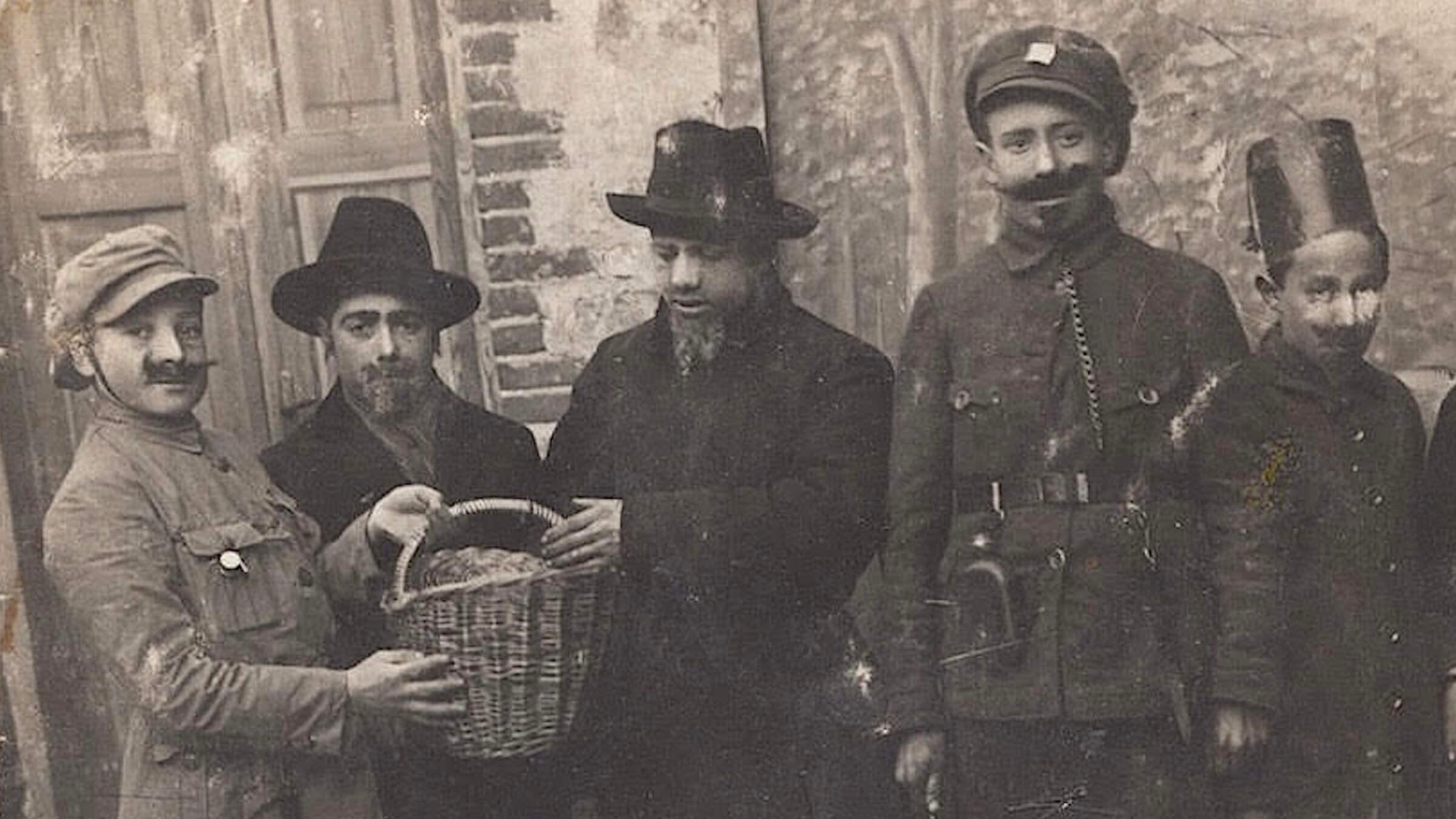
Courtesy of Barbara Kirshenblatt-Gimblett

By Forverts Staff March 7, 2023
Two photos of young performers of a Purim shpiel (Purim play) in the shtetl of Apt (Opatow) appeared on Facebook this week. The actors look to be between 10 and 15 years old.
The images were posted by Yiddish folklore scholar Barbara Kirshenblatt-Gimblett. Her own father, Mayer Kirshenblatt, was born and raised in Apt. She found them in her private collection but has no information about it.
The Purim shpiel is a skit or monologue about the Book of Esther that’s performed at the festive Purim family meal. As described in this entry from YIVO’s website, the custom began in the fifteenth century or earlier and was usually performed in Yiddish. The skit was often based on the biblical Scroll (Megillah) of Esther.
According to the story, two Jews, Mordechai and Esther, prevented the massacre of the Jews ordered by Haman, minister of Ahasuerus, king of Persia. The fact that this custom has been around for at least 500 years is testimony to its central role in Jewish culture.
"Why I became the Forward’s Editor-in-Chief"

You are surely a friend of the Forward if you’re reading this. And so it’s with excitement and awe — of all that the Forward is, was, and will be — that I introduce myself to you as the Forward’s newest editor-in-chief.
And what a time to step into the leadership of this storied Jewish institution! For 129 years, the Forward has shaped and told the American Jewish story. I’m stepping in at an intense time for Jews the world over. We urgently need the Forward’s courageous, unflinching journalism — not only as a source of reliable information, but to provide inspiration, healing and hope.
Support our mission to tell the Jewish story fully and fairly.