Recalling Millie Baran, whose mark on the Yiddish world lives on
Once a beloved “camp mother” at a socialist summer camp, she was invited onto “The View” to describe her Holocaust experiences.
Courtesy of the Baran Family
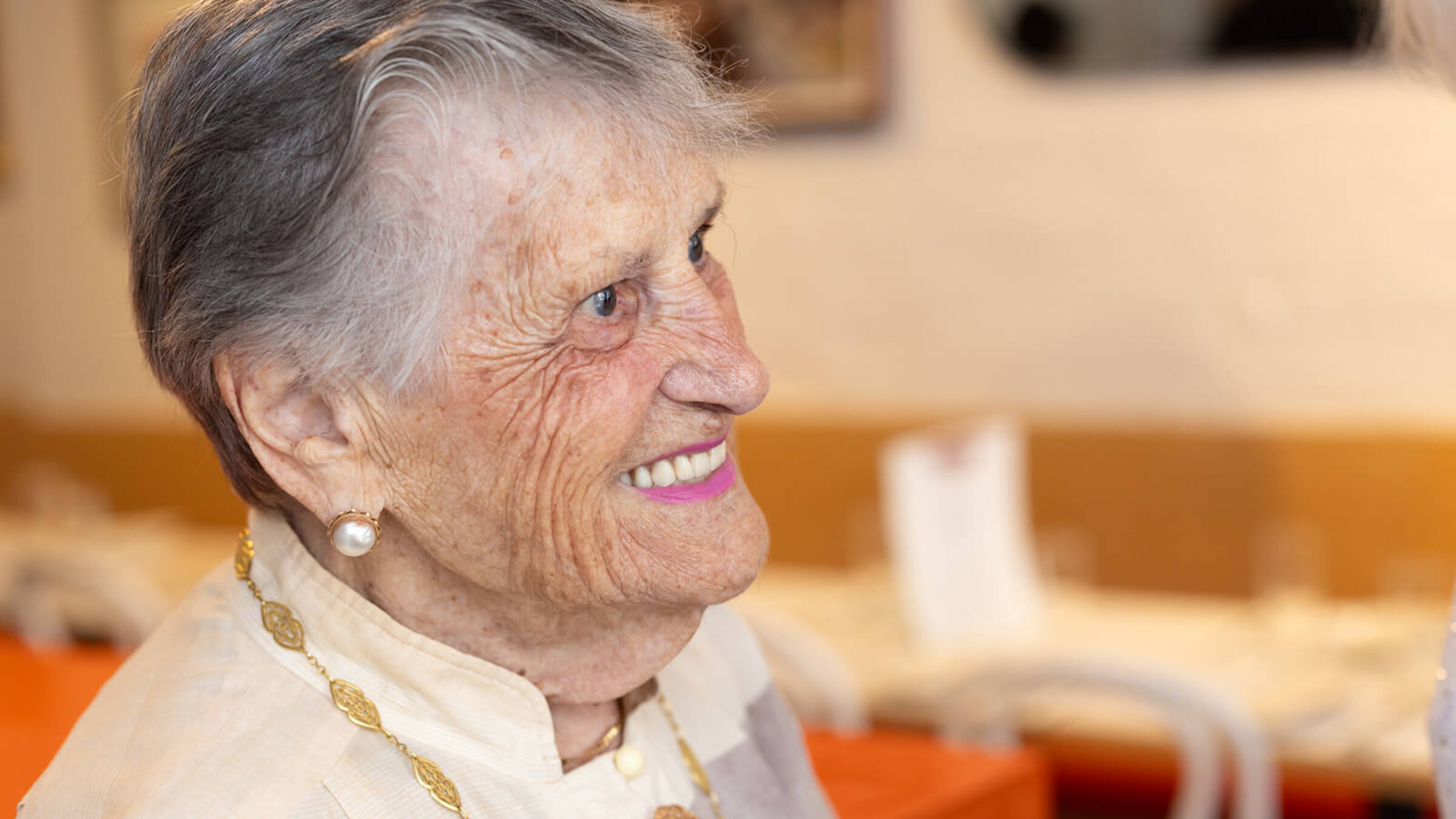
Millie Baran, a Holocaust survivor who served for many years as a “camp mother” at the socialist Yiddish summer camp, Hemshekh, and spoke publicly, even on television, about her Holocaust experiences, passed away on April 3. She was 100 years old.
Millie, whose late husband, Mikhl Baran, was the camp’s director, was known for her warmth and mentshlekhkeyt (kindness). As many former Hemshekh campers will tell you: Nishto keyn tsveyte — no one could replace her.
Born Mila Persky in 1926 in the town of Oszmiana (Oshmene in Yiddish) in what was then Poland and is now Belarus, she attended a Tarbut school, a secular Zionist Hebrew-language school. An ardent Zionist herself, she often praised the education she received there.
After Millie’s passing, her daughters, Ruth Baran Gerold and Janice Baran Blatt, talked about her fluency in both Yiddish and Hebrew in an interview with the author. “She spoke a beautiful, elegant Yiddish,” Ruth said. “In fact, her Hebrew education at Tarbut enriched her Yiddish.”
During the war, Millie was interned in the Oszmiana ghetto, the Vilna ghetto and several labor camps. She credited her survival to a specific forced labor detail on a Polish farm where the prisoners were permitted to eat the apples that had fallen on the ground.
“My mother said, ‘This farmer wasn’t the worst, and this guard wasn’t the worst, so they let us eat,’” Ruth said. “This source of nutrition was key to her survival.”
One day, when Millie’s hands became bloody from shoveling, a Polish woman, also a slave laborer, approached her. “She heard Millie singing and was so captivated, she offered to do Millie’s shoveling if Millie would sing as they worked,” Ruth said. “Throughout her life, she always emphasized that even the smallest acts of kindness from strangers could have a tremendous impact.”
Despite starvation rations, Millie would not eat the meat given to the prisoners in their soup, since it wasn’t kosher. She valued Jewish tradition even in the most dire conditions, trading the non-kosher dish for a piece of bread, or whatever another prisoner would be willing to exchange for it.
Many years later, this devotion was apparent to Forverts editor Rukhl Schaechter.
“Millie was very principled, whether it was about supporting Israel or keeping Jewish traditions,” Schaechter said. “When I worked with her husband Mikhl at Camp Kinder Ring during the 1980s, Millie, who would come up on weekends, always asked the waiter for a fish or pasta meal; she never ate the chicken or meat dishes. I once asked her if this was because she was vegetarian, and she said no, she simply didn’t eat meat in a non-kosher establishment. I was still a secular Jew then and was in awe of her willpower. Little did I know that many years later, I would do the same.”
After the war, Millie and Mikhl, who was also from Oszmiana, encountered each other in Lodz, Poland, a city that drew many survivors. They fell in love and married. In 1949, they emigrated to the United States.
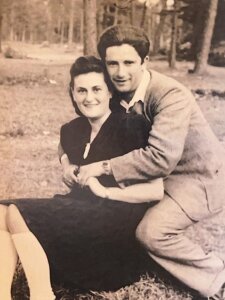
As a camp mother, Millie’s loving nature impacted the lives of hundreds of children of survivors. One former camper, Moish Russ, recalled her warmth and gentleness when he was a young boy in the 1960s. “I was still homesick at times. Millie was extraordinarily kind and carried herself with a confidence and gentleness I didn’t know in my own mother. The feeling of her comforting, soapy hands was a joy. I felt loved.”
“I remember her examining my fingernails to be certain they were clean,” said another former camper, George Rothe. “Years later, whenever I saw her, I’d hold out my hands to let her inspect them. It became a joke between us.”
Millie’s daughters both spoke of their mother’s elegance and fastidious nature, even in the clothes she wore as a prisoner in the ghettos and labor camps.
“Millie always made sure she kept a needle,” Ruth said.“She hid it in her blanket. Even in the camps, she made sure she never had a dropped hem.”
That commitment to dressing properly came up again years later, after Millie and Mikhl had immigrated to New York. Janice, then six, was sitting with her mother on the bus when a woman passed by with her hem undone. “Can you believe it?” Millie said, “She’s free here, and yet she goes around like that!”
While Millie had an enormous impact on the campers and staff at Camp Hemshekh, admiration for her goes far beyond. Her life inspired a jazz collaboration by Albert Marques and Amplify Voices called “Mir Zaynen Do” (“We Are Here”) that was performed at the iconic Joe’s Pub in January 2025.
Millie’s and Mikhl’s stories also made their way onto television when they were invited to share their Holocaust experiences on The View in 2020. After Millie’s passing, The View’s host Whoopie Goldberg shared the sad news on the show and paid tribute to Millie’s accomplishments.
Millie never took her freedom for granted, Ruth said. “Her favorite holiday was pesakh (Passover), and she died right before pesakh. Every year, she would stand by the kids’ table and say, ‘We were slaves in Egypt and I was a slave by Hitler. Now I’m an American and a free Jew.’ ”
In addition to her daughters Janice and Ruth, Milllie is survived by grandsons Ben, Jonathan, and Sam, and great-grandchildren Sophia, Joshua, Ava, Olivia and Billie.
Did you know that only 2% of Forward readers donate to support our nonprofit newsroom? That 2% make it possible for millions to read the Forward without a paywall or subscription — removing any barriers to the full and fair Jewish story.
But while the Forward is free to read, it isn’t free to produce. Big stories — like deep dives into the antisemitism data, political scoops or reporting trips to college campuses — take months of research and fact-checking. All while we keep you informed of what you need to know each day.
— Rachel Fishman Feddersen, Forward Publisher & CEO
Support our mission to tell the Jewish story fully and fairly.