VIDEO: Playwright Jacob Gordin brought realism into the Yiddish theater
This month marks 170 years since the birth of the playwright who translated “The Kreutzer Sonata” and “King Lear” into Yiddish
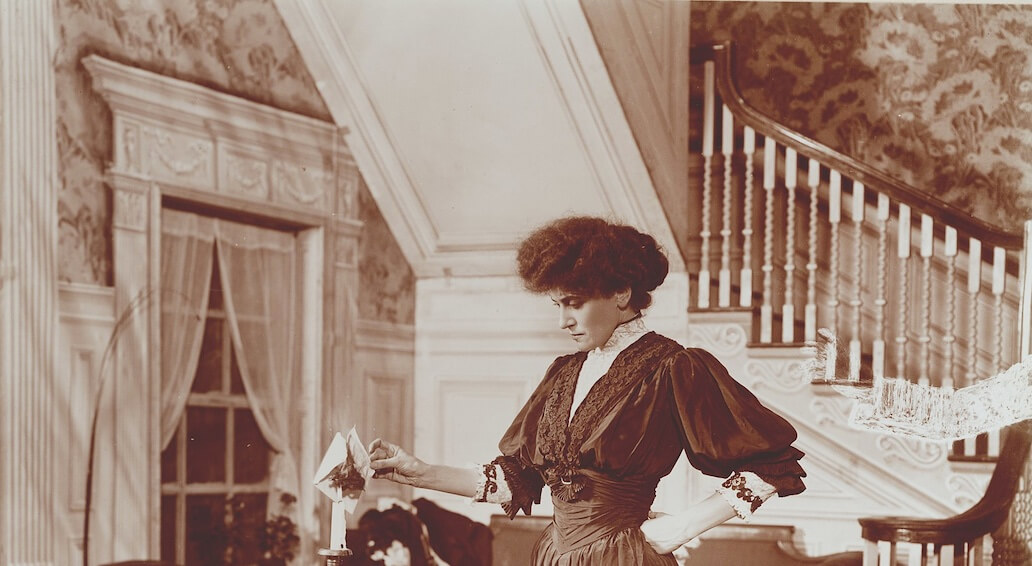
Graphic by Angelie Zaslavsky

By Forverts Staff May 15, 2023
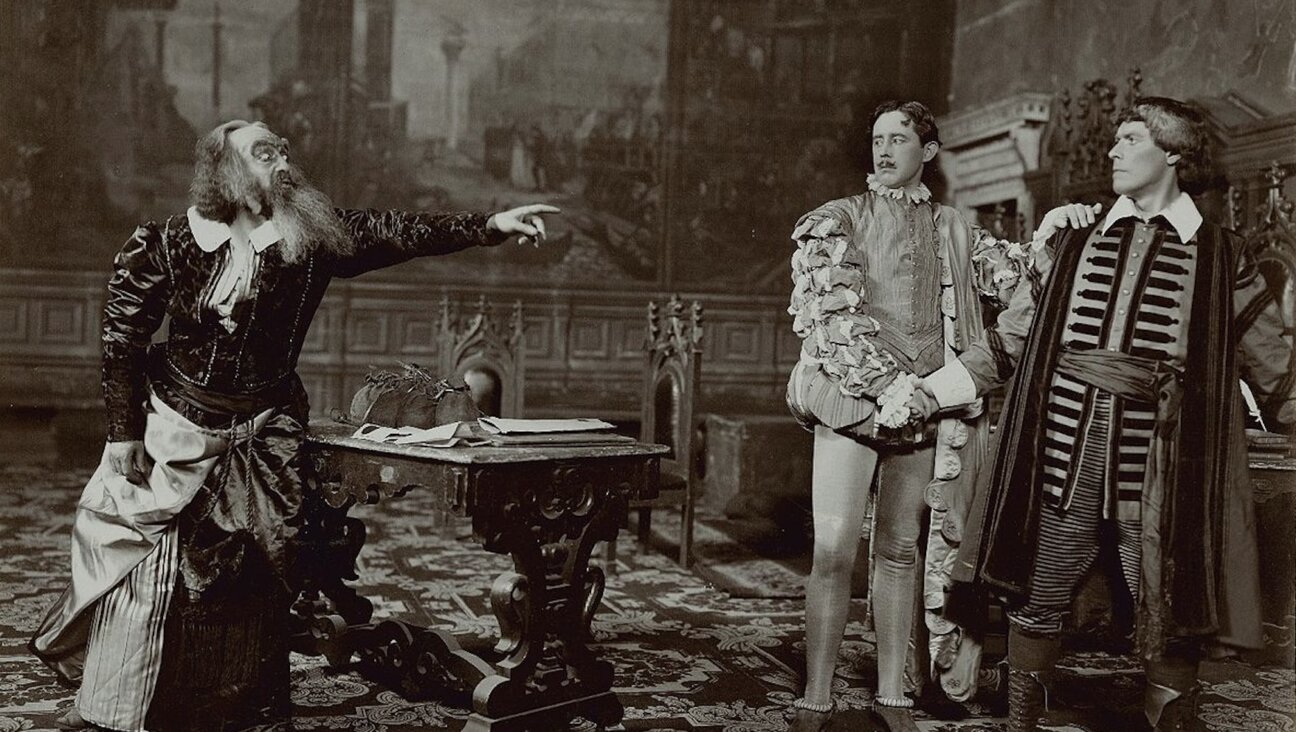
This month marks 170 years since the birth of the Yiddish playwright and journalist Jacob Gordin, who was born in the Ukrainian city of Mirgorodon on May 5, 1853. Gordin is credited with having brought realism into the Yiddish theater through his productions which included a Yiddish version of Shakespeare’s play King Lear and a translation of Lev Tolstoy’s The Kreutzer Sonata.
In his youth Gordin followed a unique trajectory for a Jewish young man, founding a religious sect based on ideas promoted by Russian novelist Lev Tolstoy. After the Czarist police disbanded the group, Gordin was forced to flee to America, where he began an unexpectedly successful career as a playwright for the Yiddish theater.
When Gordin arrived in New York, most Yiddish productions were light musical productions with vaudeville elements. He decided to take a more serious, naturalist approach to the Yiddish theater. In addition to The Yiddish King Lear and The Kreutzer Sonata, he also wrote his own plays. Two that were both a critical and popular success are Mirele Efros and Got, Mentsh un Tayvl (God, Man and the Devil). The Cambridge History of English and American Literature has characterized him as “the acknowledged reformer of the Yiddish stage.”
In this short Yiddish video with English subtitles, novelist and former Forverts editor Boris Sandler describes Gordin’s life, with all its surprising twists and turns.
Why I became the Forward’s Editor-in-Chief

You are surely a friend of the Forward if you’re reading this. And so it’s with excitement and awe — of all that the Forward is, was, and will be — that I introduce myself to you as the Forward’s newest editor-in-chief.
And what a time to step into the leadership of this storied Jewish institution! For 129 years, the Forward has shaped and told the American Jewish story. I’m stepping in at an intense time for Jews the world over. We urgently need the Forward’s courageous, unflinching journalism — not only as a source of reliable information, but to provide inspiration, healing and hope.
Support our mission to tell the Jewish story fully and fairly.