VIDEO: Hear the Israeli national anthem ‘Hatikvah’ sung in Yiddish
The song was translated into Yiddish in 1943 and was performed by the Yiddish Philharmonic Chorus in Lincoln Center last spring
Graphic by Angelie Zaslavsky

By Forverts Staff October 16, 2023
Most Orthodox and Conservative synagogues in the United States end their Shabbat morning services by singing the prayer “Adon Olam.” But in light of the horrific Hamas slaughter of 1,400 people in Israel last week, another song was added to the service in many shuls this Shabbat: the Israeli national anthem, “Hatikvah” (“Hope” in Hebrew).
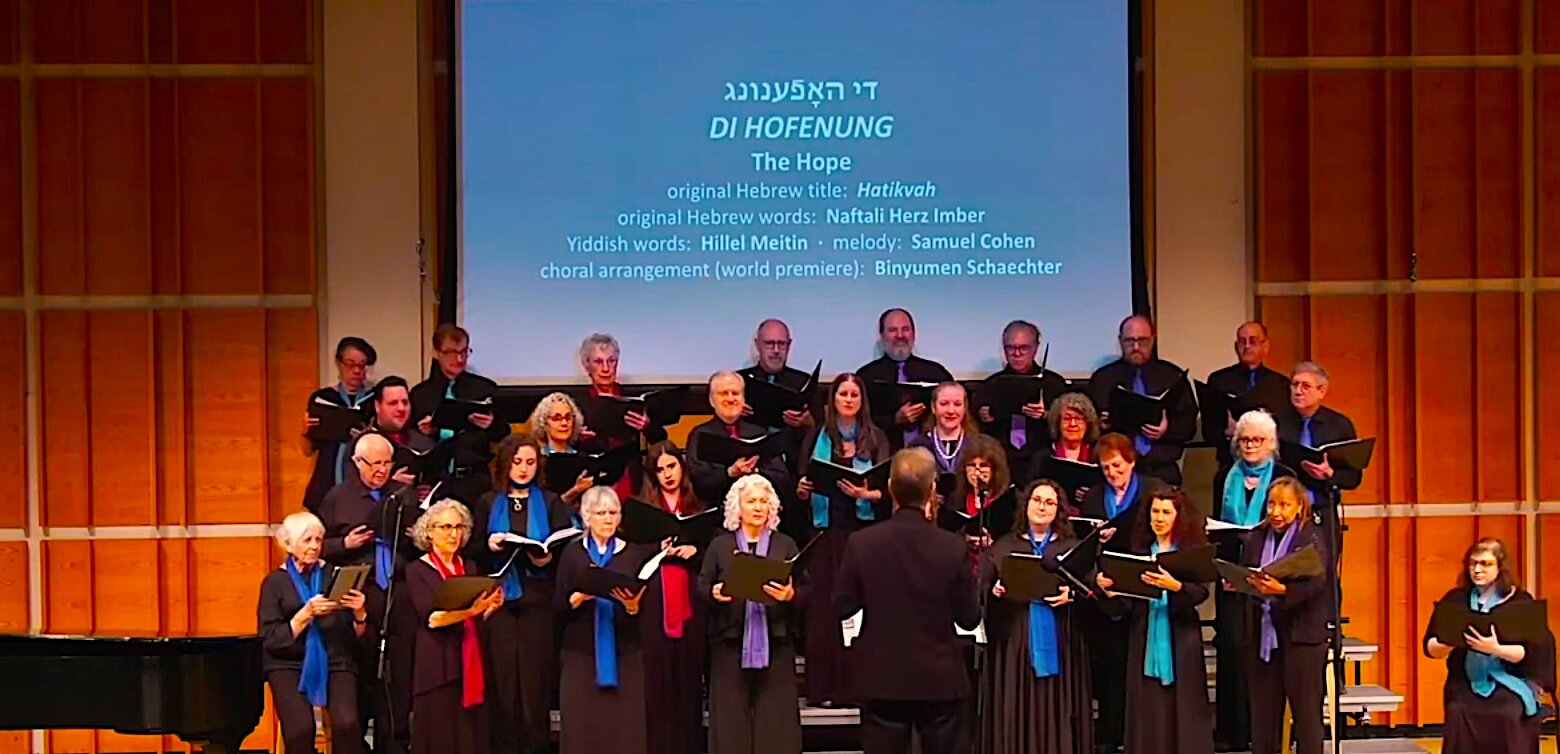
Few people know that “Hatikvah” was translated into Yiddish by Hillel Meitin in 1943, who called it by the Yiddish word for “hope”: “Di Hofenung.”
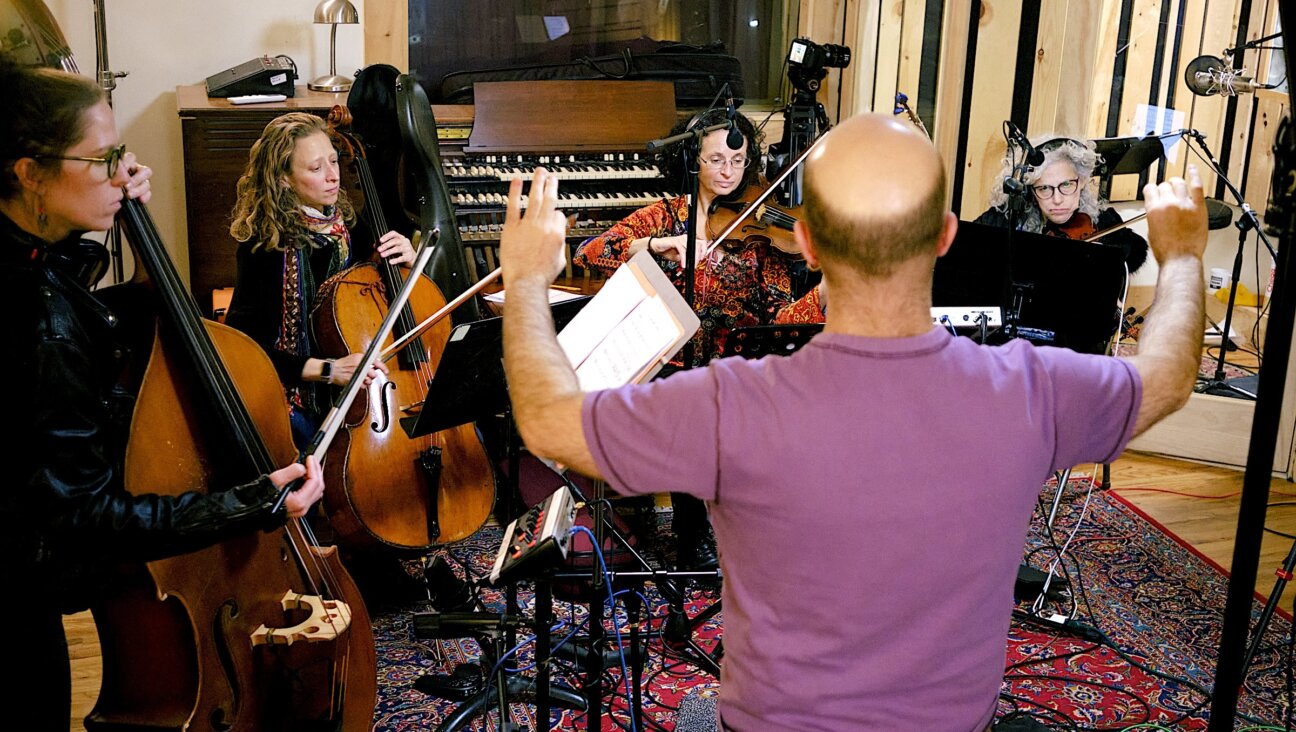
The song was performed by the Yiddish Philharmonic Chorus at its concert, “Chutzpah! Yiddish Songs of Defiance” in Lincoln Center in Manhattan in June. This was actually the world premiere of a new arrangement of the song by the chorus’s director, Binyumen Schaechter, brother of the Yiddish editor of the Forward, Rukhl Schaechter.
In light of the enthusiastic response to the concert, there will be a repeat performance on Oct. 29.
A video recording of the song, accompanied by English subtitles, is now on YouTube. (See the transliterated text of the song underneath the video below.)
The original text of “Hatikvah” was adapted from a much longer poem written in 1877 by Naftali Imber, a Jewish poet from Zolochiv (Złoczów), Austrian Galicia. In 1887, Shmuel Cohen, a teenage resident of Rishon Lezion, on the outskirts of Tel Aviv, set the words to a Romanian melody and the new song spread rapidly through the Zionist communities of Palestine.
Interestingly, although the state of Israel was founded in 1948, “Hatikvah” wasn’t officially adopted as its national anthem until 2004.
Di Hofenung
Kol-zman hertser zikh nokh regn,
Hertser yidishe nokh glien,
Un tsu Tsiens mizrekh-bregn
Oygn benkendik zikh tsien,
Iz di hofenung un shtrebn
Fun a mol nokh nit fargesn,
S’land fun oves tsu balebn
Vu s’iz Dovids hoyz gevezn.
Kol-zman shtoltse Yardns indn
In di bregn zayne shtromen
Un zey zinken mit gepilder
In dem yam Kineres’ tomen,
Iz di hofenung un shtrebn
Fun a mol nokh nit fargesn,
S’land fun oves tsu balebn
Vu s’iz Dovids hoyz gevezn.
Hert, fun goles-lender, brider,
Hert di shtim fun novis shtrofn,
Az bloyz mit dem letstn yidn
Kumen vet dos letste hofn.
Iz di hofenung un shtrebn
Fun a mol nokh nit fargesn,
S’land fun oves tsu balebn
Vu s’iz Dovids hoyz gevezn.
I’m personally matching all gifts to the Forward, up to $36,000. Can I match your gift now?

Hello, fellow Forward reader! I’m Joel Brown, a Forward reader and supporter for more than 15 years, and currently the chair of the board of directors.
I’m an avid Forward reader because it ticks so many of my essential boxes: excellent journalism, Jewish focus and diverse viewpoints. In today’s political climate, what I most appreciate is the Forward’s independence — made possible by the generosity of its membership.
The Forward is committed to bringing you unbiased, nuanced Jewish news. From my position as board chair, I see an exciting future as we expand our position as the definitive independent voice of contemporary American Judaism.
— Joel Brown, Forward board chair
Support our mission to tell the Jewish story fully and fairly.