In Max and Richard Fleischer, was father like son?
A Film Forum retrospective of the cartoonist and his journeyman heir brings innovation to light
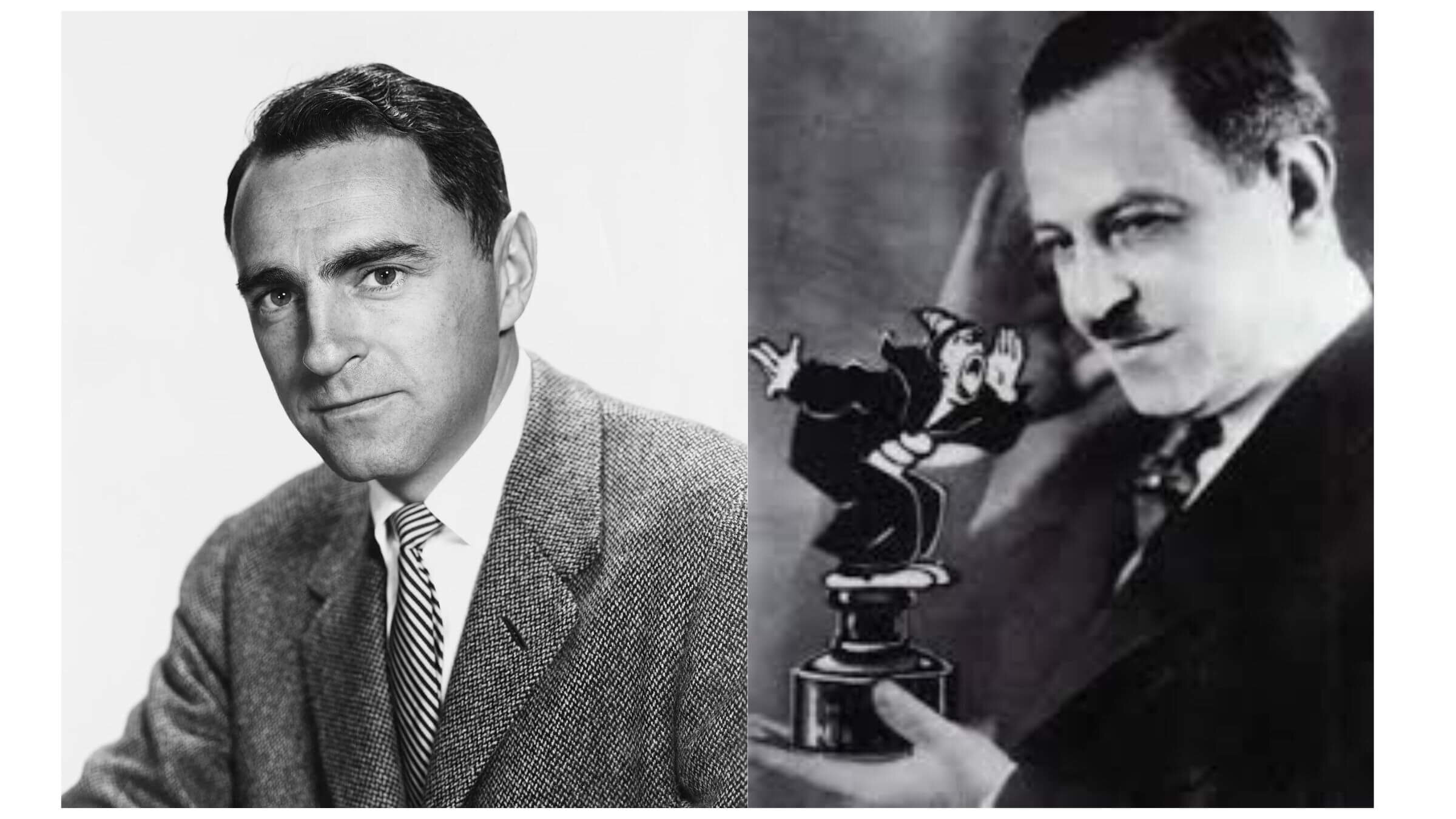
Richard and Max Fleischer (and Koko the Clown). Courtesy of Film Forum/Canva

By PJ Grisar May 7, 2026
Spare a thought for Mr. Boop’s bald spot — or is it a yarmulke?
In Max Fleischer’s 1932 cartoon “Minnie the Moocher,” Betty Boop is shown at home, harangued by her heavily-accented immigrant parents. They want her to eat her hasenpfeffer. For a particular subset of cartoon neurotics, what exactly is going on with Betty’s dad’s pate is a point of obsession.
It’s not a kippah. A wisp of hair tells us it’s male pattern baldness, and, anyway, hasenpfeffer has rabbit, which is treyf. But if you watch enough Fleischer cartoons, you can be confident that the man’s lone follicle was meant to be challenged by landsmen.
The first cartoon the Betty Boop appears in — more properly a Boop prototype, a lounge-singing anthropomorphic dog — has similarly scrambled Yiddishkeit. And 1930’s “Dizzy Dishes” captures the shift of a psychopathic canine short order cook.
At one point, an animal with a hat and beard, and a distinctly Eastern European accent, pokes his head through the window. “I want ham,” he says, and his face is immediately smacked by a loin printed with the letters כּשר, or kosher. It makes no sense.
There’s no more logic when, in 1932’s “I’ll Be Glad When You’re Dead You Rascal You,” Koko the Clown, fleeing from the disembodied head of Louis Armstrong, sprouts a speedometer from his rear, first reading 70, then 90, 100, a question mark, an exclamation point and, finally, כּשר.
It’s an inside joke from one Majer (later Max) Fleischer, who was born to a tailor in Krakow, and came of age in Brownsville, Brooklyn, when it was the domain of poor Jewish factory workers. The question of Boop’s paternity — and whether it is any strict sense Jewish — may come to mind at Film Forum, where Fleischer père et fils, a retrospective of Max Fleischer’s cartoons and his son Richard’s live action work, is playing from May 8 to 28.
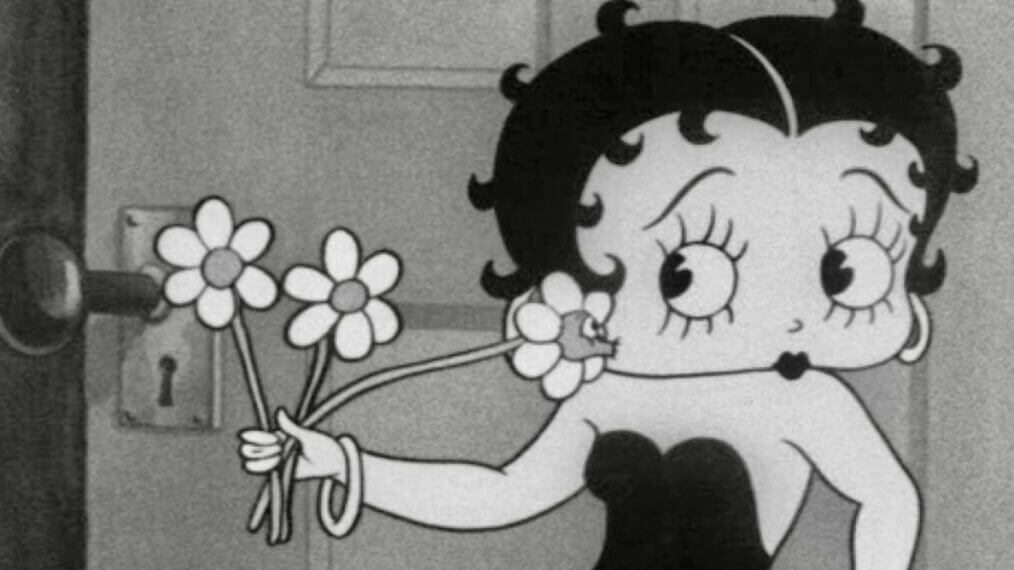
The elder Fleischer was a pioneer in animation. He patented the rotoscope, allowing artists to draw over filmed live action and create more realistic movement. He invented the bouncing ball used in sing-a-longs to indicate words. He pushed the boundaries of cartoons, bringing a manic, New York sensibility to the medium: Mickey Mouse drove a steamboat; Betty Boop went to hell.
It’s hard to explain the work of Fleischer and its sheer lunacy, but Jewish examples may suffice. Like a jumpscare, Semitic caricatures spring up from graveyards or along waterfalls with interjections like “ya needed ih” and “vat can we do?” Why? Why not?
At the same time Fleischer was capable of incredible, painterly refinement, as in his Superman cartoons. The curators at Film Forum have devoted programing to the Man of Steel, Betty Boop, Fleischer’s Popeye shorts, musical novelties and “head” cartoons, the kind favored by stoners in the 1960s and ‘70s.
They are all remarkably weird, but perhaps no less strange than the filmography of Max’s son Richard, who helmed the original Doctor Dolittle, Soylent Green and the 1959 adaptation of Meyer Levin’s novel Compulsion, a fictive account of the Leopold and Loeb case.
It’s difficult to say what Richard’s work has in common with his father’s, as so many of Richard’s projects have nothing in common with each other save his name in the credits.
What there is, from contained noirs like 1952’s The Narrow Margin to the spaghetti biblical epic Barabbas, is a brilliance for visuals and staging. (And a seeming affinity for lady pinnipeds.)
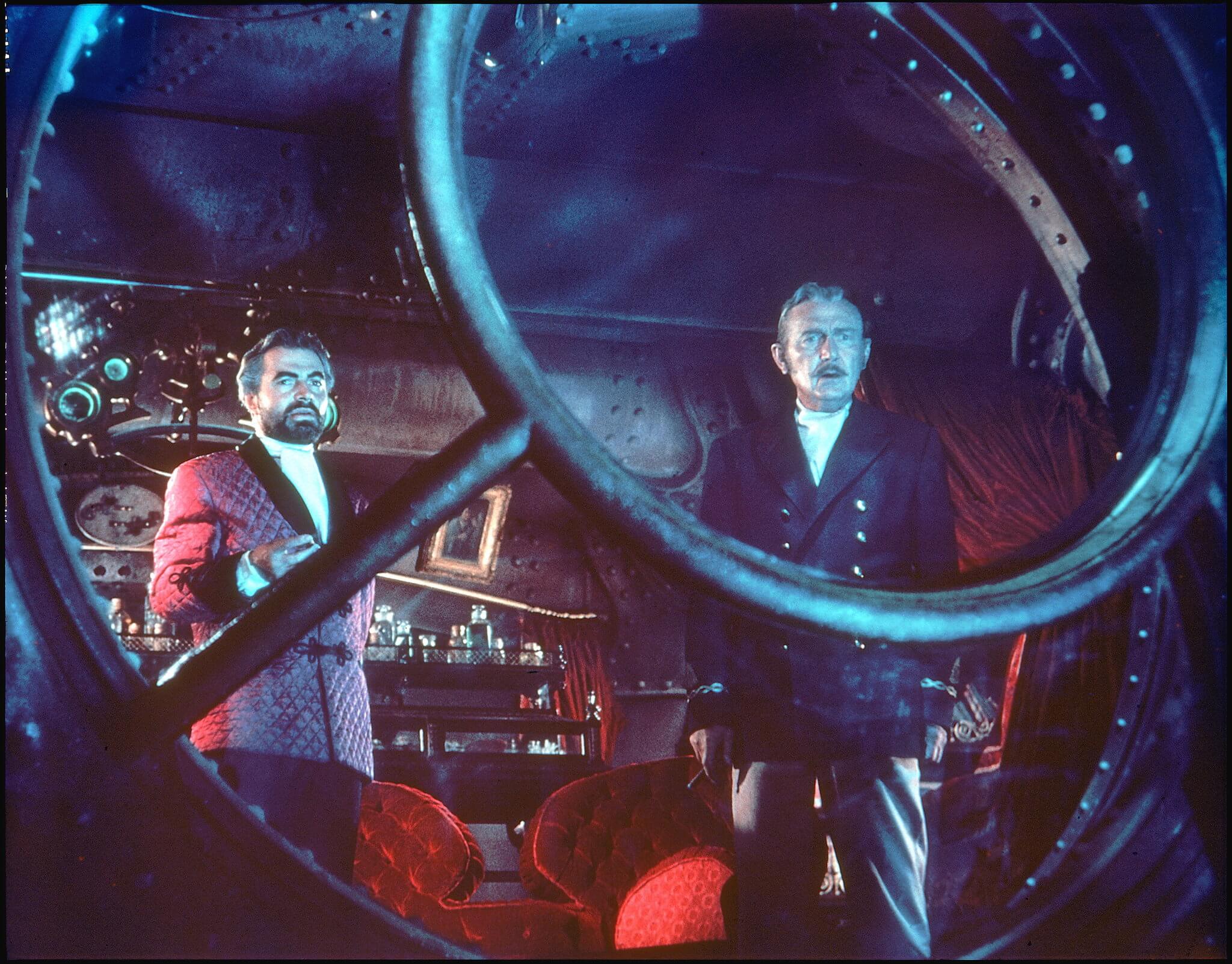
In the widescreen formats of VistaVision and CinemaScope, the younger Fleischer worked depth of field in ways that rivalled Orson Welles. (There may be no greater testament to Fleischer’s talent for wrangling tall personalities than Welles’ appearance in both Compulsion and 1960’s Crack in the Mirror.) He relished the chance to experiment with underwater cinematography in 20,000 Leagues Under the Sea. He once insisted on delaying production to film during a solar eclipse.
On the rare occasion that he tried comedy — 1948’s So This is New York — Fleischer made early use of freeze frames and, in a sequence that prefigures Airplane!, provided genteel subtitles to rough-spoken New York cabbie.
Notable in Fleischer the younger’s oeuvre is its detached engagement with Jewish themes. In the novel of Compulsion, Levin pays lip service to Jewish self-hatred motivating the murder at the center of the story. But Fleischer never makes much of his killers’ or their victim’s Jewishness, caring more for their nihilistic thoughts on Nietzsche and the Welles character’s atheism. (The character was based on Leopold and Loeb’s real attorney, Clarence Darrow, and often gives voice to his verbatim quotes.)
Barrabas, a film in the mold of Ben-Hur, follows Anthony Quinn as the titular reprieved bandit, the one Jesus replaced on the cross. The contours of his story resemble the Talmudic account of Reish Lakeish, a brigand turned gladiator turned believer, but it is a remarkably goyische production that doesn’t even bother to have matzo for the Passover week of the Passion.
Fleischer’s Jewishness perhaps feels akin to that of one of his collaborators, Kirk Douglas. It was never denied, but seldom a feature. But just as Douglas had The Juggler, where he went from Holocaust survivor to halutz, Fleischer had The Jazz Singer.
That remake, from 1980 and starring Neil Diamond, is wisely excluded from the Film Forum’s particular lineup, sparing filmgoers the Jewish Elvis’ blackface, and perhaps affording Fleischer the grace owed him as a replacement director who stepped in mid-production and couldn’t save the picture.
Per Jason A. Ney’s biography Richard Fleischer: Journeyman, Fleischer described the performance of Laurence Olivier in that movie thusly: “This very gentile gentleman had done his damnedest to portray a very Jewish cantor by using every broad cliche in the book. Rolling eyes, grimacing, gesturing, it was a performance worthy of the Yiddish Art Theater at its worst.”
Fleischer, it must be concluded, knew from Jews, and so surmised Sir Laurence wasn’t up to leading Kol Nidrei — not that Diamond did much better.
The yikhes in the Fleischer family is strong, with father and son producing countless hours of too often undersung entertainment. Perhaps the greatest tribute to their overlap and influence will not be screening at Film Forum, but it’s worth recalling.
In a season two episode of the Rugrats, Chuckie swallows a watermelon seed. Through the magic of animation, the babies, drawing inspiration from a sci-fi film, imagine themselves shrunken down and entering his body to retrieve it before it grows.
It’s a parody of 1966’s Fantastic Voyage, directed by Richard Fleischer. It’s safe to say, without the contributions of both father and son, the episode couldn’t exist.
Film Forum’s series Fleischer père et fils begins May 8.

Did you know that only 2% of Forward readers donate to support our nonprofit newsroom? That 2% make it possible for millions to read the Forward without a paywall or subscription — removing any barriers to the full and fair Jewish story.
But while the Forward is free to read, it isn’t free to produce. Big stories — like deep dives into the antisemitism data, political scoops or reporting trips to college campuses — take months of research and fact-checking. All while we keep you informed of what you need to know each day.
— Rachel Fishman Feddersen, Forward Publisher & CEO
Support our mission to tell the Jewish story fully and fairly.