Why do some people think Rep. Mike Lawler is Jewish?
A drunken antisemitic rant against the Catholic Republican puts spotlight on a congressman who has made fighting antisemitism central to his political identity
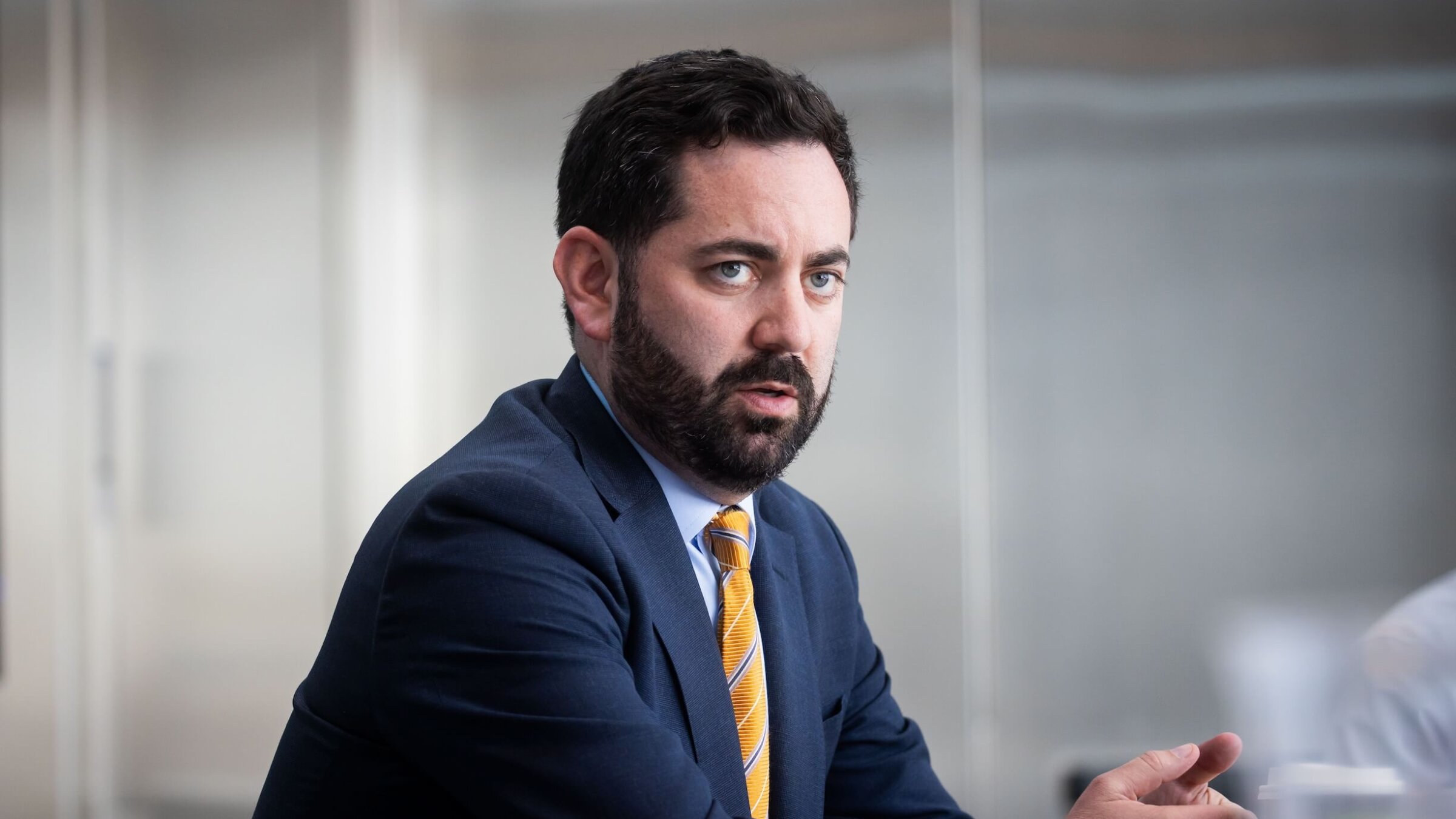
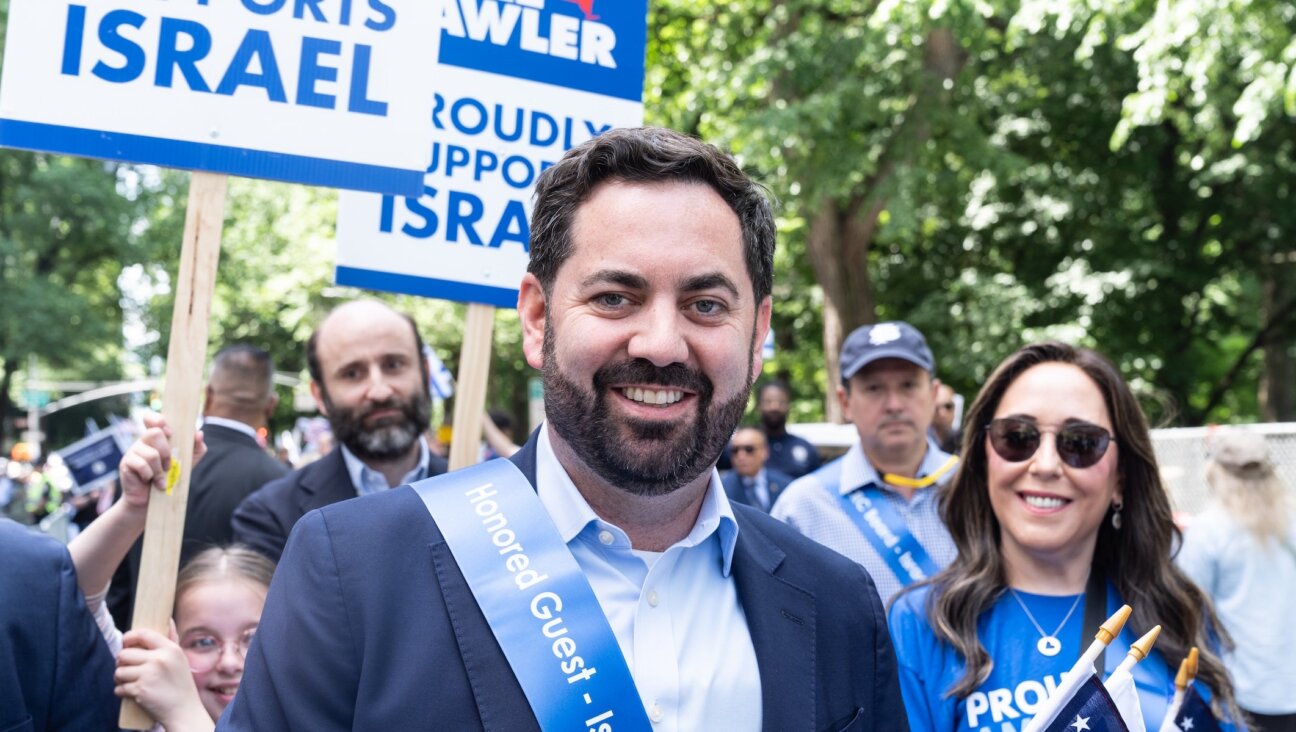
Rep. Mike Lawler, a Republican from New York, on April 24, 2025. Photo by Michael Nagle/Bloomberg via Getty Images

By Jacob Kornbluh May 14, 2026
For Rep. Mike Lawler, a practicing Catholic, the antisemitic insult hurled at him this week was not just a ugly political attack by an intoxicated political scion. It highlighted how closely the Hudson Valley Republican has become linked to New York’s Jewish community because of the district he represents, the relationships he has built and his role as one of the GOP’s strongest pro-Israel voices.
“I have one of the largest Jewish populations anywhere in the country in my congressional district, and I’m not going to stop standing up for my constituents,” Lawler told reporters on Wednesday, a day after William Paul, the son of Sen. Rand Paul of Kentucky, confronted him in a Washington bar and blamed “Jews” for political attacks — targeting Lawler because he believed the New York rep was Jewish. Paul later apologized and said he has a drinking problem for which he is seeking treatment.
Lawler, 39, represents New York’s 17th Congressional District, a suburban swing seat in Rockland and Westchester counties that has the nation’s largest Jewish population per capita. Lawler narrowly defeated Democratic incumbent Sean Patrick Maloney in the last midterm elections by a slim 2,000-vote margin, with strong support from the large Hasidic communities in Monsey, New Square and New Hempstead.
The episode reflected how deeply Lawler has become associated with Jewish causes and support for Israel. Lawler, who previously served two years in the New York State Assembly, took credit for lowering the temperature in Rockland County after local GOP officials in 2019 posted a video widely criticized as antisemitic. After his election to Congress, Lawler chose a seat on the influential House Foreign Affairs Committee, saying it was because support for Israel is important for the people in his district. He now serves as chair of the Middle East and North Africa Subcommittee.
He was the lead sponsor of the bipartisan Antisemitism Awareness Act that would require the Department of Education to use the controversial International Holocaust Remembrance Alliance definition of antisemitism — which classifies most anti-Zionism as antisemitic — when investigating allegations of discrimination. It passed in the House in 2024 by an overwhelming majority of 320-91, but was stalled in the Senate due to resistance over constitutionally protected free speech. It was reintroduced in the House last year.
More recently, Lawler partnered with Rep. Josh Gottheimer, a moderate Democrat from New Jersey, on a bipartisan House resolution condemning antisemitic rhetoric from online personalities including Hasan Piker and Candace Owens.
His close ties with Orthodox and Hasidic leaders have also become a hallmark of his political brand. During the 2024 campaign, Lawler brought former House Speaker Kevin McCarthy to visit the Hasidic communities and rabbinic leaders —and twice the current speaker, Mike Johnson — to shore up support for his reelection. Former Rep. Mondaire Jones, who ran against Lawler in 2024, had to delete a social media post that some deemed insulting to Orthodox Jews after he remarked that the former Republican leader’s meeting with Rabbi David Twersky, the 84-year-old spiritual leader known as the Skverer Rebbe in Rockland County, “was a waste of everyone’s time.”
Those relationships have given Lawler unusual credibility in communities that have historically leaned Democratic. Kamala Harris carried the district by a narrow 50-49 margin in 2024, and it voted for Joe Biden by a 59-39 margin.
The combination of his district’s demographics and his outspoken support for Israel has increasingly tied Lawler politically to Jewish communal issues.
“I am proud to be a Zionist,” Lawler proclaimed at the annual legislative breakfast hosted by the Jewish Community Relations Council of New York in February,
Lawler was not immediately available for an interview with the Forward on Thursday.
At that breakfast, Lawler joked about his physical resemblance to New York City Mayor Zohran Mamdani, whose handling of antisemitism and criticism of Israel has left many Jewish voters uneasy.
“I know some of you looking at me may look and say, ‘Looks like Zohran Mamdani,’” Lawler quipped, referring to their similar trimmed black beards. Noting that the two served together in the New York State Assembly and regularly played poker in Albany, Lawler said the similarities end there.
“On issues of combating antisemitism and support of the State of Israel, there are strong differences,” Lalwker said. “And I think one of the things that I have spent my time in Congress focused on is strengthening the U.S.-Israel relationship and being unapologetic about it.”
Lawler is gearing up for a difficult reelection campaign. National Democrats see him as a top target. Five candidates are competing in the June 23 Democratic primary.
Earlier this year, Lawler challenged the Democratic candidates to condemn a TV ad sponsored by the Institute for Middle East Understanding, which attacked him for prioritizing aid to Israel. Lawler said the commercial “traffics antisemitic tropes.”
With a handful of suburban swing districts likely to decide control of the House, Lawler’s support among Jewish voters could once again prove politically decisive.

Did you know that only 2% of Forward readers donate to support our nonprofit newsroom? That 2% make it possible for millions to read the Forward without a paywall or subscription — removing any barriers to the full and fair Jewish story.
But while the Forward is free to read, it isn’t free to produce. Big stories — like deep dives into the antisemitism data, political scoops or reporting trips to college campuses — take months of research and fact-checking. All while we keep you informed of what you need to know each day.
— Rachel Fishman Feddersen, Forward Publisher & CEO
Support our mission to tell the Jewish story fully and fairly.