Video: Thirteen-year old bakes baklava in Yiddish
Sender Glasser, of Clark, New Jersey, discovered the honey-soaked pastry while dining with his family in Turkish restaurants
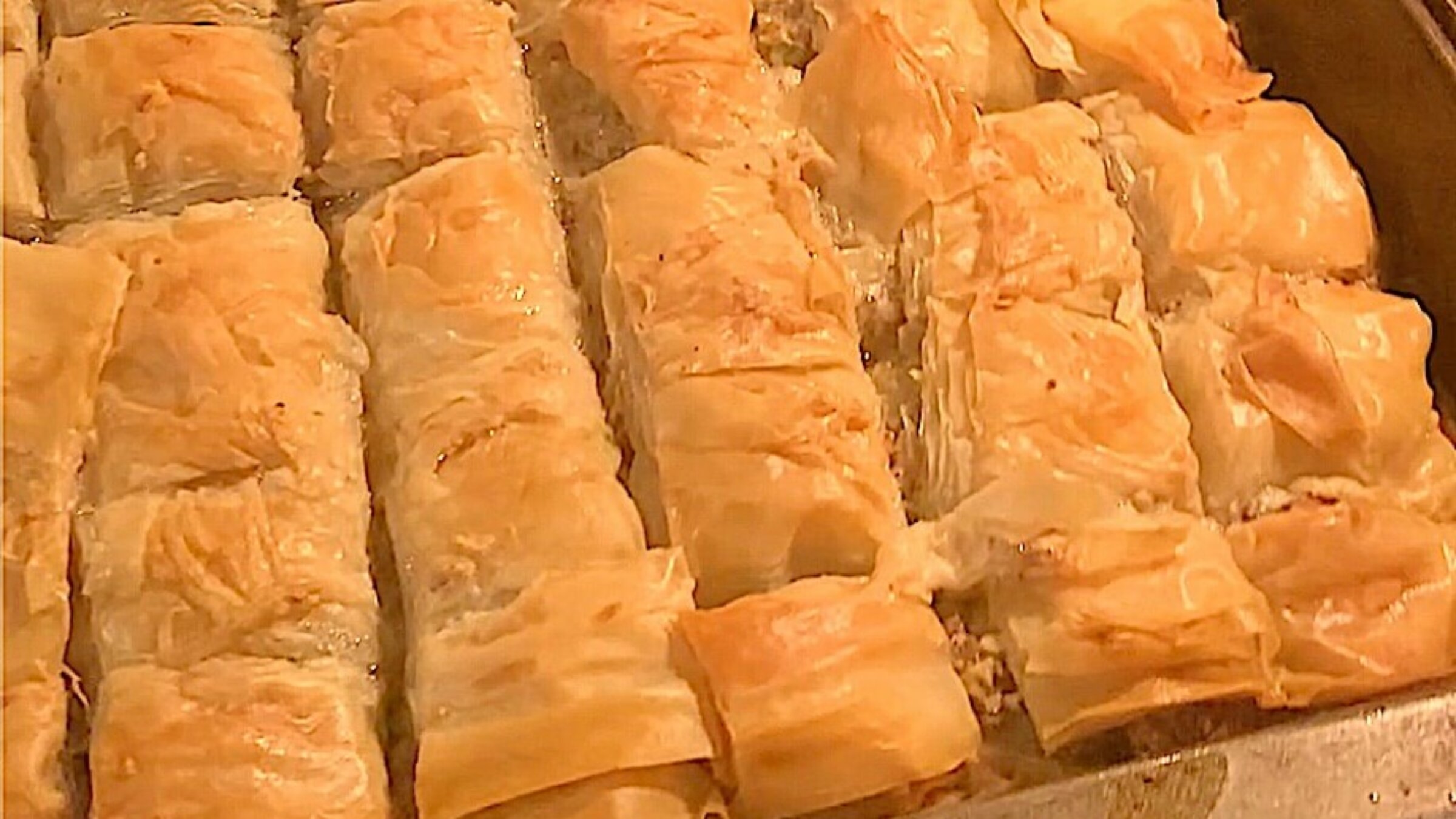
Screenshot Photo by the Forward

By Forverts Staff June 28, 2024
Baklava, a dessert made of phyllo pastry filled with chopped nuts and soaked in honey, is said to have originated in the Turkish and Greek regions.
Sender (aka Alexander) Glasser, who speaks Yiddish at home, knows that this dish isn’t part of his Eastern European heritage. But he thought it would be cool to show audiences how to make baklava at home, in his own mother tongue. Glasser is the son of Yiddish linguist and Forverts contributor Paul Glasser and Polish-born Yiddishist Gosha Zaremba.
So his mother filmed him preparing it in the kitchen of their home in Clark, New Jersey. The Yiddish clip, which was produced by the Forverts, is accompanied by English subtitles.
Glasser started to make baklava around a year ago. “I remember eating it in middle eastern and Turkish restaurants,” he said. “I decided to try it out because I wanted a challenge, and knew that my dad likes it, too.”
He was happy to find a recipe for the dessert in the cookbook of a fellow chef only nine years his senior: The bestseller Eitan Eats the World: New Comfort Classics to Cook Right Now by Eitan Bernath. Bernath, who has been called a “culinary darling” by The New York Times, lives in another New Jersey township: Teaneck.
This is only the second cooking demo that Glasser has made. In the first one, he showed audiences how to bake pretzels in Yiddish, eliciting praise on social media for his Yiddish and his baking acumen. He was pleasantly surprised by all the attention.
“I gave one of the pretzels I made to my next-door neighbors and they loved it,” he said. “And they aren’t even Jewish.”
Baklava
4 cups of pecans and pistachio nuts
2 sticks (16 Tbs.) butter
2/3 cup sugar
1-½ sticks (12 Tbs) butter
32 phyllo sheets
The honey syrup
⅓ cup sugar
Cinnamon, to taste
Lemon juice, to taste
1 cup honey
2 Tbs. water
(Recipe adapted from Eitan Eats the World: New Comfort Classics to Cook Right Now)
Did you know that only 2% of Forward readers donate to support our nonprofit newsroom? That 2% make it possible for millions to read the Forward without a paywall or subscription — removing any barriers to the full and fair Jewish story.
But while the Forward is free to read, it isn’t free to produce. Big stories — like deep dives into the antisemitism data, political scoops or reporting trips to college campuses — take months of research and fact-checking. All while we keep you informed of what you need to know each day.
— Rachel Fishman Feddersen, Forward Publisher & CEO
Support our mission to tell the Jewish story fully and fairly.