Maria Ka’s cosmic Yiddish music — from punk grit to starlight
Performing out of Gdańsk, Poland, the singer-songwriter fuses everyday Yiddish speech with celestial wonder
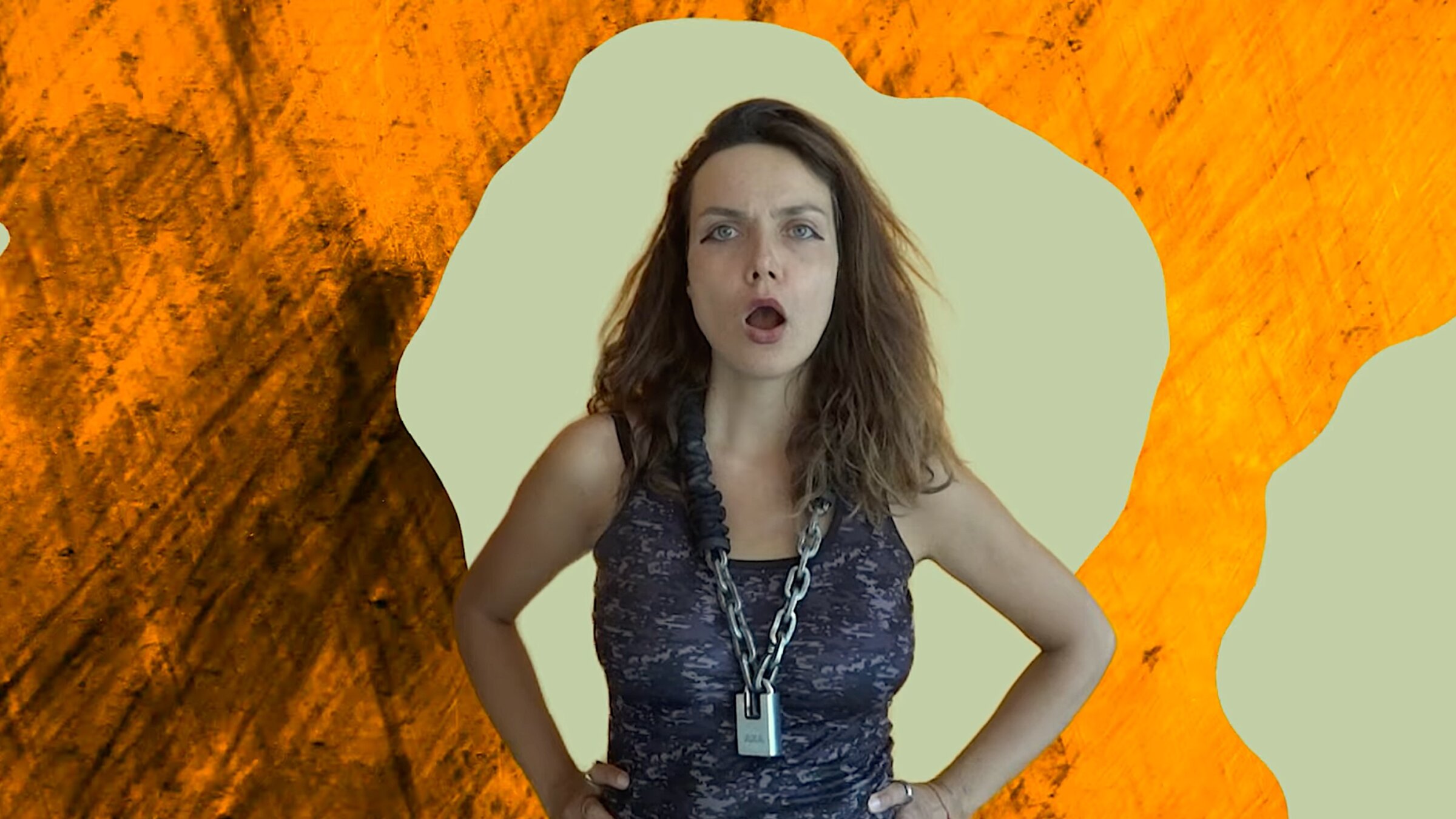
Screenshot Courtesy of Maria Ka

By Judah Sussman October 29, 2025
When Polish-born musician Maria Ka released her latest album Di Mashin (The Machine), she wasn’t merely reviving Yiddish song — she was remaking it in her own cosmic image.
Performing out of Gdańsk, she fuses everyday Yiddish speech with the vastness of outer space, using synths, distortion and humor to connect the language’s earthly pulse with celestial wonder.
Her approach is unorthodox by design. Rather than treating Yiddish as sacred, she sees it as a living, working language — one that can carry “punk rock” energy as easily as poetic introspection. For Ka, the language’s vitality lies in its adaptability. “Authenticity,” she says, “means Yiddish being modern, vivid and evolving.”
Beyond Klezmer
Ka’s music steers clear of nostalgia. She speaks with playful candor about her dislike of traditional klezmer, preferring what she calls the “mechanical rhythms” of shipyards, engines and machinery — sounds that mirror both the industrial history of her city and the emotional machinery of human connection.
Her songs blend the personal and the metaphysical — daily struggle intertwined with a hum of cosmic motion. “We run through our days,” she said, “while the universe simply expands.”
Ka credits much of her inspiration to pioneering women in music and theater — from Polish rock icon Kora to American legend Grace Slick and the British singer Siouxsie Sioux. Their daring artistry, she says, shaped her own stage persona: bold, visual and unapologetically original.
A Yiddish Voice in Dresden
In October, Ka opened Dresden’s Jüdische Woche (Jewish Week) festival — an experience she describes with disbelief and gratitude. The performance, which happened to fall on her birthday, felt to her like an impossible full circle. “If you told people during WWII that a Yiddish artist would perform new songs in Dresden,” she said with a laugh, “they’d have called you crazy.”
For her, bringing Yiddish music into postwar German spaces is not only symbolic but redemptive, a way to turn historical trauma into creative dialogue. “It’s meaningful,” she says, “because it opens understanding.”
Emotion, Light, and Connection
Ka writes instinctively — beginning with emotion and often discovering melody alongside it. Inspiration can come from anywhere: a word, an article, even a scientific term. One track, “Alef-Tsentauri Disko,” was sparked by an article she read about the star Alpha Centauri, which she transformed into a Yiddish pun, creating a link between the first letter of the Hebrew alphabet, alef, with the word alpha.
Her forthcoming piece, Di Kosmishe Motorn (The Cosmic Motors), continues that theme. It’s a psychedelic reflection on intimacy between the human soul and the stars. Despite her space-age vision, Ka’s goal is earthly and humane. She hopes listeners feel “light, positivity and balance” through her songs. In a fractured world, she believes music remains one of the few forces that unite. “There are more things that connect us than divide us,” she says. “Music proves it.”
Did you know that only 2% of Forward readers donate to support our nonprofit newsroom? That 2% make it possible for millions to read the Forward without a paywall or subscription — removing any barriers to the full and fair Jewish story.
But while the Forward is free to read, it isn’t free to produce. Big stories — like deep dives into the antisemitism data, political scoops or reporting trips to college campuses — take months of research and fact-checking. All while we keep you informed of what you need to know each day.
— Rachel Fishman Feddersen, Forward Publisher & CEO
Support our mission to tell the Jewish story fully and fairly.